
Yes. The northern rockhopper penguin (Eudyptes moseleyi) is Endangered. The most recent published BirdLife/IUCN assessment records a decreasing population trend. Most breeding birds are concentrated on a small group of remote islands in the South Atlantic and southern Indian Oceans, which makes the species vulnerable to changes at sea and problems at individual colonies.
The 2020 IUCN assessment estimated about 413,700 mature individuals. That figure is a dated scientific estimate rather than a live headcount: the colonies are remote, surveys do not all use the same method, and some sites have long gaps between censuses.
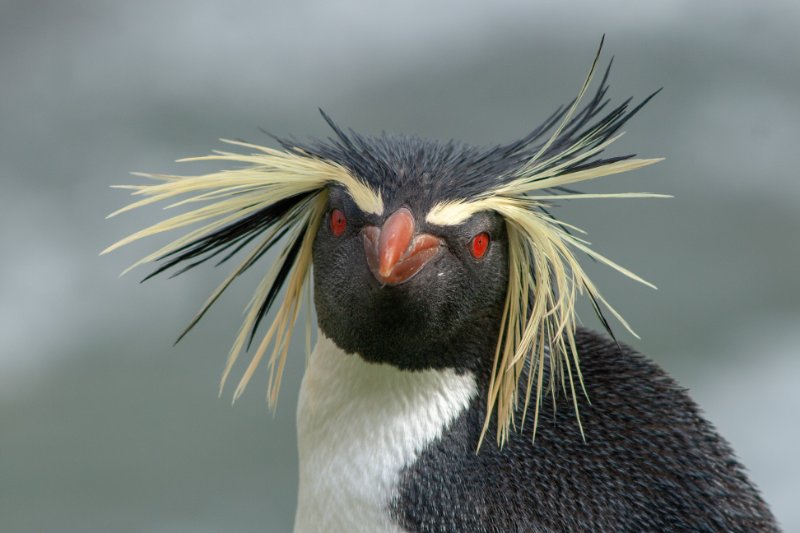
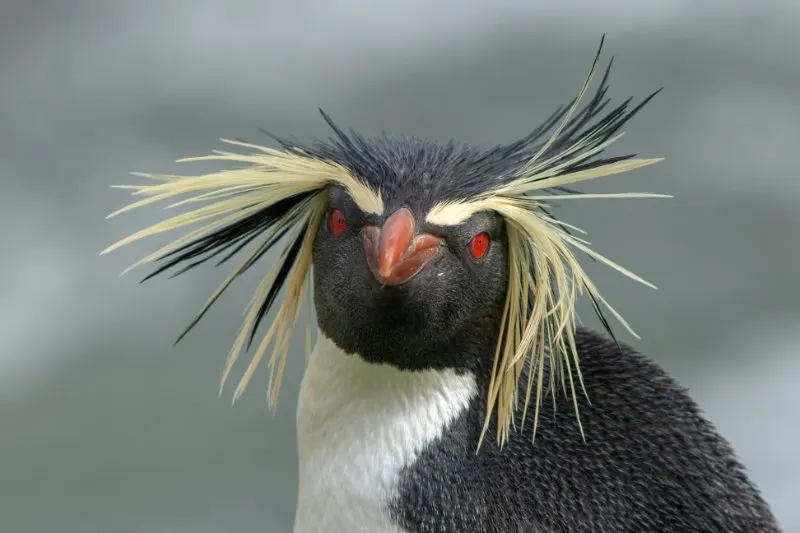
Northern rockhopper penguin quick facts
| Fact | Detail |
|---|---|
| Scientific name | Eudyptes moseleyi |
| IUCN Red List status | Endangered |
| Population trend | Decreasing |
| Estimated mature population | About 413,700 in the 2020 assessment; not a live census |
| Main breeding range | Tristan da Cunha archipelago and Gough Island in the South Atlantic; Amsterdam and Saint-Paul Islands in the southern Indian Ocean |
| Habitat | Cool-temperate ocean and rocky island coasts, slopes, cliffs, and tussock-covered nesting areas |
| Diet | Fish, squid and other cephalopods, krill, and other crustaceans |
| Approximate size | About 45–55 cm (18–22 in) tall and roughly 2–4 kg (4.4–8.8 lb), with weight varying by sex and season |
| Main conservation concerns | Ocean and prey changes, fisheries interactions, oil pollution, severe weather, disease, disturbance, and invasive species or habitat degradation at some colonies |
Status and population figures last checked in July 2026. The most recent referenced IUCN assessment was published in 2020.
Why is the northern rockhopper penguin endangered?
“Endangered” is a formal IUCN category. It means the available evidence indicates a very high risk of extinction in the wild; it does not mean the species is certain to disappear within a few years or by a specific deadline.
Northern rockhopper populations have undergone severe long-term declines at several colonies. Historical summaries have described losses approaching 90% since the 1950s, but early counts were uneven and some colonies were estimated rather than fully surveyed. The clearest conclusion is that the species has declined substantially and remains on a downward trajectory, while the exact global rate carries uncertainty.
The species is also unusually concentrated. A disruption affecting one major breeding island—such as an oil spill, disease event, food shortage, extreme storm, or habitat problem—can affect a meaningful share of the global population.
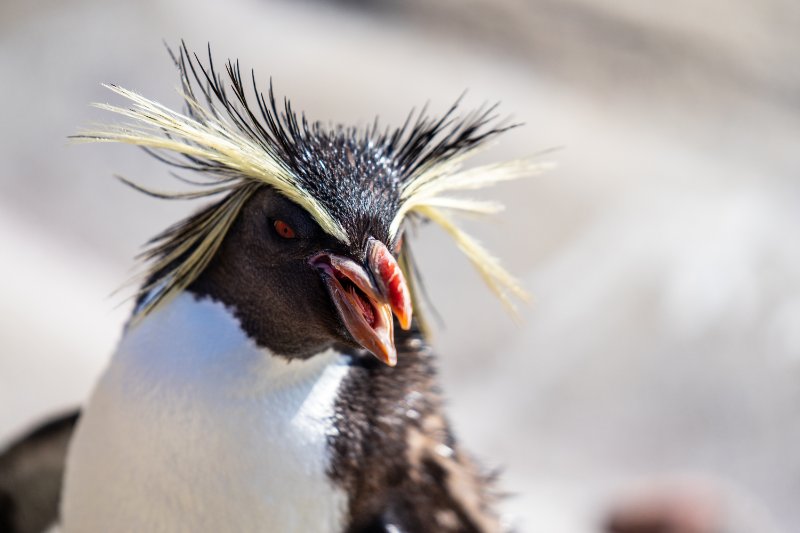
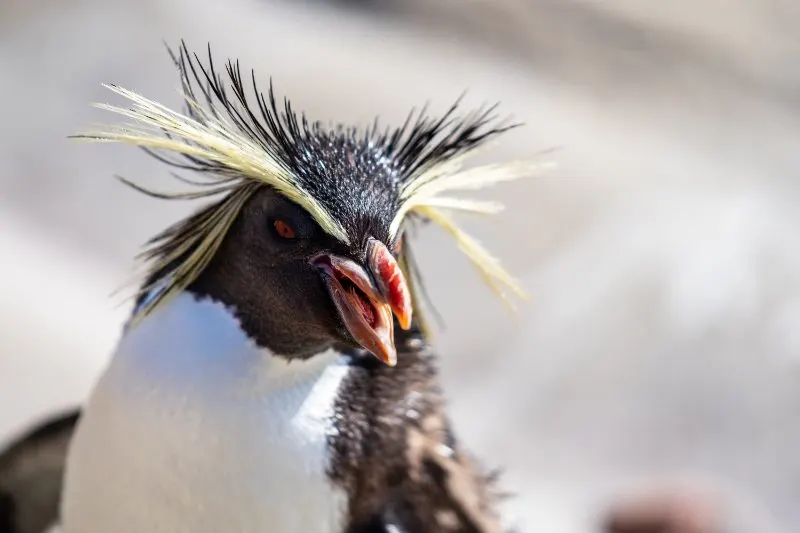
Where northern rockhopper penguins live
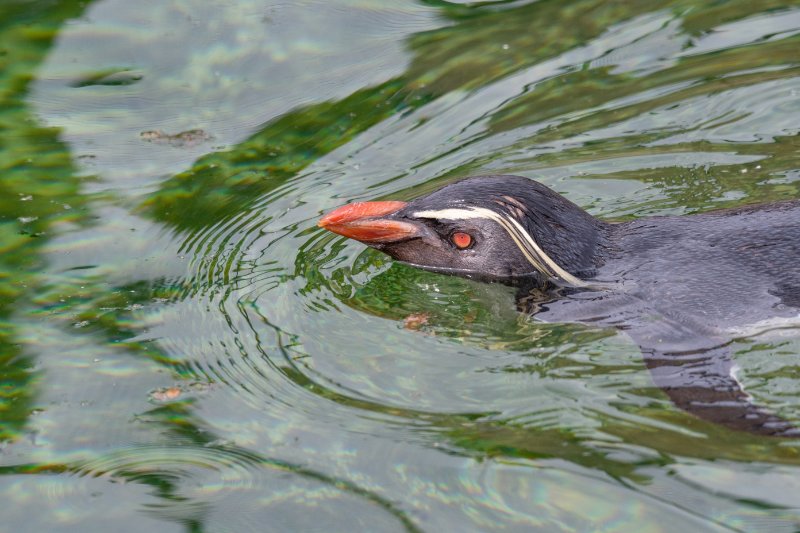
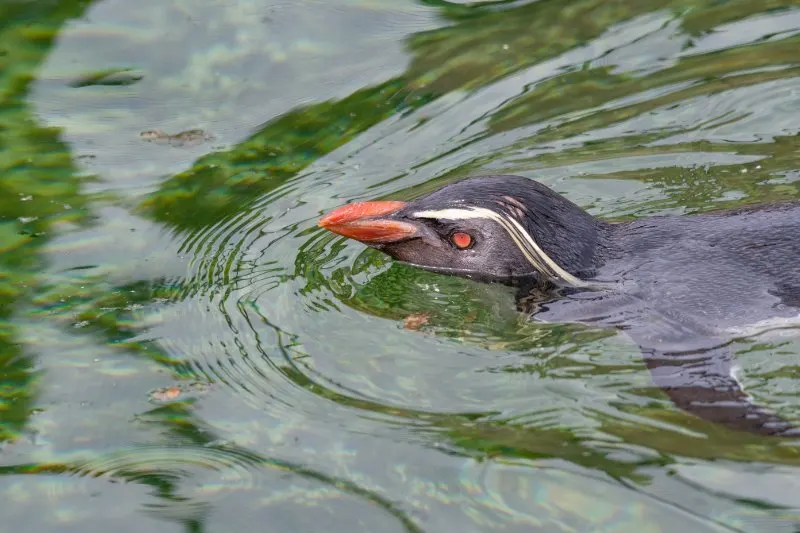
Northern rockhopper penguins live entirely in the Southern Hemisphere. “Northern” describes their position relative to other rockhopper penguin breeding ranges—not a range north of the equator.
The main breeding colonies are on the Tristan da Cunha archipelago and Gough Island in the South Atlantic. Smaller breeding populations occur on Amsterdam and Saint-Paul Islands in the southern Indian Ocean. These are cool-temperate, isolated oceanic islands rather than Antarctic ice habitats.
At sea, the penguins range across productive ocean waters to find prey. On land, they nest in colonies from the shoreline to steep rocky slopes and sometimes farther inland, using ledges, crevices, scree, and vegetation. These coastal and marine habitats expose them to salt spray, strong winds, steep terrain, and rapidly changing weather.
Appearance and identification
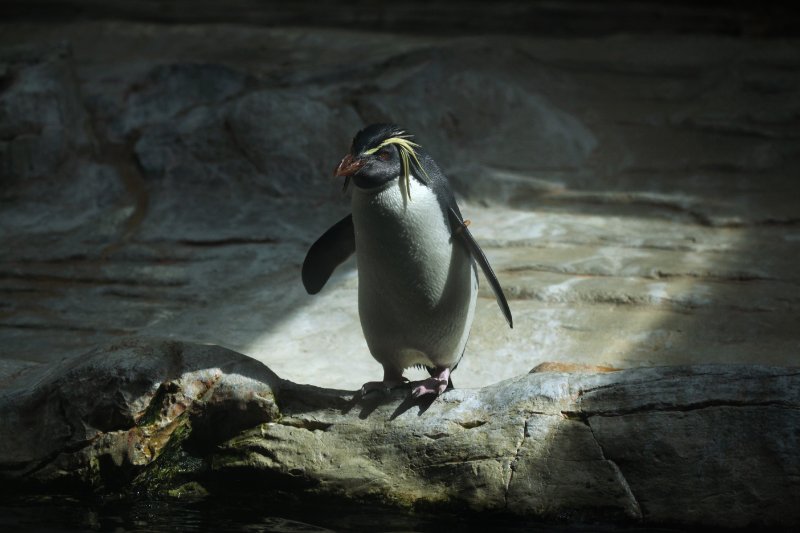
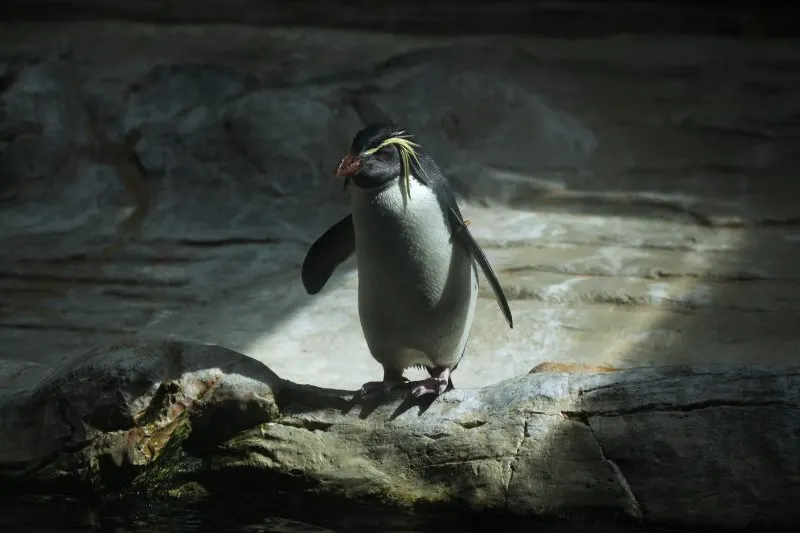
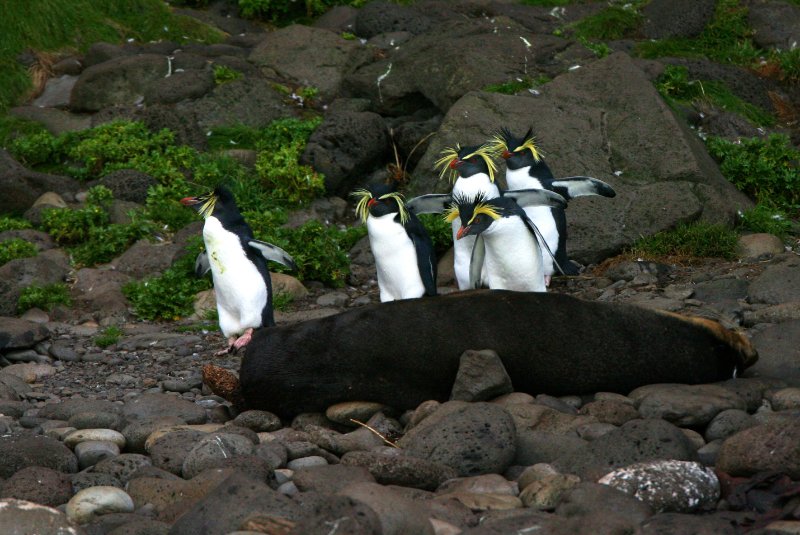
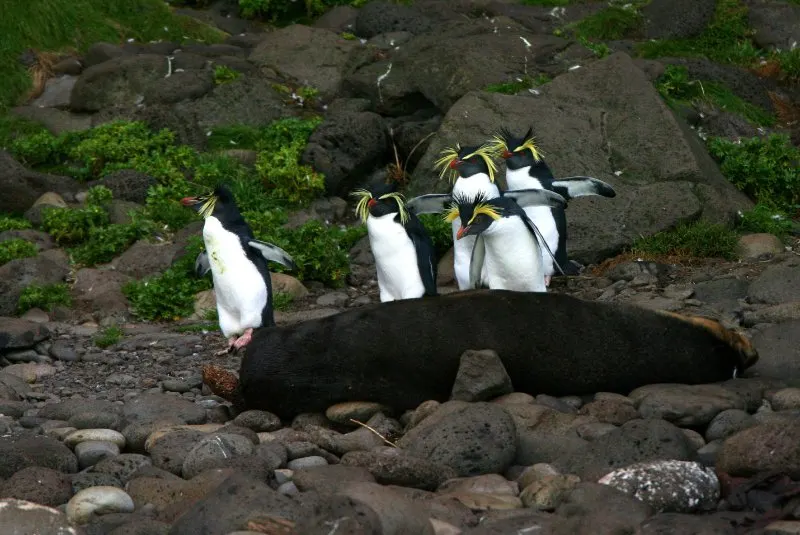
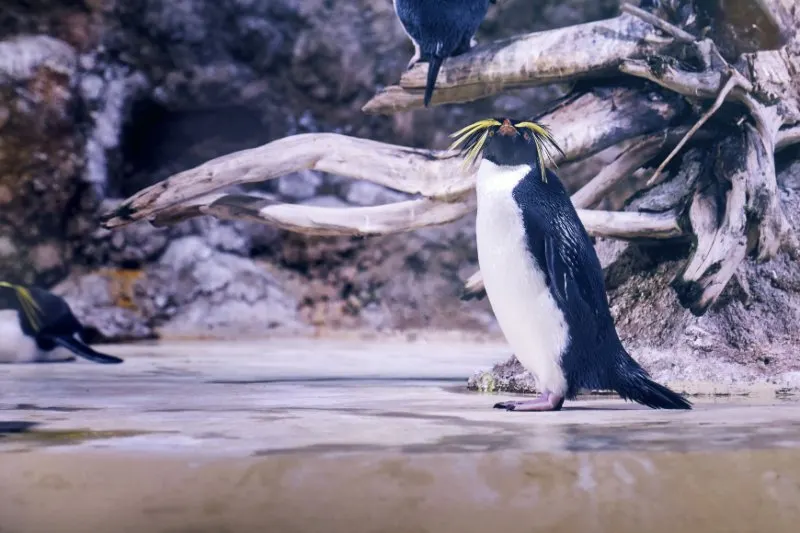
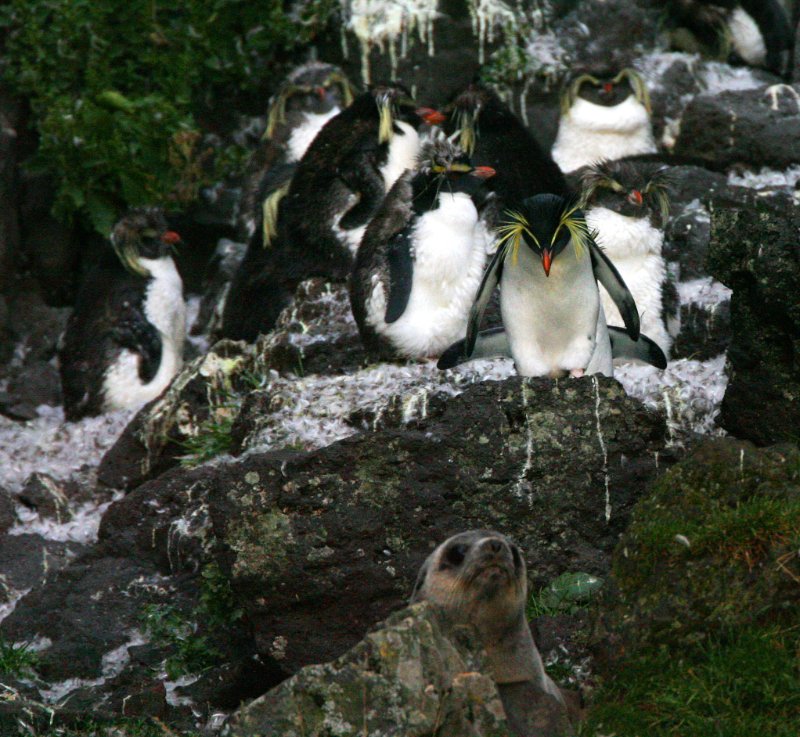
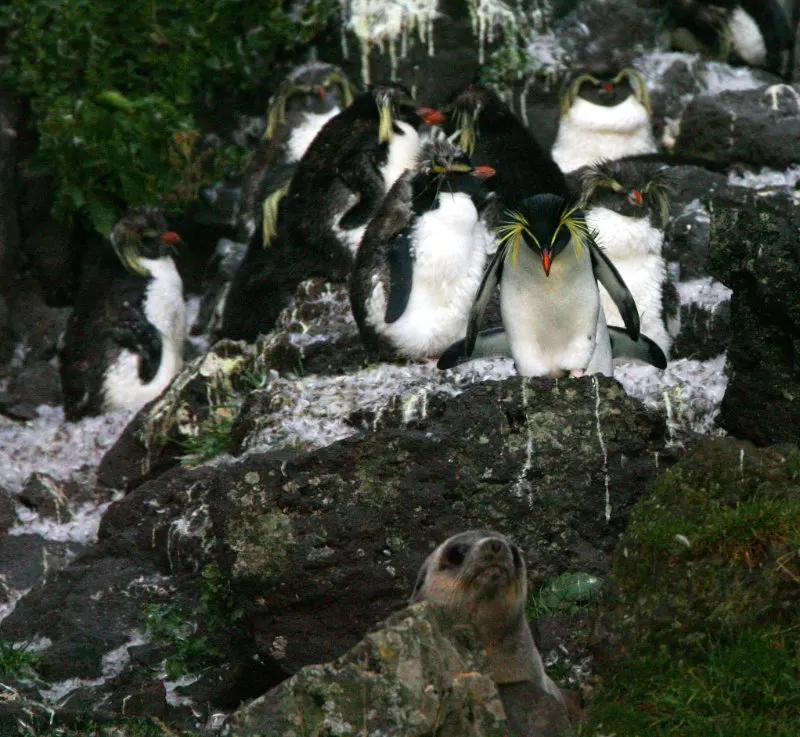
Northern rockhoppers are small, compact penguins with black upperparts, a white belly, red eyes, pink feet, and an orange-red bill. Their most recognizable feature is a yellow stripe above each eye that extends into long, untidy crest plumes.
Adults are roughly 45–55 cm (18–22 in) tall and commonly weigh about 2–4 kg (4.4–8.8 lb). Body mass changes through the breeding cycle and annual moult, so one number does not describe every healthy adult.
The northern rockhopper was once grouped with other rockhoppers. Genetic, vocal, and physical evidence now supports Eudyptes moseleyi as a distinct lineage. That is a practical example of how researchers combine DNA, behavior, and anatomy when deciding what scientists mean by a species.
Diet and foraging
Northern rockhopper penguins are strong swimmers and pursuit divers. They propel themselves with their flippers and steer with their feet and tail while chasing prey underwater.
Their diet includes fish, squid and other cephalopods, krill, and additional crustaceans. The proportions vary by colony, season, breeding stage, and local ocean conditions. That flexibility helps the birds exploit changing prey fields, but it does not protect them from widespread or prolonged food shortages.
During breeding, adults must balance their own energy needs with repeated trips between the colony and feeding grounds. If useful prey shifts farther offshore or becomes less abundant, parents may return later or with less food for their chicks.
Breeding and behavior
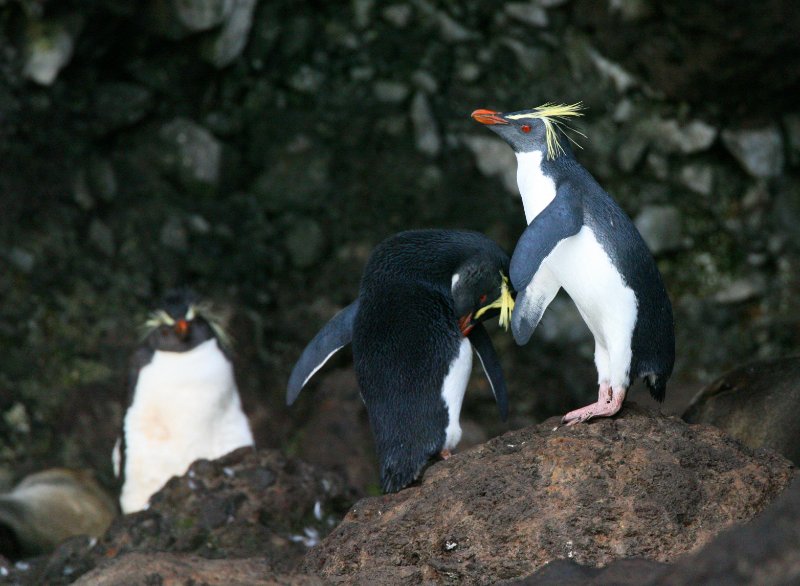
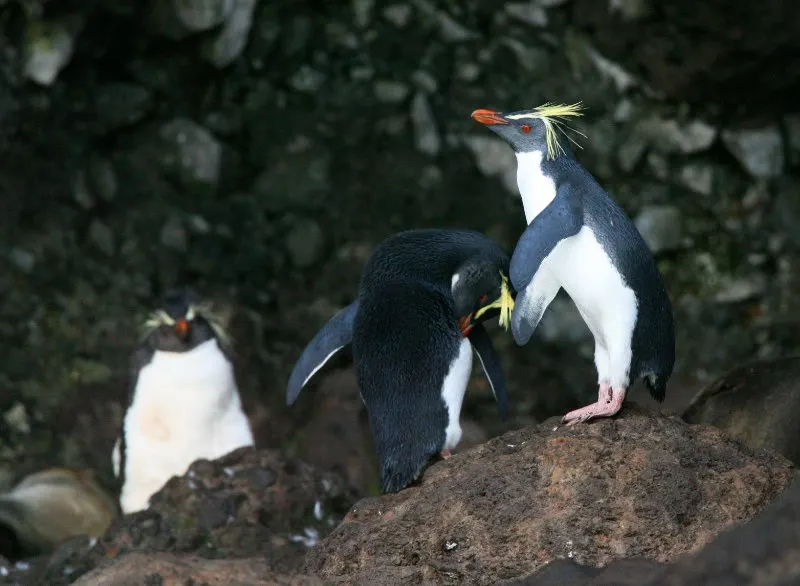
Adults return to land for breeding and moulting. In the colony they use calls, postures, and crest displays to recognize partners, defend small nest areas, and communicate with neighbors.
A typical crested-penguin clutch contains two eggs, with the second egg larger than the first. Even when both hatch, a pair usually raises one chick. Both parents contribute to incubation, guarding, and feeding, although their duties change over the breeding cycle.
Adults often return to the same colony and may reunite with a previous partner. Pair fidelity can be strong, but lists of animals known for long-term pair bonds should not be read as proof that every individual mates for life; partnerships can change after breeding failure, loss of a mate, or other disruption.
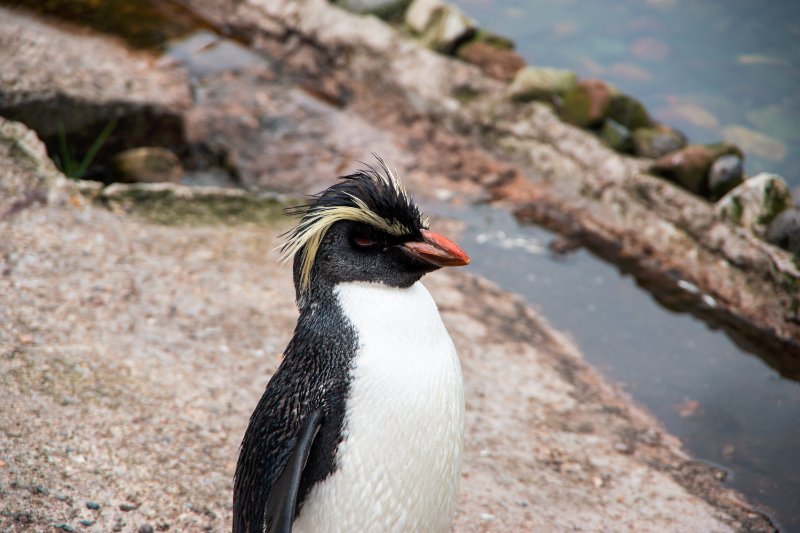
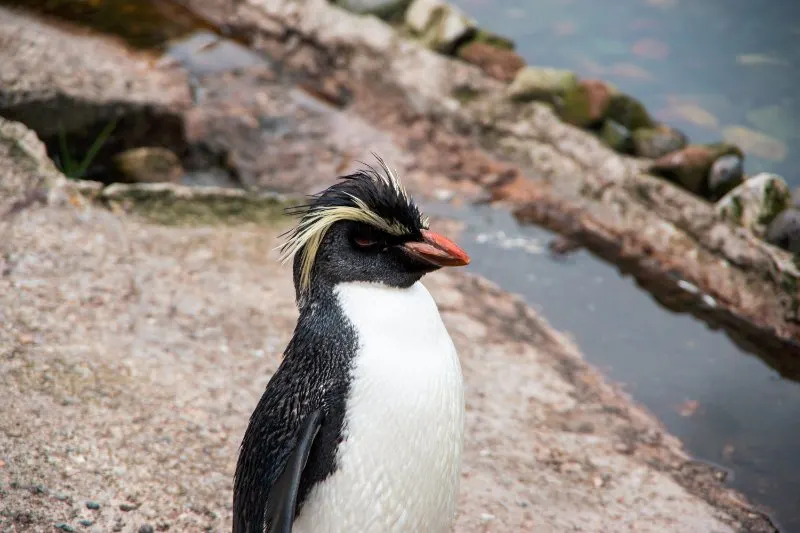
The “rockhopper” name comes from the bird’s agile movement across boulders, cracks, and steep slopes. Hopping is useful on terrain where sliding on the belly would be impossible, although these penguins also climb with help from their feet, bill, and flippers.
Ecological role and natural predators
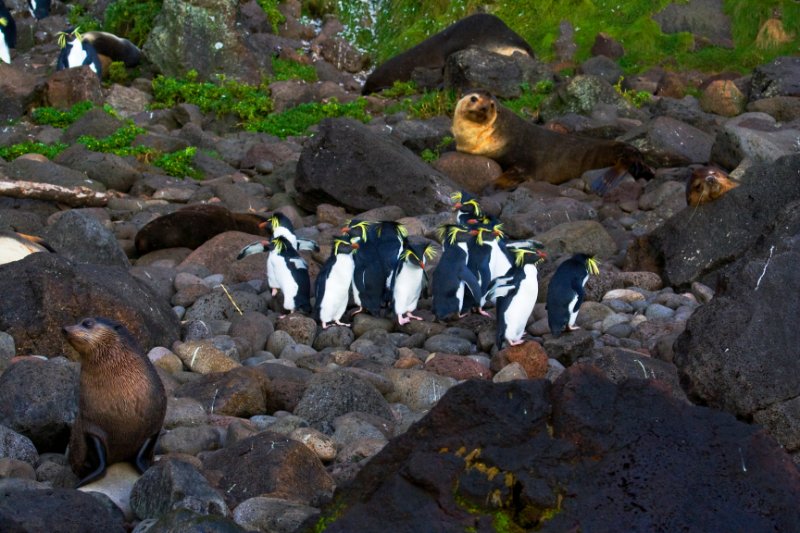
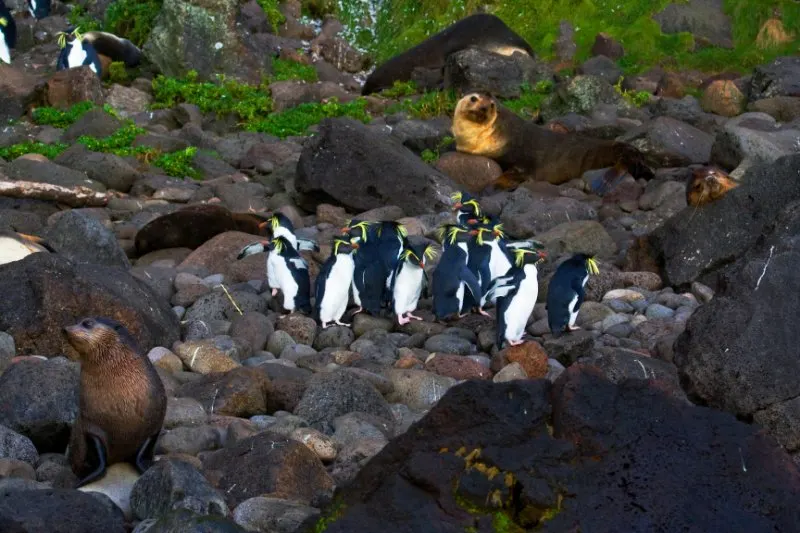
Northern rockhoppers are mid-level marine predators. By eating fish, cephalopods, and crustaceans, they transfer energy through the food web. Their guano, eggshells, feathers, and carcasses also move marine nutrients onto nutrient-poor oceanic islands, where those inputs support plants, invertebrates, and other wildlife.
At sea, adults may be taken by fur seals and other large marine predators. At colonies, skuas, giant petrels, and other birds can take eggs or chicks. These natural interactions are not the same as the broad, human-driven pressures that can reduce prey, pollute feeding areas, or damage breeding habitat.
Population decline and major threats
No single explanation accounts for every decline. Conditions differ among the Atlantic and Indian Ocean colonies, and several pressures can act together. The strongest conservation approach is therefore to monitor each colony and its feeding areas rather than assume one universal cause.
Ocean warming and changing prey
Rockhoppers depend on productive ocean fronts and food webs. Changes in sea temperature, currents, nutrient supply, and prey distribution can affect adult body condition and the distance parents must travel to feed chicks. Climate change is therefore a food-web and foraging problem for this species—not simply a loss of sea ice. For broader context, see why climate action still matters.
Fisheries interactions
Commercial fisheries can overlap with penguin feeding areas, compete for some prey, alter food-web relationships, or catch diving seabirds unintentionally. The importance of each mechanism varies by location, so fisheries monitoring, observer coverage, bycatch reduction, and protection of key foraging zones are more useful than blaming all fishing activity equally.
Oil spills and marine pollution
Oil destroys the waterproofing and insulation of penguin feathers. Contaminated birds can become hypothermic, ingest toxins while preening, and lose the ability to forage normally. The 2011 grounding of the MS Oliva near Nightingale Island showed how one shipping accident can threaten a concentrated island population. NOAA explains the wider ecological effects of oil spills in marine environments.
Plastic debris and lost fishing gear add entanglement and ingestion risks throughout marine food webs. Direct population-level effects on northern rockhoppers are not as well quantified as the risk from oil, but reducing marine plastic pollution still benefits seabirds and their prey.
Colony disturbance, invasive species, disease, and extreme events
Remote breeding islands are not automatically safe. Introduced mammals and plants can alter island ecosystems, people can disturb crowded colonies, and severe storms or disease can cause sudden losses. Gough Island’s introduced house mice are a serious site-wide threat to seabirds, although their direct population-level effect on northern rockhoppers is less clearly quantified than their documented impact on some petrels and other nesting birds.
Conservation efforts
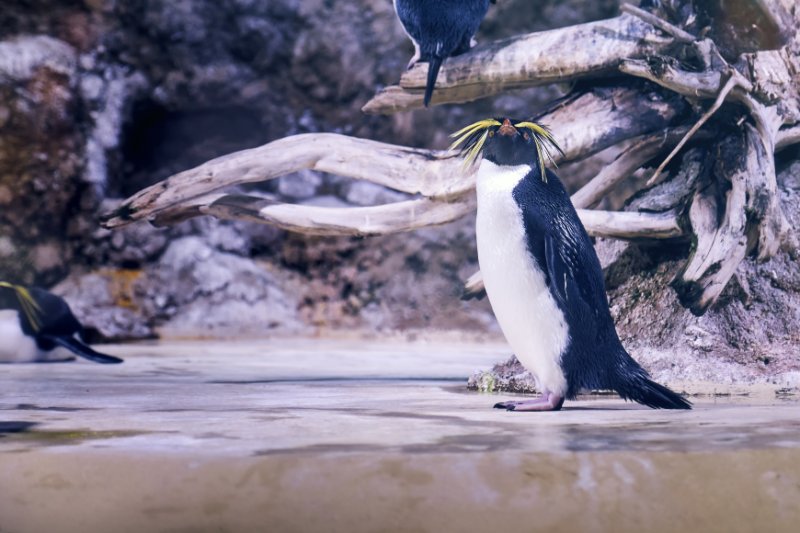
Several important breeding sites already have formal protection. Gough and Inaccessible Islands are a UNESCO World Heritage Site and nature reserve, while Amsterdam and Saint-Paul Islands lie within the protected French Austral Lands and Seas. Protection on paper matters most when it is backed by monitoring, biosecurity, fisheries management, and practical enforcement.
The highest-value conservation actions include:
- Repeat colony censuses with comparable methods so scientists can distinguish real population change from survey noise.
- Track adults at sea to identify feeding hotspots, migration routes, and overlap with fisheries and shipping.
- Reduce bycatch and manage fisheries around key feeding areas using evidence from observers, electronic monitoring, and seabird tracking.
- Maintain oil-spill prevention and response capacity near remote colonies, where rescue logistics are difficult.
- Strengthen island biosecurity and invasive-species control to prevent new predators, pathogens, or habitat-altering plants from reaching breeding sites.
- Protect nesting habitat and limit avoidable disturbance while allowing carefully managed scientific monitoring.
These actions combine conservation and preservation: active management of threats alongside strict protection of remote breeding habitat. They also align with broader habitat protection and restoration principles.
Northern vs. southern rockhopper penguins
Northern and southern rockhoppers look similar, but research on genes, calls, and physical traits supports the northern rockhopper as a distinct species. A foundational 2006 study documented genetic isolation and differences in sexual signals between the lineages.
| Feature | Northern rockhopper | Southern rockhopper |
|---|---|---|
| Scientific name | Eudyptes moseleyi | Eudyptes chrysocome in the narrower western/southern sense |
| Main breeding range | Tristan da Cunha and Gough; Amsterdam and Saint-Paul | Falkland Islands and islands around southern South America |
| Crest | Generally longer, fuller, and more drooping | Generally shorter and less luxuriant |
| Average build | Slightly larger on average | Slightly smaller on average |
| Evidence separating them | Genetic differences, distinct vocalizations and courtship signals, and consistent physical differences | |
Taxonomic authorities do not all handle the eastern rockhopper in the same way: some recognize Eudyptes filholi separately, while others group it with the southern rockhopper. That disagreement does not change the identity or Endangered status of the northern rockhopper.
How readers can help
- Choose seafood from fisheries with credible traceability, bycatch monitoring, and seabird safeguards.
- Reduce disposable plastic use and secure fishing line, hooks, and other gear so they cannot enter waterways.
- Support organizations that publish measurable seabird-monitoring, invasive-species, or marine-protection results.
- Follow biosecurity rules when visiting islands: clean footwear and equipment, never release animals, and keep food or seeds contained.
- Share current sources rather than repeating dramatic but unsupported extinction deadlines.
Frequently asked questions
Is the northern rockhopper penguin endangered?
Yes. BirdLife International’s most recent published IUCN assessment classifies the northern rockhopper penguin as Endangered and records a decreasing population trend.
How many northern rockhopper penguins are left?
The 2020 IUCN assessment estimated about 413,700 mature individuals. This is a dated estimate, not a live census, because the breeding islands are remote and survey coverage varies.
Where do northern rockhopper penguins live?
They breed mainly on the Tristan da Cunha archipelago and Gough Island in the South Atlantic, with additional colonies on Amsterdam and Saint-Paul Islands in the southern Indian Ocean.
Why are they called northern rockhopper penguins if they live in the Southern Hemisphere?
Northern refers to their breeding range relative to other rockhopper penguins. The species lives in the Southern Hemisphere and is not a Northern Hemisphere penguin.
What do northern rockhopper penguins eat?
They eat fish, squid and other cephalopods, krill, and other crustaceans. The mix changes by colony, season, and local prey availability.
What is the difference between northern and southern rockhopper penguins?
Northern rockhoppers are Eudyptes moseleyi and breed mainly around Tristan da Cunha, Gough, Amsterdam, and Saint-Paul. They usually have longer crest plumes and are slightly larger. Genetic and vocal evidence also separates them from southern rockhoppers.
The bottom line
The northern rockhopper penguin is an Endangered Southern Hemisphere seabird with a declining population and a breeding range concentrated on a few remote islands. Its future depends on sustained colony monitoring, productive and well-managed feeding areas, strong island biosecurity, pollution prevention, and conservation plans that adapt as new evidence emerges.
For related species profiles, see the African penguin and the Amsterdam albatross, another threatened seabird associated with Amsterdam Island.