Beachfront lighting really impacts sea turtle survival during nesting season, which usually runs from May through October along most U.S. coastlines.
Artificial light throws off nesting females and hatchlings, pulling them away from the ocean and straight into danger.
If you own property in a coastal zone, you probably have to follow permit conditions or local ordinances that require turtle-safe lighting modifications. Ignoring these rules? You risk fines or project delays.
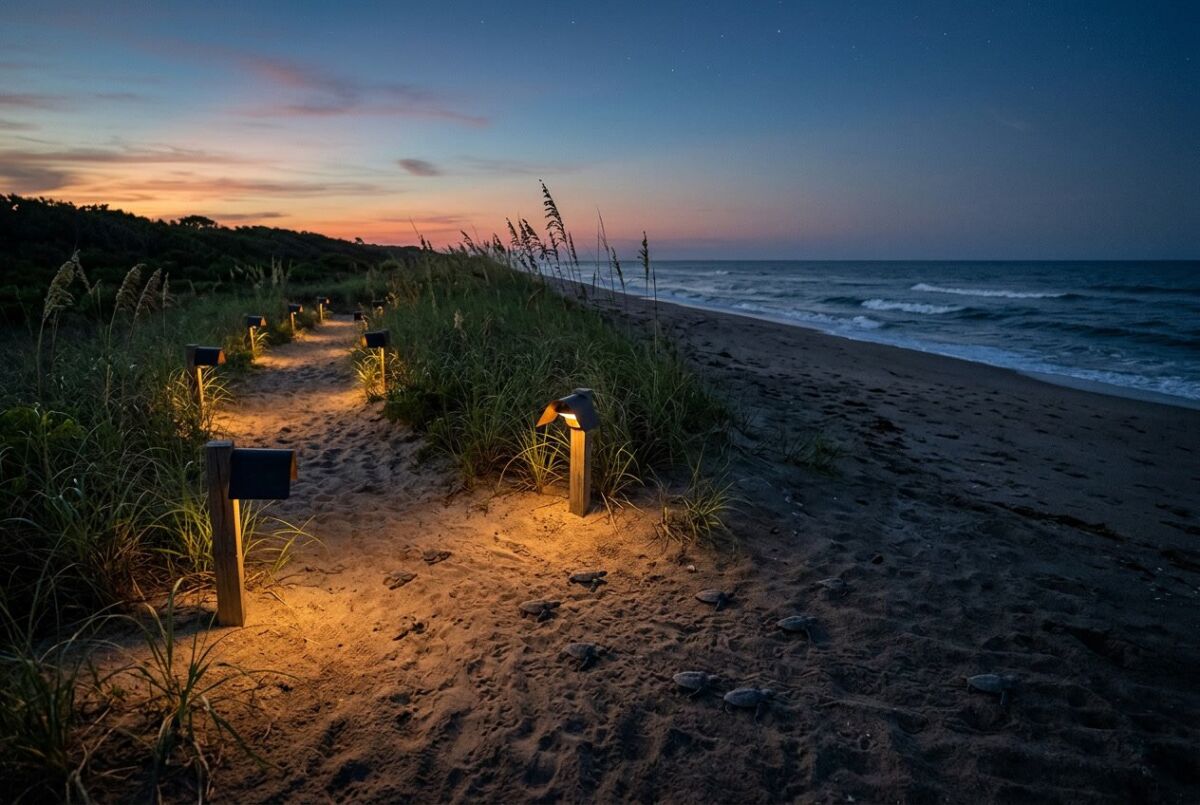
Making your beachfront lights turtle safe means shielding fixtures, swapping bulbs for long-wavelength amber or red LEDs, and hiding lights from the beach. Most fixes are cheap and don’t require a full fixture replacement.
Start by figuring out which lights you actually need for safety and which can just be turned off. Then, use targeted solutions like shields, bulb swaps, window tinting, or even some extra shrubs to meet the rules and keep things secure.
Key Takeaways
- Turtle-safe lighting uses amber or red LEDs, shielding, and smart positioning to keep lights off the beach
- You’ve got to modify or turn off anything visible from the beach during nesting season to stay compliant
- Interior lights need window coverings, tinting, or moving lamps to avoid messing with hatchlings
Why Turtle Safe Beachfront Lighting Matters
Artificial lighting along beaches interrupts sea turtle nesting and creates dangerous situations for hatchlings.
Every year, more than 100,000 adult and hatchling sea turtles in Florida get disoriented because of light pollution on the beach.
Impact of Artificial Light on Sea Turtle Nesting
Adult female sea turtles want dark, quiet beaches for nesting. If your beachfront property glows with bright white light, you might scare away nesting females completely.
Sea turtles have come to these beaches for millions of years, guided by natural moonlight. Now, modern development has changed everything.
When your property lights up the beach, turtles run into barriers that make them search for darker spots or just give up on nesting.
Fewer turtles nest on beaches with artificial light. Some females turn back to the ocean without laying eggs if they run into lit areas.
This behavior directly hurts population recovery for endangered and threatened turtles.
Your lighting choices decide if turtles will even try to nest on your beach. Even light coming from your windows can be enough to scare them off.
How Hatchlings Are Disoriented by Light Pollution
Sea turtle hatchlings chase light sources when they emerge at night. Normally, the moon’s reflection on the ocean guides them to safety.
But artificial lighting from your house, landscaping, or neighbors competes with natural moonlight. Hatchlings instinctively crawl toward the brightest thing they see.
White lights from beachfront homes often outshine the ocean horizon. So, hatchlings head the wrong way.
When hatchlings crawl toward artificial lights, they get lost. They might:
- Circle the beach until they’re exhausted
- Crawl inland toward buildings and roads
- Dry out and get dehydrated
- Get picked off by birds or mammals
- Die from exposure before ever touching the water
Both your outdoor and indoor lighting can cause this. Even lights inside your house, if visible from the beach, can lure hatchlings away from the ocean.
False Crawls and Sea Turtle Mortality
False crawls happen when nesting females come ashore but leave without laying eggs. Beachfront lighting causes a lot of these false crawls by making the area feel unsafe.
Every false crawl drains energy the female needs to reproduce. A turtle might try several times before giving up or finally finding a dark spot.
This wasted energy means fewer eggs and lowers her odds of survival.
Hatchling deaths spike in lit areas. If they crawl toward your lights, they might never make it to the water.
At dawn, they’re still stranded on the sand, facing:
- Traffic on nearby roads
- Daytime predators
- Deadly dehydration and overheating
- Total exhaustion from wandering
When several properties add to the light pollution, the risks multiply. Your lights, combined with your neighbors’, can decide if hatchlings on your stretch of beach survive their first night.
Regulations and Guidelines for Turtle Safe Lighting

If you own property near a sea turtle nesting beach, you’ve got to follow state and local lighting rules. These protect nesting females and hatchlings from getting lost.
The Florida Fish and Wildlife Conservation Commission sets the standards, and local governments enforce them through ordinances tied to building permits and coastal development.
Beachfront Lighting Ordinances and Enforcement
If you live next to nesting beaches, your property probably falls under a lighting ordinance for sea turtle protection. These rules usually kick in during permit reviews for construction, renovation, or coastal projects.
If you need a Coastal Construction Control Line (CCCL) permit or Environmental Resource permit, you have to prove your lighting meets turtle-safe standards. That means modifying, shielding, or swapping out any fixture visible from the beach.
You’ll trigger enforcement if you:
- Build new or renovate
- Apply for a CCCL permit
- Get complaints about visible lights during nesting season
- Get a code compliance inspection
They can fine you or deny your permit if your lighting puts sea turtles at risk. Some areas even require certified wildlife lighting or proof your lights can’t be seen from the beach.
It’s smart to call your local environmental or planning department to check which rules you need to follow. Every county and city can have different requirements.
Role of FWC and Florida Fish and Wildlife Conservation Commission
The FWC has sea turtle lighting guidelines that most Florida ordinances use as a reference. These guidelines spell out what “turtle-safe” actually means.
FWC’s three golden rules: keep lights low, long, and shielded. Low means mount fixtures close to the ground. Long means use bulbs in the amber, orange, or red LED range. Shielded means angle light away from the beach and block it from view.
FWC expects you to:
- Use amber, orange, or red LED bulbs for anything visible from the beach
- Shield lights so you can’t see the bulb from the beach
- Turn off decorative lights during nesting season
- Control interior lighting so it’s not visible outside
You can email [email protected] if you have questions or need technical help. FWC doesn’t hand out permits directly, but they work with local governments to enforce the rules.
Sea Turtle Nesting Season Requirements
Sea turtle nesting season goes from March through October in Florida. During these months, make sure your lights don’t scare off nesting females or confuse hatchlings.
Turn off decorative lights like uplights, string lights, and landscape accents by March 1, and keep them off until October 31. Safety and security lights can stay on if you’ve modified them to meet turtle-safe standards.
During nesting season, remember to:
- Close your window coverings at night to block indoor lights
- Turn off lights in empty rooms facing the beach
- Set pool lights to amber or red if possible
- Use motion sensors on security lights
Indoor white lights are often brighter than anything outside and can cause disorientation events. Put up window tint with 45% or less inside-to-outside transmittance to cut down on light leaks. If you’ve got big glass windows, darker tints around 15% work even better.
Core Principles of Turtle Safe Lighting
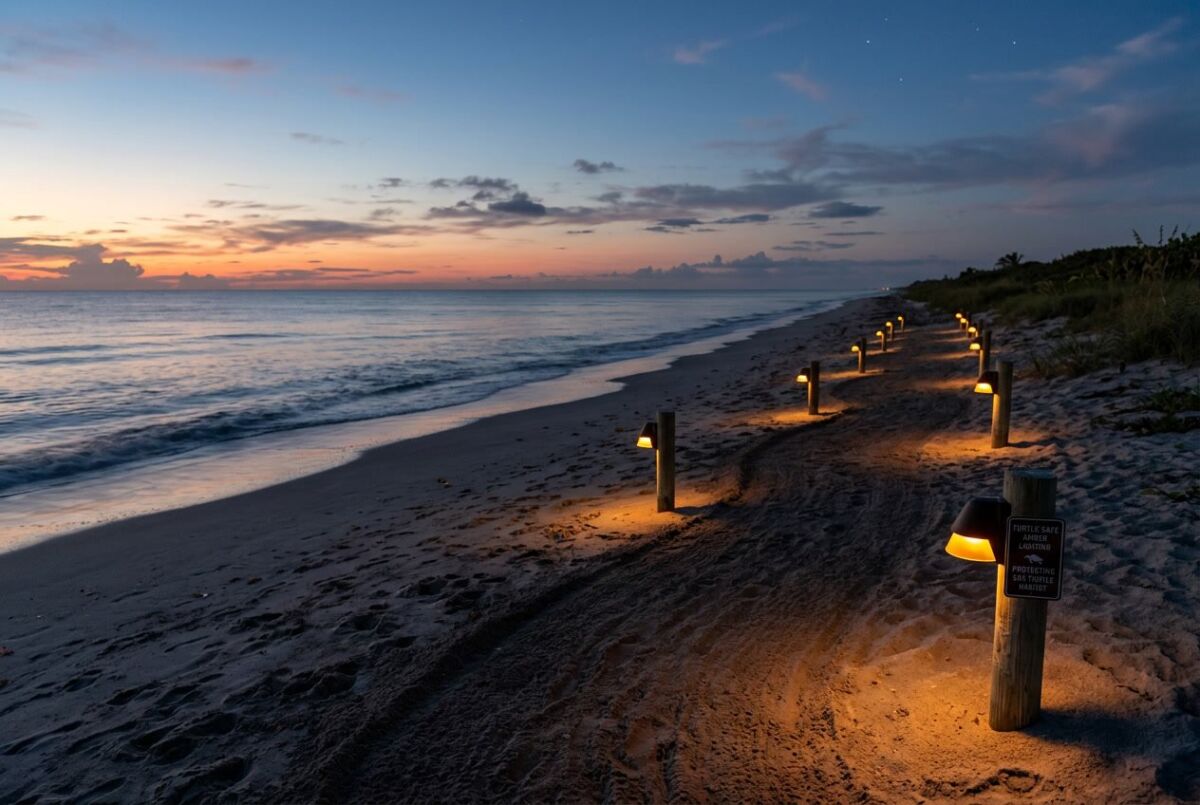
Wildlife lighting for beachfront homes follows three basic rules that keep artificial light from messing with turtle nesting and hatchlings. These principles cover where you put lights, how you contain the glow, and the type of light you use.
Keep It Low: Fixture Height and Placement
Mount your lighting fixtures as close to the ground as you can. Lower fixtures mean less light reaches the beach and fewer turtles notice it.
Install like this:
- Keep fixtures just high enough for the job
- Use the lowest wattage and lumens you need
- Point lights away from the beach
Going lower with wattage also saves you money on energy bills. Lots of properties use way more lumens than they actually need.
By lowering both the height and the brightness, you light up the areas people use without blasting the beach.
Check your coastal construction permits—many places set strict limits on fixture height and lumen output near nesting beaches.
Keep It Shielded: Preventing Visible Light from the Beach
Shielded fixtures use solid covers to block the bulb from view and stop light from spilling onto the beach. This design pushes light down, not out.
Why shield?
- Stops turtles from seeing the light directly
- Focuses brightness where you need it
- Gets more light on the ground without upping the wattage
You need full cutoff fixtures, not just something halfway covered. If you can see the bulb or LED from the beach, it’s not shielded enough.
Top and side shields block upward and sideways light, funneling everything down to your walkways or entryways.
Don’t forget about indoor lighting. Light from your windows can reach the beach, so close your curtains, add window film, and turn off any unnecessary lights in rooms facing the water.
Keep It Long: Proper Light Color and Wavelength
Sea turtles see short wavelengths way better than we do, but they barely notice longer ones—especially those at 560 nanometers or longer.
Pick lights that shine in the amber, orange, or red spectrum.
Here’s what matters:
- Check the spectral data before you buy
- Don’t trust color names alone
- Ask for proof that the peak wavelength is at least 560 nm
Not every amber bulb is truly turtle safe. Some “amber” lights still give off short wavelengths that bother turtles.
Get documentation from the manufacturer showing the real nanometer output.
Red LEDs have the longest wavelengths, but if they’re too bright, they can still bother turtles. The trick is to combine the right color, low intensity, and full shielding.
White flashlights and phone lights are full-spectrum and a big no-no on nesting beaches, even if you’re just out for an evening walk.
Retrofit Strategies for Existing Properties
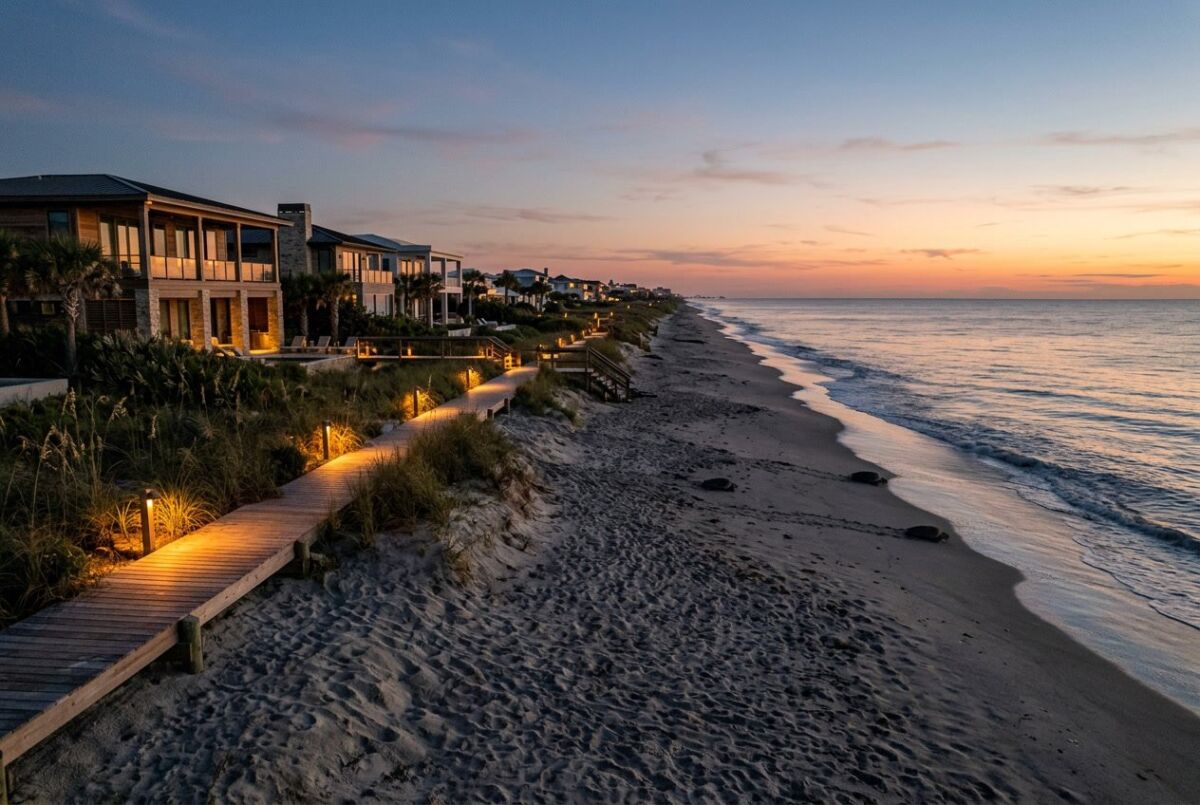
If you want to upgrade your beachfront lighting, start by figuring out which fixtures are a problem for turtle nesting and hatchlings.
Then, tweak your outdoor spaces—balconies, pools, walkways—with solutions that actually work. Don’t forget about indoor light leaking out onto the sand, either.
Identifying and Assessing Problem Lights
Kick things off by grabbing a flashlight and heading outside after dark. Walk your property from the beach side and see what lights you spot shining onto the sand or glowing above the dunes.
You’ll usually find issues with:
- Unshielded fixtures that send light sideways toward the beach
- White or blue-spectrum bulbs (those short wavelengths catch turtle hatchlings’ eyes)
- Upward-facing spotlights for landscaping or architecture
- Motion sensors that blast bright floods at beach access points
The Sea Turtle Conservancy helps with lighting retrofits by targeting properties where turtles get disoriented or where nesting is heavy. You can ask them for an assessment, or just call a local lighting consultant who knows the turtle rules.
Write down where each fixture is, its wattage, color temperature, and whether it’s shielded. In Florida, most counties want you to keep a photometric plan showing the beach light levels don’t top 0.5 foot-candles. Double-check your local threshold before you start shopping for new gear.
Modifications for Balconies, Pools, and Outdoor Spaces
Balcony and patio lights should point away from the beach. Better yet, swap them for amber LED lights with shields. Go for full-cutoff fixtures that only shine downward. If you love string lights, switch to low-wattage amber ones rated 590-600 nanometers.
Pool lights are tricky since safety codes demand a minimum brightness. But you can still protect turtles by:
- Installing recessed lights with turtle-safe lenses
- Using amber bollard lights on busy walkways
- Mounting fixtures low, below deck level, with shields
- Adding motion sensors that turn on only when someone’s nearby
Beachfront owners might get help covering the cost of fixture and bulb swaps through The Sea Turtle Conservancy’s Retrofit Program—as long as you follow the turtle rules.
LEDs are the way to go. Sure, they cost more up front, but LEDs use up to 80% less energy than old-school bulbs and last much longer.
Managing Interior Lights Facing the Beach
Interior lights can cause the worst problems for hatchlings, since windows act like giant lanterns. You’ll need to control this light spill during nesting season, which runs May through October in most coastal spots.
Window treatments are your best friend here. Put up blackout curtains, cellular shades, or exterior shutters on all beach-facing windows and glass doors. Make it a habit to close them after dusk during nesting season.
Tinting is also a solid option—apply amber window film to filter out those short wavelengths. It works year-round and doesn’t need daily attention.
Room-by-room tips:
- Move lamps away from windows
- Use lower-wattage bulbs in rooms facing the beach
- Install dimmers to keep light low at night
- Keep blinds on sliding glass doors closed in the evenings
Some places require motion-activated timers that dim interior lights after a certain hour. Check if your county has those rules for beachfront homes.
Wildlife Lighting Certification and Choosing Products

Getting your lights certified makes life way easier. It proves you’re compliant and gives you a handy list of approved products. The Florida Fish and Wildlife Conservation Commission (FWC) runs the official turtle-safe certification program.
Wildlife Lighting Certification Program Overview
The Wildlife Lighting Certification Program is FWC’s way to review and test lighting products for the coast. Manufacturers send in their fixtures and bulbs, and FWC checks if they meet the right wavelength specs for turtles and wildlife.
If a product passes, it lands on an official list you can use for shopping. The list sorts items by where you’d use them, so it’s pretty straightforward.
Certification focuses on wavelength output. Turtle safe lights can’t emit blue wavelengths under 560 nm—those mess with turtle navigation and nesting.
Check if your area requires FWC-certified products. Some places insist on it, while others just want you to meet the technical specs.
Selecting Fixtures and Bulbs for Compliance
Start with the FWC certified list if your area demands it. Contact manufacturers or distributors directly—these lights aren’t always at your local hardware store.
Look for fixtures marked for coastal wildlife. Many certified products are made in the USA and have ETL safety certification as well as wildlife compliance.
Pick what fits your needs:
- Bollard lights for walkways and paths
- Wall-mounted fixtures for exteriors and doors
- Post-top lights for parking lots and open areas
- Downlights for overhangs and covered spaces
Ask for photometric reports before you buy. These show the light pattern, so you know it’ll work for your spot and stay within the rules.
Keep track of your purchases—model numbers, certification dates, wavelength specs. You’ll want this handy for inspections or future swaps.
Product Labels: Amber, Red, and Orange LEDs
Amber LEDs are the go-to for turtle safe lighting—they emit light above 560 nm and still let you see what you’re doing. Red LEDs are even safer for turtles but can be a bit too dim for detail work.
Orange LEDs sit in the middle—safer than amber, but brighter than red. They’re great for spots that need a little more light.
Wavelength breakdown:
| LED Color | Typical Wavelength | Turtle Safety | Human Visibility |
|---|---|---|---|
| Red | 620-750 nm | Highest | Lowest |
| Orange | 590-620 nm | High | Moderate |
| Amber | 560-590 nm | Adequate | Good |
Always check the label for the actual wavelength, not just the color name. Some “amber” LEDs sneak in lower wavelengths, which isn’t what you want.
Skip bulbs labeled “warm white” or “soft white” unless you see a wavelength spec—these usually have blue light that’ll mess with turtles, even if they look yellow to you.
Swap out non-compliant bulbs right away. Mixing and matching certified with non-certified lights just cancels out your turtle-safe efforts.
Best Practices for Property Owners and Developers

If you own or develop property by the beach, you’ve got to follow the rules to protect nesting turtles. Documentation, staying in touch with local authorities, and taking advantage of educational programs make the whole process smoother.
Developing Turtle Friendly Lighting Plans
Before you swap out or install anything, put together a lighting plan. Head outside at night and spot every light visible from the beach—inside and out, including reflections from pools or shiny surfaces.
Lay out which lights you’ll turn off, modify, or replace. Beachfront lighting plans have to balance safety and turtle protection. Document each fixture’s location, type, and how you’ll change it.
Include:
- Specs for each fixture with Wildlife Lighting Certification
- Shielding and placement details
- Bulb wavelength info (amber, orange, or red)
- Where vegetation buffers go
- How you’ll handle interior lights
Hang on to records—before and after photos, product specs, install dates. If an inspector drops by during nesting season, you’ll be glad you did.
Working with Inspectors and Local Authorities
FWC wants specific lighting fixes for properties near turtle nesting beaches. Contact your local wildlife office before you make changes to make sure your plan checks all the boxes.
Lighting ordinances change from county to county and usually run May 1–October 31. Some places do regular night surveys and note violations by address.
Get a pre-installation review from authorities. It’ll save you from fixing costly mistakes later. You might need to submit plans for Coastal Construction Control Line or Environmental Resource Permits.
If you get flagged for visible lights, fix it fast. Set up a nighttime walk-through with the inspector to pinpoint the problem and agree on a fix. Keep all your emails and notes.
Educational Resources and Community Programs
Retrofit programs can help pay for turtle-friendly lighting. The Sea Turtle Conservancy has grants (thanks, National Fish and Wildlife Foundation!) that cover fixtures and bulbs.
You just pay for installation and upkeep, and get the turtle-safe gear for free. These programs focus on properties within 1,000 feet of conservation land to keep beaches dark for nesting.
Call your county environmental office and ask about programs. Lots of coastal communities offer free consults to spot problem lights and suggest fixes.
Need help? Email [email protected]. The FWC team can look at your photos and give you advice that covers safety and wildlife protection.
Frequently Asked Questions
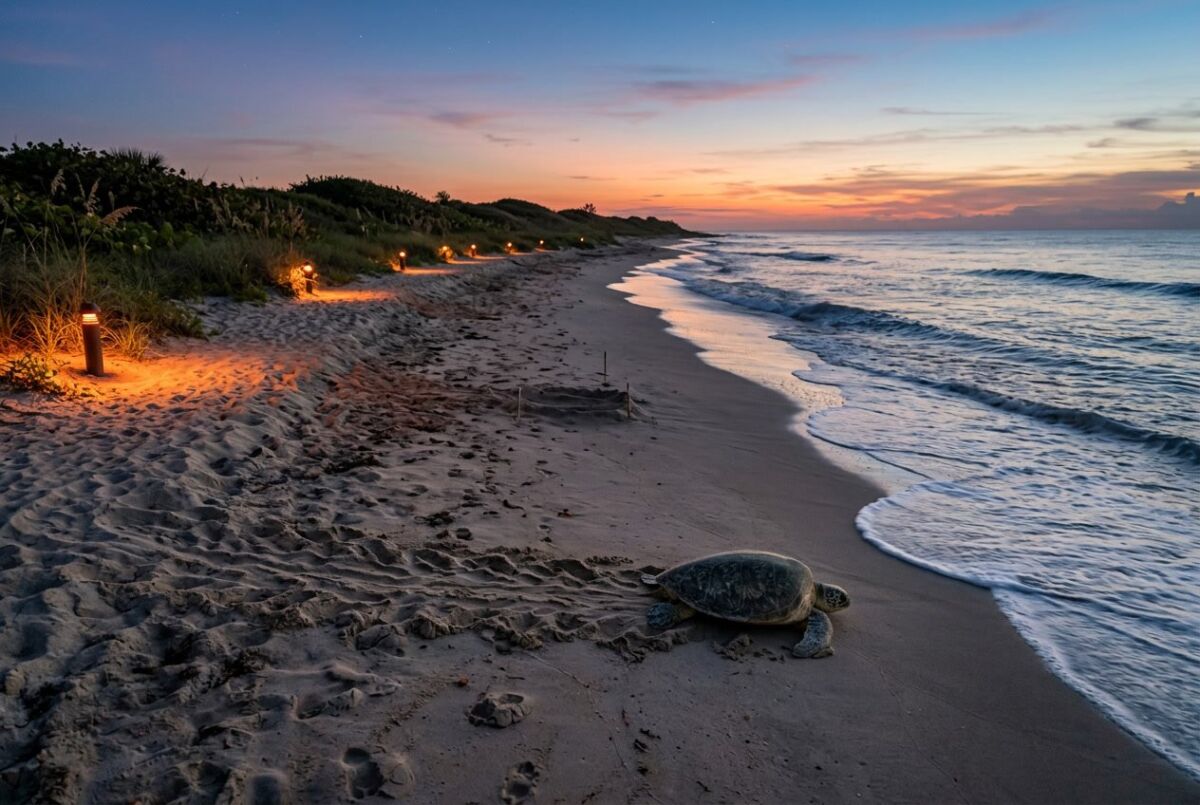
Beachfront property owners always have questions—about products, permits, or just how to keep turtles safe without making the place feel like a cave.
What are the guidelines for installing sea turtle friendly lighting on beachfront properties?
You’ll want to stick to three main rules for beachfront lighting. Sea turtle guidelines say lights should be low, long, and shielded.
Low: Mount fixtures close to the ground to cut down on how far the light travels.
Long: Use bulbs that give off amber, orange, or red light above 560 nanometers.
Shielded: Point lights downward and away from the beach so turtles can’t see them from the nesting area. Only light up the spots you really need for safety.
If you need lights for security, don’t just turn them off—modify them. Use full cutoff fixtures, add shields to utility poles, or swap in amber or red LEDs.
Decorative lights like string lights, uplights, and landscape features? Turn those off completely during nesting season (May 1–October 31).
What are the specific lighting requirements according to the sea turtle lighting ordinance?
It really depends on your county or city. Most places say you can’t have artificial light visible from the beach during nesting season.
If your property is in a regulated zone, you might need a Coastal Construction Control Line permit. Those usually require Wildlife Lighting Certified fixtures or proof of compliance with a lighting survey.
Window tint rules often mean you can’t let more than 45% of interior light out through beach-facing glass. Some buildings with lots of glass need even darker tints—down to 15%.
Security lights might need motion sensors to limit how long they’re on. Some areas set maximum wattages and require full cutoff fixtures for all outside lights.
Call your local environmental office and ask for the exact ordinance for your area. You might need to turn in compliance paperwork before you can get building permits.
How do LED lights impact sea turtles, and are there any turtle-safe options available?
Standard white and blue LEDs mess with both nesting females and hatchlings. Sea turtles spot these wavelengths easily, so the lights actually pull them away from the ocean.
Turtle-safe LED technology uses wavelengths above 560 nanometers. That’s basically amber, orange, or red light—outside the range that bothers turtles.
Wildlife Lighting Certified fixtures go through testing to meet protective standards. You’ll find these as wall packs, path lights, pole lights, and balcony fixtures, and they come in plenty of styles and wattages.
You can swap out regular LED bulbs for long-wavelength versions in most fixtures. Amber and red LEDs are easy to find, they fit standard sockets, and honestly, they still light things up well enough for safety.
Stick to a color temperature of 2200K or lower for that warm amber vibe. Give cool white LEDs over 3000K a hard pass—they’ve got way too much blue light.
What alternative lighting methods can be implemented to prevent disorienting sea turtles on beaches?
Interior light management makes a huge difference right away. At night, just close drapes and blinds, turn off lights in empty rooms, and keep lamps away from windows.
Pool lights can throw off a big glow that bounces off the water. During nesting season, lock them to amber or red settings, or just turn them off when you’re not using the pool.
Vegetation buffers are a great trick. Plant native species between your place and the beach to block light and get some nice landscaping at the same time.
Motion-activated lighting saves the day by cutting down how long lights stay on. Tweak the sensitivity and timer so you’re not lighting up the whole beach every time a crab walks by, but still keep things safe.
Balcony shields keep light on your balcony and off the sand. Pair these with long-wavelength bulbs, though, or you’re not really helping the turtles.
Window film on glass stops interior light from leaking out to the beach. You might want a pro to install it so it actually works and doesn’t bubble or peel off.
Where can I find a turtle safe flashlight, and what are the features to look for?
Turtle safe flashlights use red or amber LEDs instead of harsh white. You can find them from marine conservation groups, outdoor stores, and specialty lighting shops.
Look for flashlights that actually say they’re for sea turtle observation or wildlife viewing. The LED should pump out light at 590 nanometers or higher to stay turtle-friendly.
If you’re in a pinch, slap a red filter on a regular flashlight as a quick fix. Still, dedicated turtle-safe models just work better and you don’t have to worry about filters falling off.
Go for adjustable or naturally dim lights. Even a red light can be way too bright if you crank it up.
Rechargeable models are a smart pick—they cut down on battery waste and you’ll always have a working light. Some coastal communities even hook people up with turtle-safe flashlights at a discount during nesting season.
What precautions should beachgoers take with flashlights during sea turtle nesting season?
Don’t use white flashlights on the beach between dusk and dawn from May through October. Bright, standard flashlights actually confuse nesting females and send hatchlings crawling the wrong way—definitely not what you want.
If you really need some light for safety, grab a red or amber turtle-safe flashlight. Point it right at the ground in front of you, not at the dunes.
Seriously, never shine any light—red or otherwise—directly at a sea turtle. Even the softer red light can mess with their nesting if you aim it at them.
Leave the camera flash at home. Most nesting beaches ban flash photography because that sudden burst of light can make females abandon their nests and leaves hatchlings totally disoriented.
If you spot nesting turtles or hatchlings, let local wildlife officials know. It’s tempting to help, but honestly, people usually end up doing more harm than good.