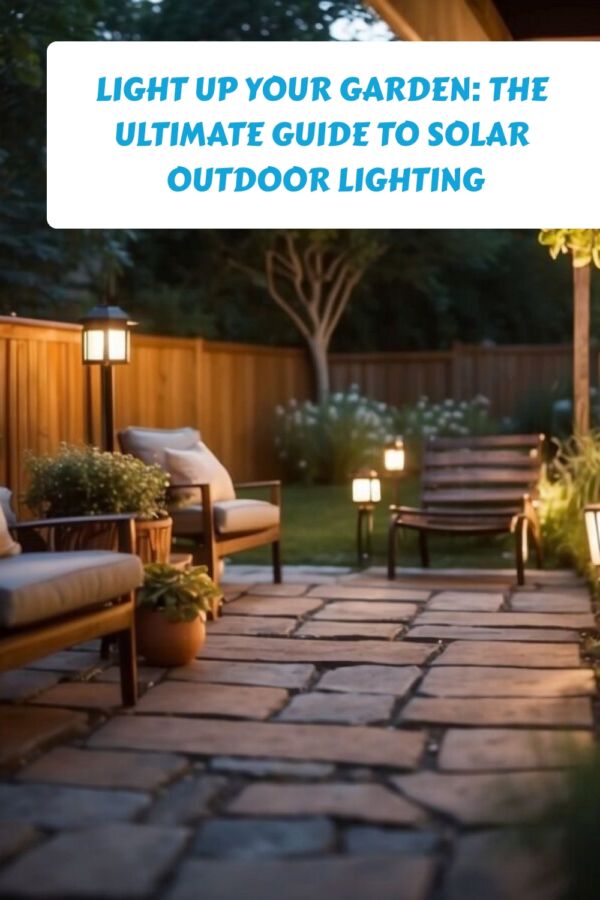
Solar outdoor lighting can provide flexible, wire-free illumination for paths, garden beds, patios, steps, fences, and entrances. It is easy to install and uses no grid electricity while operating, but its brightness and runtime depend on sunlight, panel size, battery capacity, weather, and placement. For stairs, primary security lighting, or other safety-critical areas, a wired system is usually more dependable.
This guide explains how solar lights work, which fixture type fits each job, what lumens and IP ratings mean, how to improve winter performance, and how to avoid glare, waste, and unnecessary light pollution.
Solar outdoor lighting at a glance
- Best uses: path marking, garden accents, patios, fences, sheds, gates, and locations where trenching or wiring would be inconvenient.
- Less suitable for: code-required egress, consistently bright work lighting, and any area where a failed or dim light would create a serious safety risk.
- Most important specifications: lumens, stated runtime at the selected brightness mode, battery type and replaceability, panel size and placement, IP rating, color temperature, beam direction, warranty, and available replacement parts.
- Best night-friendly setup: warm light, downward aiming, the lowest useful brightness, and motion sensors or timers that limit how long the fixture stays on.
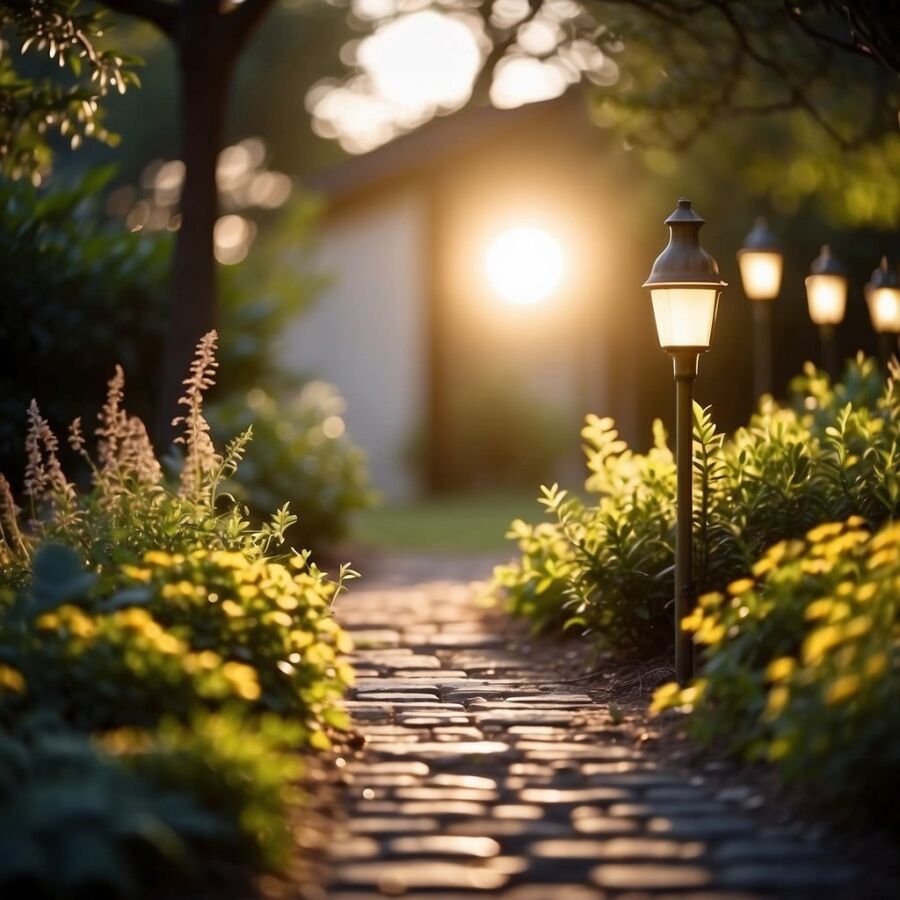
How solar outdoor lights work
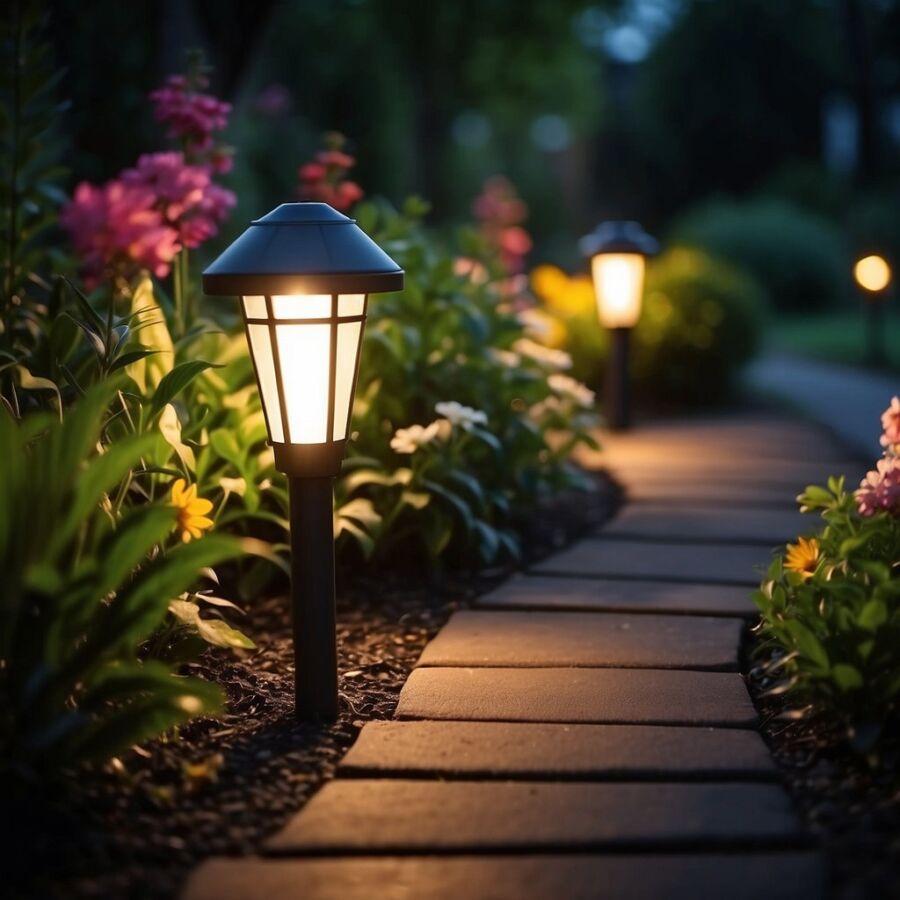
A solar light uses photovoltaic cells to convert sunlight into direct-current electricity. The electricity charges a rechargeable battery during the day, and the battery powers one or more LEDs after dark. The U.S. Department of Energy’s explanation of photovoltaic technology describes the same basic process at a larger scale.
Most outdoor solar fixtures contain four core components:
- Solar panel: captures light and generates electricity. It may be built into the top of the fixture or connected by a cable so it can sit in a sunnier location.
- Rechargeable battery: stores energy for use after sunset. Small garden lights often use replaceable cells, while higher-output units may contain a sealed battery pack.
- LED light source: converts stored electricity into light. LEDs are well suited to small solar systems because they produce useful light with relatively little power. See the benefits and tradeoffs of LED lighting for more context.
- Controller and sensors: manage charging, prevent over-discharge, detect darkness, and activate motion or brightness modes when the product includes them.
What controls brightness and runtime?
The advertised battery capacity is only part of the equation. Nighttime performance also depends on the solar panel’s size and efficiency, the amount of unshaded daylight it receives, the selected brightness mode, LED efficiency, battery age, temperature, and how long the light remains on.
Clouds do not stop all charging because panels can use diffuse daylight, but less solar energy reaches the battery. Season, shade, dust, snow, and other obstructions can also reduce production. The Department of Energy lists season, time of day, clouds, dust, haze, shadows, rain, snow, and dirt among the factors that affect solar energy production.
Are solar outdoor lights worth it?
Solar lights are worth considering when easy installation and placement flexibility matter more than maximum, perfectly consistent output. Their strongest value is often the wiring they eliminate. A small decorative fixture may save only a modest amount of electricity compared with an efficient wired LED, but it can avoid trenching, cables, outlets, transformers, or electrician work.
They are not automatically the most sustainable option in every situation. Panels, batteries, LEDs, housings, and electronics all require materials and eventually reach end of life. A durable fixture with a replaceable battery, repairable parts, and a meaningful warranty is generally a better long-term purchase than a sealed unit designed to be discarded after one component fails.
| Lighting system | Installation | Output and reliability | Best use |
|---|---|---|---|
| Standalone solar | No power cable; usually DIY | Variable because charging depends on site and weather | Remote paths, garden accents, fences, patios, gates, and decorative lighting |
| Wired low-voltage | Transformer and buried or concealed cable | Consistent, controllable output | Permanent path, step, deck, and landscape lighting |
| Mains or hardwired | Often requires an electrician and code-compliant installation | Highest potential output and dependable operation | Primary security, large areas, entrances, and safety-critical lighting |
Advantages
- No grid electricity during operation.
- No trenching or long cable runs for most standalone fixtures.
- Easy to reposition as plants grow or outdoor layouts change.
- Automatic dusk sensing is common.
- Motion modes can reserve stored energy until light is needed.
Limitations
- Runtime and brightness fall when the panel receives insufficient daylight.
- Small integrated panels can be difficult to position when the ideal lighting location is shaded.
- Batteries lose capacity with age and may be difficult or impossible to replace in sealed fixtures.
- Low-cost products may omit useful specifications such as lumens, battery capacity, beam angle, or runtime at full output.
- Decorative solar lights may mark a path without providing enough light for safe footing on uneven ground or stairs.
Types of solar outdoor lights and where to use them
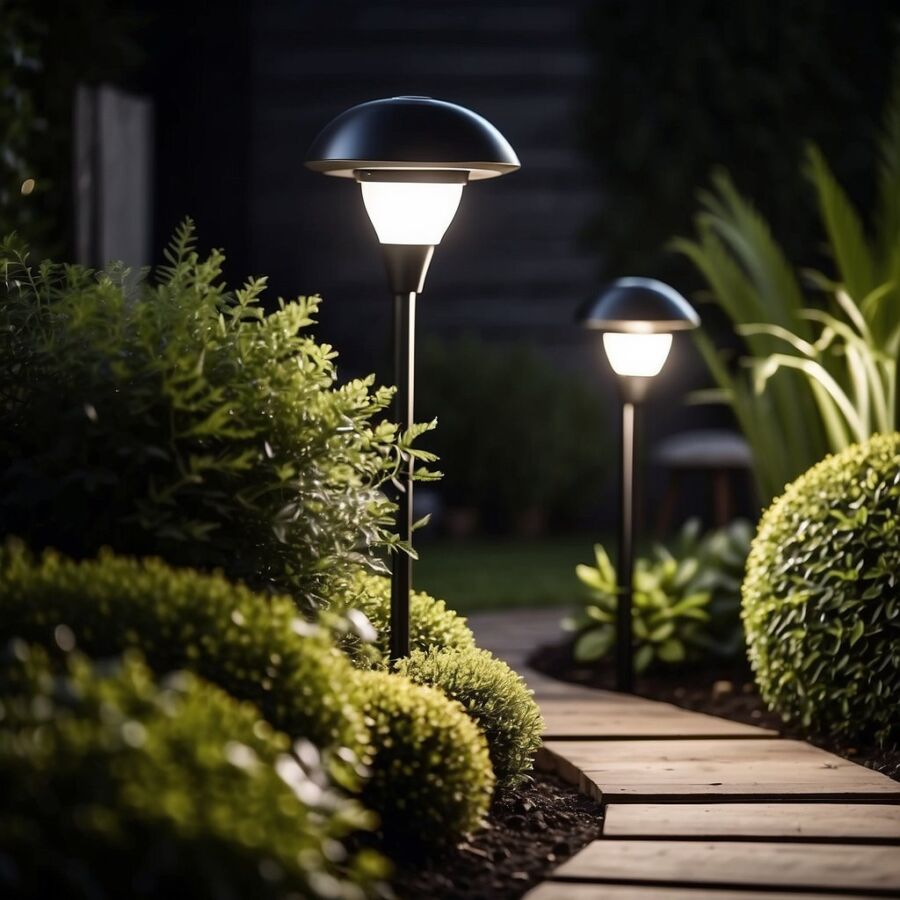
| Fixture type | Best use | What to check |
|---|---|---|
| Path and stake lights | Marking walkways, borders, and driveway edges | Downward beam, glare control, stable stake, spacing, and enough output for the surface |
| Step and deck lights | Changes in level, railings, stairs, and deck edges | Low-profile housing, side shielding, slip and trip risk, and reliable runtime |
| Spotlights and uplights | Trees, walls, signs, sculptures, and garden features | Adjustable head, narrow beam, separate panel option, and aim that does not shine into windows or the sky |
| Wall and motion lights | Doors, gates, side passages, sheds, and driveways | Detection range and angle, activation duration, full-output lumens, panel exposure, and manual override |
| String and fairy lights | Pergolas, fences, balconies, and dining areas | Lit length versus total cable length, panel lead length, bulb spacing, timer, brightness modes, and weather rating |
| Lanterns and table lights | Portable atmosphere for patios and outdoor dining | Stable base, carry handle, manual switch, warm light, and backup charging option |
| Solar lamp posts | Entrances, gates, larger paths, and visual landmarks | Base stability, wind exposure, panel size, replaceable battery, serviceable light head, and realistic output |
For larger entrance fixtures, compare construction, battery access, and mounting requirements in our guide to the best solar lamp posts.
How to choose the right outdoor solar lights
1. Start with the task, not the style
Decide what the light must accomplish after dark. A decorative glow, a visible path edge, a readable house number, a lit doorway, and a motion-triggered driveway are different jobs. The consequence of failure should determine how much reliability and output you need.
For a purely decorative feature, a short runtime or soft output may be acceptable. For steps or an entrance used every night, choose a more dependable fixture, provide overlap between lights, or use a wired system.
2. Compare lumens, not LED count or watt-equivalent claims
Lumens describe visible light output. LED count does not tell you how bright a fixture will be, and wattage describes power use rather than brightness. Also check whether the stated lumen figure applies to the normal mode, the motion-activated boost mode, or only a brief maximum setting.
| Use | Practical starting range | What the range is meant to do |
|---|---|---|
| Decorative markers and fairy lights | About 1–20 lumens per light point | Create atmosphere or show an edge; not dependable task lighting |
| Path and step lights | About 10–100 lumens per fixture | Reveal nearby surfaces and changes in direction without excessive glare |
| Accent spotlights | About 100–300 lumens | Highlight a small tree, sign, wall section, or garden feature |
| Patio, wall, and close-range task lighting | About 300–700 lumens | Provide more useful visibility around seating, doors, grills, or work areas |
| Motion and flood lighting | About 700–1,300 lumens for a small area; 2,000 or more for broader coverage | Illuminate a driveway, yard section, or entrance for a limited period |
A modest, well-aimed light can make a path easier to read than a brighter fixture that shines into the user’s eyes. For larger or safety-sensitive projects, evaluate the actual nighttime result instead of relying on packaging alone.
3. Evaluate the solar panel and available daylight
Look at the installation site during the season when you need the light most. A location that receives strong summer sun may be shaded in winter by a building, evergreen tree, fence, or lower sun angle. Panel orientation also matters, although avoiding shade is usually more important than chasing a perfect compass direction on a tiny fixture.
An adjustable or separate solar panel is useful when the light belongs under an eave, beside a shaded gate, or beneath a tree. The panel can remain in an open location while the fixture illuminates the darker area. For a deeper explanation, see how solar panel direction and tilt affect energy collection.
4. Check battery capacity, runtime, and replaceability
Runtime claims are useful only when the test conditions and brightness mode are clear. A product may advertise “up to 12 hours” while producing its brightest output for a much shorter period or dimming automatically as the battery falls.
- Look for runtime at the mode you expect to use, not only a maximum figure.
- Prefer a replaceable battery with its chemistry and voltage clearly labeled.
- For year-round use, favor a larger panel and battery rather than relying on a high-output claim from a very small housing.
- A USB charging option can be useful for string lights, lanterns, and high-latitude winters, but it changes the product from fully solar-dependent to dual-charge.
- Never substitute a disposable alkaline cell for a rechargeable battery unless the manufacturer explicitly permits it.
5. Match the IP rating to exposure
The IP code defined by IEC 60529 describes how an enclosure resists solid particles and water. The International Electrotechnical Commission’s IP ratings overview explains the two-digit system. An IP rating does not override the manufacturer’s installation limits, and weather resistance is not the same as permanent submersion.
| Common rating | Typical interpretation | Suitable placement |
|---|---|---|
| IP44 | Protected against small solid objects and splashing water | Sheltered walls, covered patios, and decorative string or hanging lights when the product instructions allow |
| IP65 | Dust-tight enclosure with protection against water jets | Exposed paths, walls, garden beds, and many year-round residential locations |
| IP67 | Dust-tight enclosure with protection against temporary immersion under specified test conditions | Very exposed or low-mounted locations; not automatically approved for ponds or permanent underwater use |
Also inspect materials and construction. UV-resistant plastic, powder-coated aluminum, stainless steel fasteners, protected switches, drainage, and replaceable seals can matter more over time than a decorative finish.
6. Choose warm color, a useful beam, and low glare
Color temperature is measured in kelvins. Warm white light usually falls around 2200K to 3000K, while cool white products may be 4000K to 6500K. Higher color temperature does not automatically mean higher brightness.
For most residential gardens, DarkSky recommends 2700K or lower as a night-friendly target. Warm light is generally less harsh, and it contains less short-wavelength blue light than cool white. Use shielding and aim the beam downward so light lands on the path, step, sign, or plant rather than in a neighbor’s window or the sky.
7. Compare controls and motion-sensor behavior
- Dusk-to-dawn mode: convenient, but it consumes stored energy for the entire night.
- Motion-only mode: preserves battery capacity and reduces unnecessary lighting.
- Dim-to-bright mode: keeps a low background level and raises output when motion is detected.
- Timer: useful for patios and string lights that do not need to remain on until morning.
- Adjustable sensitivity and duration: helps prevent activation by traffic, branches, pets, or neighbors.
- Manual off switch: useful during storage, storms, wildlife-sensitive periods, or extended charging.
8. Favor products that can be maintained
A replaceable battery, accessible fasteners, available replacement panels or light heads, clear instructions, and a multi-year warranty are stronger quality signals than a long list of lighting modes. Check whether the warranty covers the battery and solar panel or only the housing.
How to install solar outdoor lighting
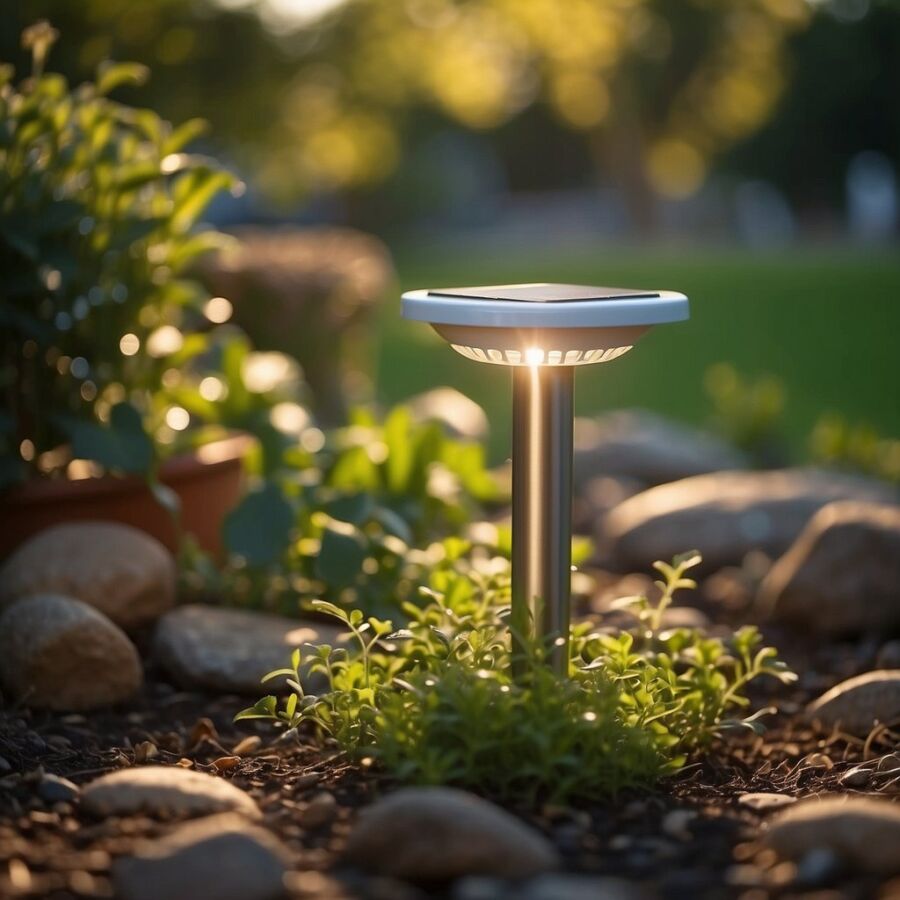
- Observe the site before mounting anything. Note shade at several times of day and consider how trees, buildings, and the winter sun will change exposure.
- Read the initial-charge instructions. Remove any protective film or battery tab, set the switch as directed, and allow the specified charging period before judging performance.
- Test the fixture temporarily. Use removable tape, a clamp, or an unburied stake position for the first night so you can check beam direction, glare, sensor activation, and dark spots.
- Keep the panel clear. Avoid eaves, dense foliage, roof runoff, sprinkler spray, and locations where snow or leaves will regularly cover the panel.
- Mount securely. Use the supplied hardware on a sound surface. Do not force plastic stakes into hard soil; make a pilot hole first to avoid snapping them.
- Aim light downward and away from eyes. Illuminate the walking surface or feature, not the sky, adjacent bedrooms, or approaching drivers.
- Set the lowest useful mode. Start dim and increase only when the real nighttime task requires it.
- Recheck after a week. Adjust for actual battery performance, motion triggers, plant shadows, and how people move through the space.
Pathways and steps
Place path lights outside the walking surface so stakes and housings do not create trip hazards. Staggered spacing often looks more natural, but the beam pattern should still reveal turns, edges, uneven paving, and changes in level. Steps need dependable, overlapping illumination; a row of very dim decorative stakes is not a substitute for proper step lighting.
Patios, pergolas, and string lights
Check the distance from the panel to the first bulb before buying. A long string is not useful if the short panel lead forces the panel into shade. Keep cable tension off branches and fasteners, use outdoor-rated supports, and avoid placing bulbs where doors, umbrellas, or people will strike them.
Spotlights and garden accents
Use one focused beam to reveal a trunk, wall texture, sign, or sculpture rather than lighting an entire planting bed. Aim from above or at a shallow downward angle when possible. Avoid leaving bright uplights pointed into tree canopies all night.
Motion lights for entrances and driveways
Mount the sensor where approaching people cross its detection zone instead of walking directly toward it. Test the range from the actual route, then shorten the activation time and reduce sensitivity if passing cars, moving branches, or animals trigger the light. Motion lighting can improve visibility, but it is not a complete security system and should not be treated as proof that a property is protected.
Use outdoor lighting without harming the night
Solar power does not make unnecessary nighttime lighting impact-free. Artificial light can affect insects, birds, bats, plants, and other wildlife. The U.S. Fish and Wildlife Service notes that artificial light can attract, disorient, or deter nocturnal pollinators and disrupt nighttime pollination.
DarkSky International’s five principles for responsible outdoor lighting provide a practical framework:
- Useful: install light only where it serves a clear purpose.
- Targeted: shield and aim the beam so it stays within the intended area.
- Low level: use no more brightness than the task requires.
- Controlled: use motion sensors, timers, dimming, or manual shutoff.
- Warm-colored: limit blue-rich light and favor warm or amber tones.
This approach usually improves the human experience too. Lower, better-directed light reduces glare, preserves views beyond the lit area, and makes changes in texture and level easier to see.
Creative solar lighting ideas that still serve a purpose
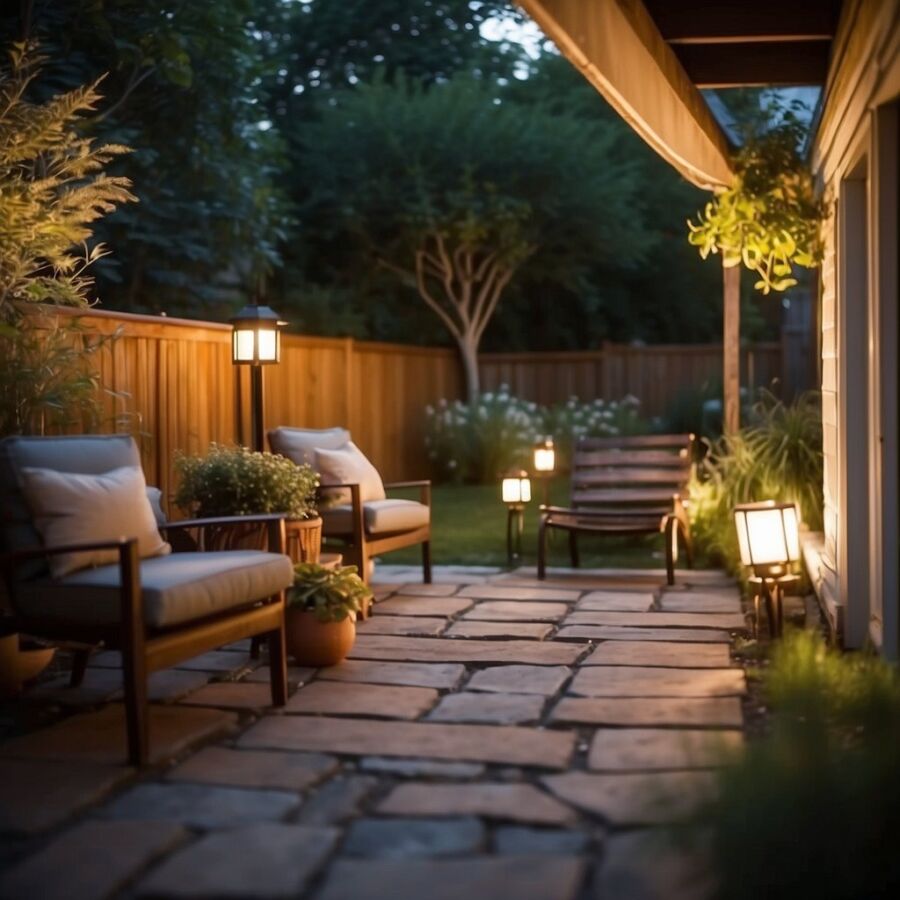
Layer light by job
Use one layer to mark movement, another to support seating or dining, and a third to highlight a single feature. Keeping each layer modest produces better depth and less glare than trying to light the whole yard with one floodlight.
Mark transitions, not every inch of a path
Prioritize gates, turns, steps, changes in surface, and path intersections. Straight, level sections may need fewer fixtures if adjacent light already provides enough visibility.
Use portable lanterns for occasional gatherings
A portable solar lantern can add light to a table only when the space is occupied. It can then be switched off or moved indoors instead of creating permanent overnight illumination.
Treat a lamp post as a landmark
A solar lamp post can identify an entrance or path junction without a trench to the electrical supply. Choose a restrained output, stable base, downward or diffused light distribution, and a serviceable battery rather than the largest fixture available.
Do solar outdoor lights work in winter and cloudy weather?
Solar lights can work in winter and under cloudy skies, but expect shorter or less consistent runtime. Winter combines shorter days, a lower sun angle, more frequent cloud cover in many climates, possible snow or debris on the panel, and lower available battery capacity in cold conditions.
Use these steps to improve cold-season performance:
- Move or angle the panel toward the clearest available winter sky.
- Trim seasonal shading and remove leaves, dirt, frost, or snow without scratching the panel.
- Use motion-only or dim-to-bright mode instead of full output all night.
- Choose a model with a larger separate panel, larger battery, and clear low-temperature operating range.
- Reduce decorative operating hours with a timer.
- Use a dual solar-and-USB product when dependable winter use matters but wiring is still undesirable.
If a location receives little winter daylight, a wired low-voltage fixture may be more reliable than repeatedly replacing underpowered solar units.
Maintenance and troubleshooting
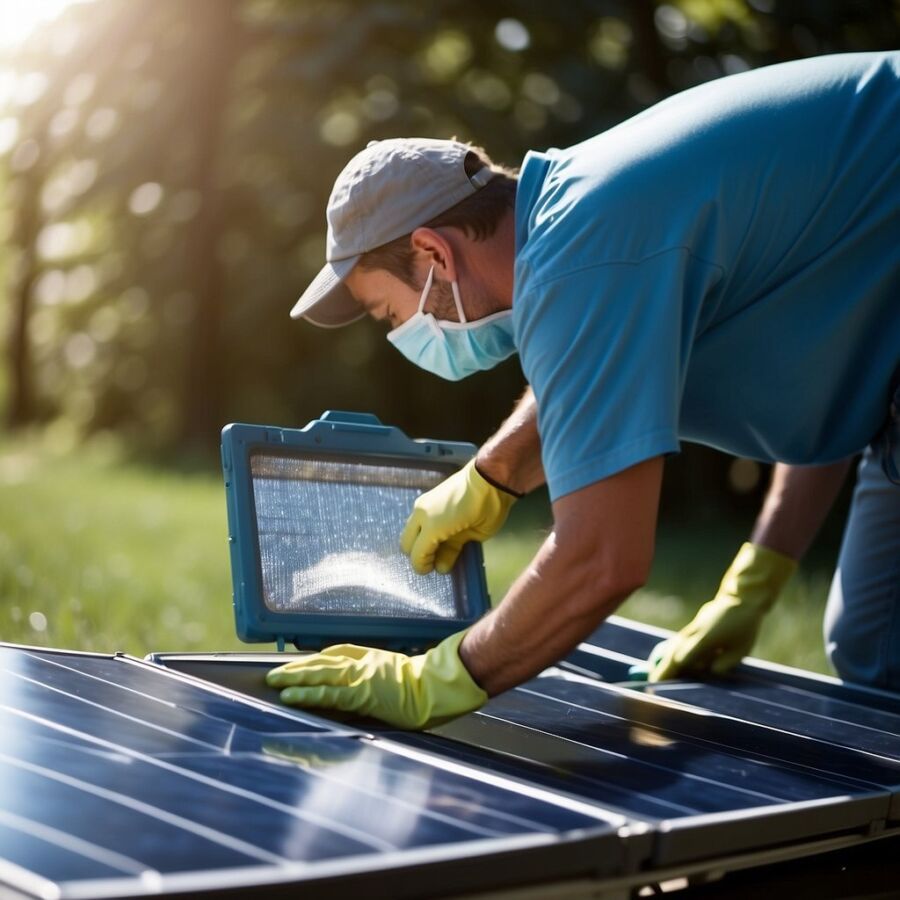
Simple maintenance schedule
| When | What to do |
|---|---|
| Monthly during heavy use | Check panel cleanliness, fixture angle, plant growth, loose mounts, water pooling, and motion-sensor behavior. |
| After storms or seasonal change | Remove debris, inspect seals and housings, confirm the panel still receives daylight, and reset any shifted stakes or heads. |
| When runtime drops | Clean the panel, test in a sunnier position, confirm the switch and mode, allow a full recharge, then assess the rechargeable battery. |
| Before storage | Switch the light off, clean and dry it, follow the battery instructions, and store it where the housing and battery will not be exposed to damaging temperatures. |
Why a solar light may stop working
| Symptom | Likely cause | What to try |
|---|---|---|
| Never turns on | Switch is off, battery tab remains, battery is empty, or nearby light is hitting the photocell | Check setup instructions, cover the panel to test darkness, move away from other lights, and charge fully |
| Dim or short runtime | Shade, dirty panel, winter conditions, high-output mode, or aging battery | Clean and reposition the panel, reduce the mode, remove obstructions, and replace the battery with the specified type if allowed |
| Motion light activates constantly | Traffic, branches, heat sources, pets, or excessive sensitivity | Change the sensor angle, clear moving vegetation, reduce sensitivity, and shorten the activation period |
| Water inside the housing | Damaged seal, loose cover, cracked plastic, or unsuitable installation angle | Switch off, stop using the fixture, dry only as the manufacturer directs, and replace damaged parts or the unit |
| Only one unit in a set fails | Local shade, poor connection, failed cell, or defective battery | Swap locations with a working unit to separate a site problem from a product problem |
Replace batteries only with the chemistry, voltage, size, and orientation specified by the manufacturer. Do not use a swollen, leaking, crushed, or overheated battery. In the United States, the U.S. Environmental Protection Agency’s battery guidance says rechargeable batteries should not go in household trash or municipal recycling bins; use a participating retailer, battery recycler, electronics recycler, or local hazardous-waste program as appropriate.
For a larger off-grid lighting or power need around an outbuilding, a dedicated system may be more appropriate than multiple tiny fixtures. Our guide to solar panels for sheds explains that broader approach.
Solar outdoor lighting buying checklist
- The fixture type matches a defined task.
- The lumen output and beam pattern suit the area.
- Runtime is stated for the mode you plan to use.
- The panel can receive sufficient unshaded daylight in the relevant season.
- The battery chemistry, capacity, and replacement process are documented.
- The IP rating and materials suit the actual exposure.
- The color temperature is warm, ideally 2700K or lower for most garden settings.
- The light can be aimed downward and shielded from neighbors and the sky.
- Motion, timer, or dimming controls reduce unnecessary operating time.
- The product has a useful warranty and accessible replacement parts.
- The seller provides real dimensions, mounting instructions, and support.
- You have a responsible battery and product recycling plan for end of life.
Frequently asked questions
Do solar outdoor lights need direct sunlight?
They can charge from diffuse daylight, but direct, unshaded sun usually produces longer runtime and higher brightness. Shade, clouds, short winter days, snow, and dirt reduce the energy available to the battery.
How long do solar lights stay on at night?
Runtime varies by product, season, charging conditions, battery age, and brightness mode. Treat an “up to” claim as a best-case figure and look for runtime at full output or in the exact mode you plan to use.
Do solar outdoor lights work in winter?
Yes, but many run for fewer hours because winter brings shorter days, lower sun angles, more shade, and colder batteries. A larger panel and battery, motion-only mode, clean panel, and open winter-sun location improve performance.
What IP rating is best for outdoor solar lights?
IP44 can suit sheltered decorative fixtures, while IP65 is a stronger starting point for exposed garden and wall lights. IP67 offers greater water protection, but it does not automatically make a product suitable for permanent underwater use.
Can rechargeable batteries in solar lights be replaced?
Some can and some cannot. Check the manual before opening the housing, and replace a battery only with the specified chemistry, voltage, and size. A replaceable battery is a useful durability feature.
Why are my solar lights not working?
Common causes include an off switch, shipping tab, empty or aging battery, shaded or dirty panel, nearby light confusing the dusk sensor, water damage, or a failed connection. Test the light after a full charge in an open sunny location.
Are solar garden lights bad for wildlife?
They can affect wildlife if they are bright, blue-rich, upward-facing, or left on all night. Use warm light, aim it downward, keep output low, and add motion sensors or timers so the light operates only when needed.
Final verdict
Choose solar lighting for places where wire-free installation, low operating energy, and flexible placement are the main priorities. Buy by task, lumens, panel exposure, battery serviceability, IP rating, beam control, and warranty—not by LED count or exaggerated all-night claims.
For a dependable result, use warm, downward-directed light only where it is needed, test the layout after dark, and treat solar fixtures as one option within a broader outdoor lighting plan. For portable charging rather than fixed illumination, compare the best solar power banks.