
Electric scooters are worth considering for short, predictable trips when local rules permit them, your route has safe pavement or bike infrastructure, and you have secure storage. They are less suitable for long journeys, rough or wet roads, carrying passengers or substantial cargo, or riders who cannot balance and brake confidently.
The main benefits are low operating costs, compact dimensions, convenient first- and last-mile travel, and no tailpipe exhaust. The main drawbacks are crash risk, limited real-world range, weather sensitivity, theft, changing local regulations, and the need to charge a lithium-ion battery safely.
- Best use: Short urban commutes, errands, and trips between home and public transportation.
- Poor use: Long journeys, high-speed roads, badly surfaced routes, heavy rain, or carrying another person.
- Most important buying checks: Local legality, braking performance, real-world range, tire type, total weight, repair support, water-resistance guidance, and electrical safety certification.
- Most important safety rule: Wear a helmet, ride predictably, inspect the scooter before each trip, and use only a charger approved for that model.
What Is an Electric Scooter?
In this guide, an electric scooter means a two-wheeled, stand-up electric kick scooter with a deck, handlebars, rechargeable battery, controller, motor, brakes, and relatively small wheels. The rider stands on the deck and controls acceleration and braking from the handlebars.
This category does not include seated electric mopeds, mobility scooters, electric bicycles, or self-balancing hoverboards. Those products have different designs, operating characteristics, safety concerns, and legal classifications.

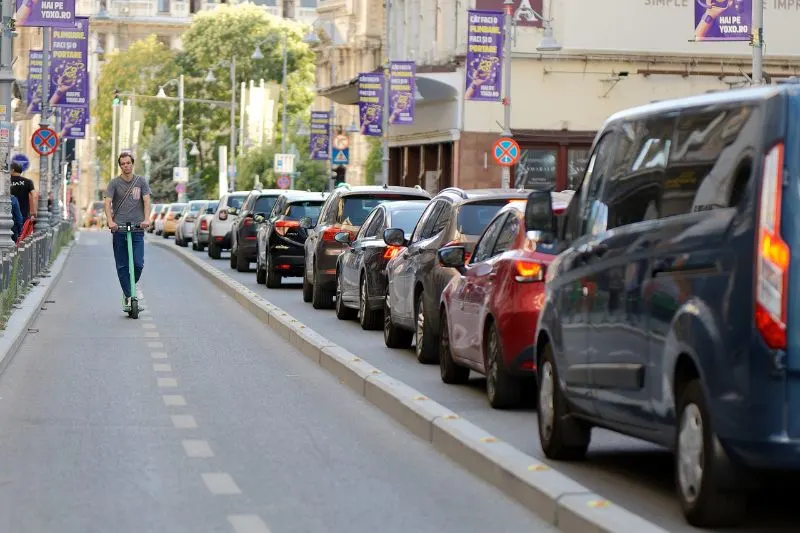
Electric Scooter Pros and Cons at a Glance
| Question | Electric scooter assessment |
|---|---|
| Are they convenient? | Yes, particularly for short journeys and connections to transit. |
| Are they cheap to run? | Charging and routine operating costs are generally low, but battery, tire, brake, and repair costs still matter. |
| Are they environmentally friendly? | They produce no tailpipe exhaust, but manufacturing, electricity, lifespan, and the trip they replace determine their lifecycle benefit. |
| Are they safe? | They can be used responsibly, but small wheels, limited rider protection, motor-vehicle exposure, and poor surfaces create material risks. |
| Can they replace a car? | For some short solo trips, yes. They cannot replace a car for most long-distance, family, cargo, or all-weather journeys. |
| Are they legal everywhere? | No. Permitted speeds, locations, ages, helmets, licensing, and insurance rules differ by jurisdiction. |
7 Advantages of Electric Scooters
1. They Are Efficient for Short Urban Trips
An electric scooter can be useful when a journey is too far to walk but too short to justify driving. It can reduce the time spent looking for parking and may provide a more direct route where protected bike lanes or micromobility corridors are available.
This benefit is route-dependent. A scooter does not automatically make a trip faster if the rider must use congested mixed-traffic roads, dismount frequently, or avoid prohibited areas.
2. Charging and Operating Costs Can Be Low
Electric kick scooters use much smaller batteries than electric cars. For a private owner, the electricity needed for routine charging is normally a minor expense compared with fuel, parking, registration, and many of the operating costs associated with a car.
Low energy cost does not mean ownership is cost-free. Tires, brake components, bearings, damaged folding mechanisms, batteries, controllers, and labor can become expensive—especially when a brand does not sell replacement parts locally.
3. Many Models Are Compact and Foldable
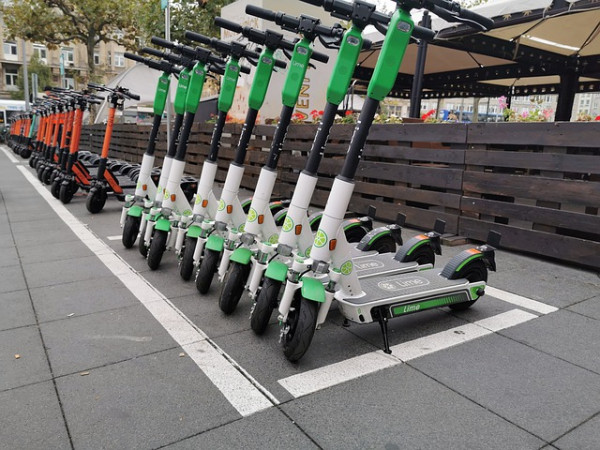
A folding stem can make a scooter easier to store in an apartment, office, garage, or vehicle. Compact storage is a meaningful advantage where bicycle parking is unavailable or theft is common.
Do not assume that “foldable” means easy to carry. Some commuter and performance scooters are heavy enough to make stairs, train transfers, and frequent lifting impractical. Check the complete product weight and test whether you can carry it safely before buying.


4. They Produce No Tailpipe Exhaust
An electric scooter does not burn gasoline while it is being ridden, so it produces no tailpipe carbon dioxide, nitrogen oxides, or exhaust particulates at street level. Replacing a short solo car trip with a durable scooter can therefore reduce direct fuel use and local exhaust emissions.
That does not make every scooter trip “zero emission.” Battery production, frame manufacturing, shipping, electricity generation, repairs, collection vehicles for shared fleets, and end-of-life disposal all contribute to environmental impact. The wider relationship between climate change and transportation choices requires considering the entire lifecycle.


5. They Can Solve the First- and Last-Mile Problem
A scooter can connect a home or workplace with a train station, bus stop, or parking facility. This can make public transportation practical for people whose origin or destination is beyond comfortable walking distance.
Before relying on this strategy, confirm that the transit operator allows scooters and check restrictions on battery-powered devices, folded dimensions, peak-hour travel, and storage.
6. The Basic Controls Are Relatively Simple
Most models use a thumb or finger throttle, one or two brake controls, and a display showing speed and battery level. The operating concept is straightforward, and a new rider can practice starting, stopping, turning, and signaling in a traffic-free area.
Simple controls should not be confused with risk-free operation. Smooth emergency braking, shoulder checks, low-speed balance, pothole avoidance, and interaction with traffic require judgment and practice.
7. Routine Maintenance Is Simpler Than on a Combustion Vehicle
An electric scooter has no engine oil, exhaust system, spark plugs, fuel pump, or multi-speed transmission. Routine ownership normally centers on tires, brakes, fasteners, cables, bearings, the folding mechanism, lights, and battery care.
Maintenance should not be described as “next to none.” Brakes can wear, pneumatic tires can puncture, solid tires can reduce ride comfort, and water or impact damage may affect electronic components. Parts availability and local service support should be evaluated before purchase.
8 Disadvantages of Electric Scooters
1. Falls and Collisions Can Cause Serious Injuries
Electric scooters provide little physical protection. Their relatively small wheels can react abruptly to potholes, curbs, loose gravel, wet leaves, cracks, drainage grates, and other surface defects. Riders are also less visible than cars and may be exposed to turning or passing motor vehicles.
In its September 2024 micromobility report, CPSC staff estimated 209,600 U.S. emergency-department visits associated with e-scooters from 2017 through 2023. The agency identified motor-vehicle collisions and loss-of-control incidents as leading hazards in reported e-scooter fatalities.
A helmet, working lights, conservative speed, both hands on the handlebars, and suitable riding infrastructure reduce avoidable risk, but they cannot remove it.
2. Advertised Range May Not Match Real-World Range
Manufacturers normally calculate range under controlled conditions. Hills, wind, cold temperatures, frequent acceleration, higher speeds, low tire pressure, rider weight, carried cargo, battery age, and stop-and-go traffic can all reduce usable distance.
Do not buy a scooter whose claimed maximum range only just covers your planned round trip. Leave a substantial reserve and look for independent testing performed at realistic rider weights and speeds.
3. Small Wheels and Bad Weather Limit Where You Can Ride
Rain can reduce tire grip, increase stopping distance, hide potholes, and affect visibility. Snow, ice, deep standing water, mud, and loose surfaces can make a normal commuter scooter unsafe or unsuitable.
An ingress-protection rating does not automatically mean a scooter is approved for heavy rain, deep puddles, or immersion. Follow the manufacturer’s operating limits and warranty conditions. A scooter marketed for urban commuting should not be treated as an off-road vehicle merely because it has wider tires or suspension.
4. Laws Differ Between Countries, States, and Cities
There is no universal rule governing electric scooter use. A jurisdiction may regulate rider age, helmet use, top speed, motor power, licensing, insurance, lighting, sidewalk access, bike-lane use, parking, or whether privately owned scooters may be used on public roads at all.
The CPSC advises riders to check local traffic laws because permitted riding locations and helmet requirements vary by community. Verify rules with the relevant transportation department or local authority rather than relying on a retailer’s product page.
5. Lithium-Ion Batteries Require Careful Charging
A well-designed battery and compatible charging system can provide reliable service, but damaged, modified, poorly manufactured, or incorrectly charged batteries can overheat and ignite.
CPSC has specifically warned against unapproved “universal” micromobility chargers. A connector may physically fit while supplying unsuitable voltage, current, or charging communication. The agency received 156 reports of fire and thermal incidents involving universal chargers between January 1, 2023, and May 16, 2024.
Use the original charger or a replacement explicitly tested and approved for the scooter. Do not charge while sleeping, block an exit with a charging scooter, use a swollen or damaged battery, or discard a lithium-ion battery in household trash.
6. Theft and Secure Storage Are Ongoing Problems
A scooter is valuable, portable, and often easier to remove than a bicycle secured through a full-size frame. Electronic locking, alarms, and location tracking can deter theft, but they are not substitutes for a physical lock and secure storage.
Check whether the frame provides a practical locking point. Whenever possible, store the scooter indoors without obstructing hallways or emergency exits. Confirm building rules before charging or storing a scooter in an apartment, dormitory, workplace, or shared garage.
7. Passenger and Cargo Capacity Is Limited
Most electric kick scooters are designed for one rider. Carrying a passenger changes balance, increases stopping distance, obstructs control, and may exceed the rated load. CPSC recommends one person per scooter.
The manufacturer’s load rating includes the rider, backpack, locks, groceries, and any attached accessories. Hanging bags from the handlebars can interfere with steering. Riders who regularly carry children, large grocery loads, work equipment, or luggage should consider a cargo bicycle, public transportation, or another vehicle designed for that purpose.
8. They Provide Little Exercise and Can Become Uncomfortable
Unlike walking or riding a conventional bicycle, standing on a powered scooter contributes little sustained physical activity. Replacing an active trip with a scooter trip may therefore reduce daily movement.
Longer rides can also cause hand, foot, knee, or back discomfort, particularly on rigid models with small solid tires and no suspension. A standing scooter is not automatically suitable for someone with impaired balance, limited grip strength, joint problems, or difficulty reacting quickly.
Are Electric Scooters Environmentally Friendly?
An electric scooter can be a lower-impact transport choice when it is durable, used frequently, maintained for a long service life, charged responsibly, and used instead of a car or ride-hailing trip. It is less environmentally beneficial when it replaces walking, cycling, or an efficient public-transit journey.
Lifecycle research on shared and private micromobility indicates that manufacturing and total lifetime mileage are major factors. A short-lived scooter spreads its production impact across relatively few trips, while a repairable scooter used for years distributes that impact over considerably more travel.
The electricity mix also matters, although the battery is far smaller than an electric-car battery. Shared fleets may incur additional emissions from collecting, charging, repairing, and redistributing vehicles. Private ownership avoids some fleet operations but can still create waste if a poorly supported model becomes unrepairable after a minor component failure.
For a more credible environmental purchase:
- Use the scooter primarily to replace car trips rather than walking or cycling.
- Choose a model with available tires, brake parts, batteries, and repair documentation.
- Avoid unnecessary performance, weight, and battery capacity that do not serve your route.
- Maintain tire pressure and brakes so the scooter remains efficient and safe.
- Recycle the battery through an approved battery or hazardous-waste program.
This lifecycle approach is more accurate than describing any battery-powered vehicle as automatically clean. Related background includes how fossil fuels are extracted and practical ways of teaching sustainability.
What to Check Before Buying an Electric Scooter
| Buying criterion | What to verify | Why it matters |
|---|---|---|
| Local legality | Permitted roads, bike lanes and paths; age, helmet, license, insurance, speed, and power rules | A product can be legal to purchase but illegal to operate on your intended route. |
| Real-world range | Independent range tests at realistic speed, terrain, temperature, and rider weight | Advertised maximum range may not cover a normal round trip. |
| Brakes | Front and rear braking arrangement, lever feel, stopping performance, replacement parts | Predictable braking is more important than a high top speed. |
| Tires and wheels | Diameter, width, pneumatic or solid construction, puncture repair, traction | Larger air-filled tires generally absorb rough surfaces better but require pressure checks and can puncture. |
| Total weight | Complete ready-to-ride weight rather than frame weight | A heavy scooter may be impractical on stairs or transit. |
| Load capacity | Rider, clothing, backpack, lock, and cargo combined | Excess load affects handling, braking, range, and component stress. |
| Lights and visibility | Headlight, tail light, brake light, side reflectors, bell or horn | Small, quiet scooters can be difficult for drivers and pedestrians to notice. |
| Water guidance | Published ingress rating, operating restrictions, and warranty exclusions | Water resistance varies, and flood or rain damage may not be covered. |
| Electrical safety | Applicable third-party safety certification and an approved charger | Battery, controller, and charger quality affect fire and failure risk. |
| Repair support | Local service, parts catalog, warranty process, and battery availability | A minor failure can otherwise make the entire scooter unusable. |
Electric Scooter Safety and Charging Checklist
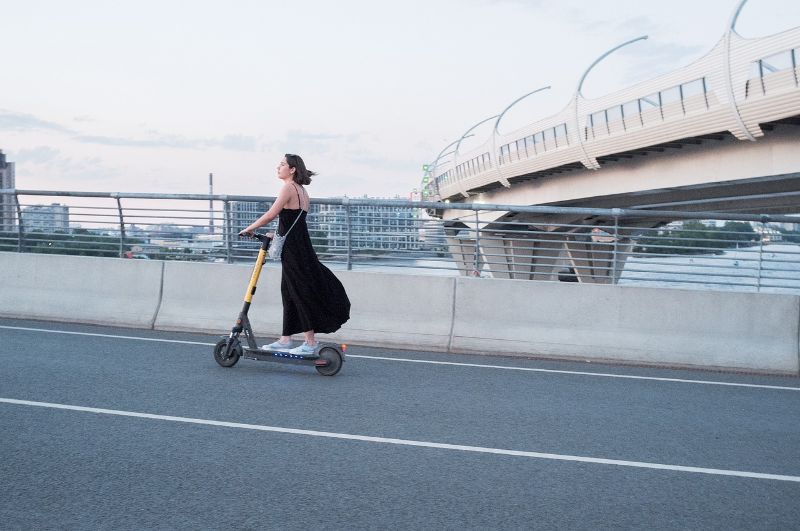
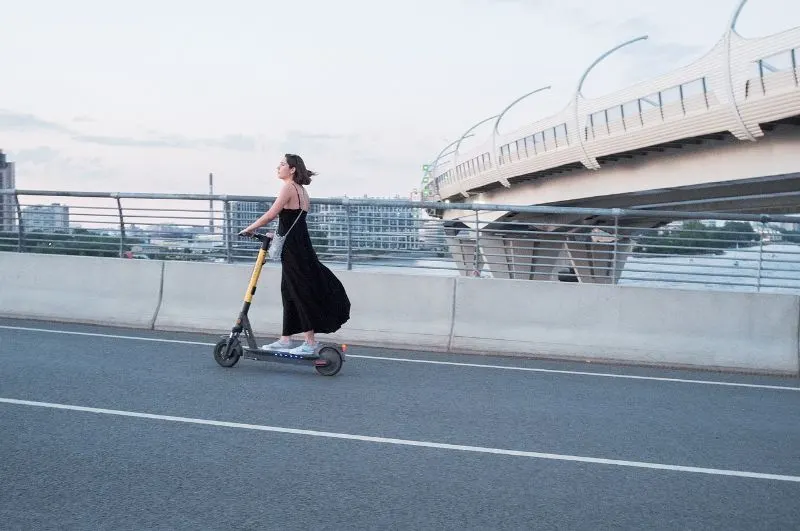
- Check local laws and permitted riding locations before the first trip.
- Wear a properly fitted bicycle helmet even where one is not legally required.
- Inspect the frame, folding latch, handlebars, brakes, throttle, cables, lights, and tires.
- Practice starting, braking, turning, and signaling away from traffic.
- Keep both hands on the handlebars and do not hang bags from them.
- Ride alone and remain below the manufacturer’s total load limit.
- Reduce speed before potholes, wet surfaces, junctions, pedestrians, and blind driveways.
- Use front and rear lights and reflective equipment in poor visibility.
- Never ride while impaired by alcohol, drugs, fatigue, or distraction.
- Charge only with the supplied or manufacturer-approved charger while you are present.
- Stop using a battery that is swollen, leaking, unusually hot, damaged, hissing, or producing an unusual odor.
- Keep charging equipment away from exits and combustible materials, and unplug it when charging is complete.
Should You Buy an Electric Scooter?
Buy an electric scooter when most of your intended journeys are short, solo, legal, and served by safe infrastructure—and when you can store and charge the vehicle securely.
An electric scooter is likely to suit you when:
- Your regular trip fits comfortably within independently verified real-world range.
- Your route uses protected bike lanes, calm streets, or approved micromobility paths.
- You can carry or store the scooter without obstructing shared spaces.
- You need a first- or last-mile connection to public transportation.
- You can buy a certified model with compatible charging equipment and local repair support.
Choose another transport option when:
- Your route requires high-speed roads, sidewalks where riding is prohibited, or badly damaged surfaces.
- You regularly carry another person, children, pets, or heavy cargo.
- You need dependable all-weather transportation.
- You cannot safely balance, look over your shoulder, grip the controls, or brake suddenly.
- You have no safe place to store and charge a lithium-ion battery.
A scooter should complement walking, cycling, and public transportation rather than replace every trip. For longer distances or journeys requiring greater protection and cargo capacity, compare other options such as the most eco-friendly cars.
The Bottom Line
Electric scooters offer genuine advantages for short urban travel: they are compact, inexpensive to charge, relatively simple to operate, and free from tailpipe exhaust. Their limitations are equally real. Riders must manage road-surface hazards, limited range, changing laws, theft, weather, battery safety, and a lack of physical protection.
The best scooter is not the fastest or the one with the largest advertised range. It is the model that is legal on your route, stops predictably, carries your total weight, has suitable tires and lighting, uses a verified charging system, and can be repaired instead of discarded.
For other practical purchasing ideas, review these products that can help address climate change.
Frequently Asked Questions
Are electric scooters worth it?
An electric scooter can be worth it for short, regular solo trips when local rules permit its use, the route has safe infrastructure, and secure storage and charging are available. It is a poor fit for long journeys, heavy cargo, passengers, rough roads, or dependable all-weather travel.
Do you need a license to ride an electric scooter?
It depends on the jurisdiction and the scooter’s legal classification. Some places require no license, while others impose age, licensing, insurance, helmet, speed, power, or riding-location rules. Check the relevant state, municipal, or national transportation authority before riding.
Are electric scooters safe?
Electric scooters can be operated responsibly, but they expose riders to falls, road defects, and motor vehicles without a protective body structure. Wear a helmet, inspect the scooter, use lights, ride at a controlled speed, avoid impairment, and choose protected infrastructure where available.
Are electric scooters environmentally friendly?
They produce no tailpipe exhaust and can reduce impact when they replace a car trip. Their full footprint still includes manufacturing, battery production, electricity, transport, repairs, and disposal. Durability, lifetime mileage, and the transport mode replaced determine the overall benefit.
How far can an electric scooter travel on one charge?
Range varies substantially by model and conditions. Rider and cargo weight, hills, speed, wind, temperature, tire pressure, stop-and-go riding, and battery age can reduce the manufacturer’s claimed maximum. Choose a scooter with a comfortable reserve beyond your normal round trip.
Can you ride an electric scooter in the rain?
Only when the manufacturer permits it and conditions remain safe. Rain reduces grip and visibility and can hide surface hazards. An IP rating does not authorize riding through deep water or flooding, and water damage may be excluded from the warranty.