
The wandering albatross (Diomedea exulans) is a large seabird of the Southern Ocean and has the largest wingspan of any living bird – up to about 3.5 meters (11.5 feet). The IUCN Red List classes it as Vulnerable: roughly 20,100 mature individuals remain and their numbers are declining, largely because of longline-fishing bycatch. These seabirds are native to the Southern Hemisphere.
- Status: Vulnerable
- Known as: Wandering Albatross, White-winged albatross, snowy albatross.
- Estimated numbers left in the wild: 20,000 adults.
- Fun fact: Wandering albatrosses can eat to such excess at times that they are unable to fly and have to rest helplessly on the water.
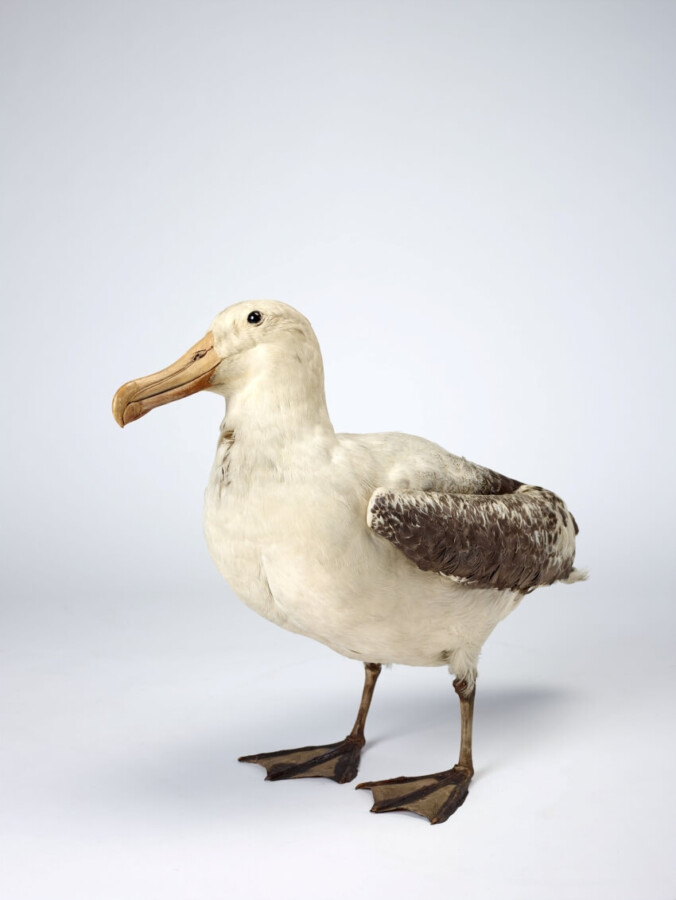
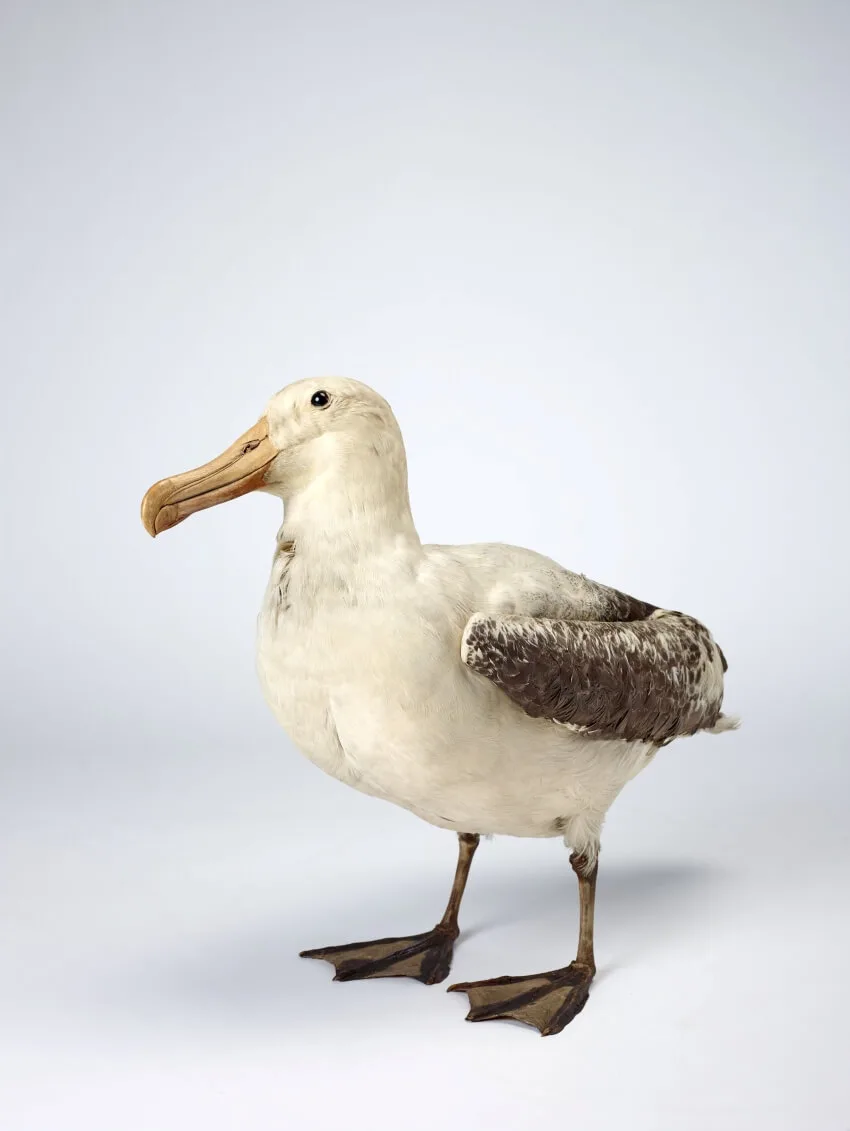
Wandering albatross populations have been declining because of human activities, and Wandering albatrosses need our help in order for them to continue their migration patterns. The wandering albatross is a vulnerable species that need protection from humans in order to survive.
Description
Vast and graceful, the wandering albatross spreads its wings towards the south like the biblical hawk, cruising the southern hemisphere’s skies on pinions that spread up to 3.5 meters, the largest wingspan found in any living bird.
Wandering albatrosses like albatross can migrate for thousands of miles, depending on which hemisphere Wandering Albatross is in.
Their chicks are very vulnerable until they grow their adult feathers, and Wandering Albatross adults are often captured by long-line fishing every year, which is harmful to the albatross populations.
They migrate for thousands of miles to spend winter months in Antarctica and summer in the Southern Hemisphere.
This albatross species is uncommon, with a global population of roughly 20,100 mature individuals (about 6,100 breeding pairs), according to the IUCN Red List.
The seabird faces many threats such as pollution, disturbance due to man-made sources like fishing boats and wind turbines, and predation by invasive species.
Anatomy and Appearance
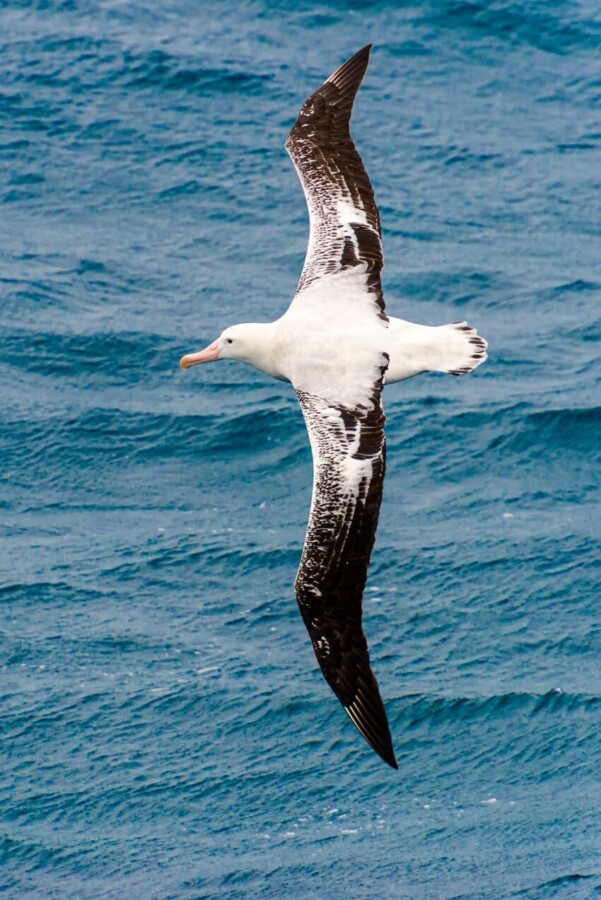
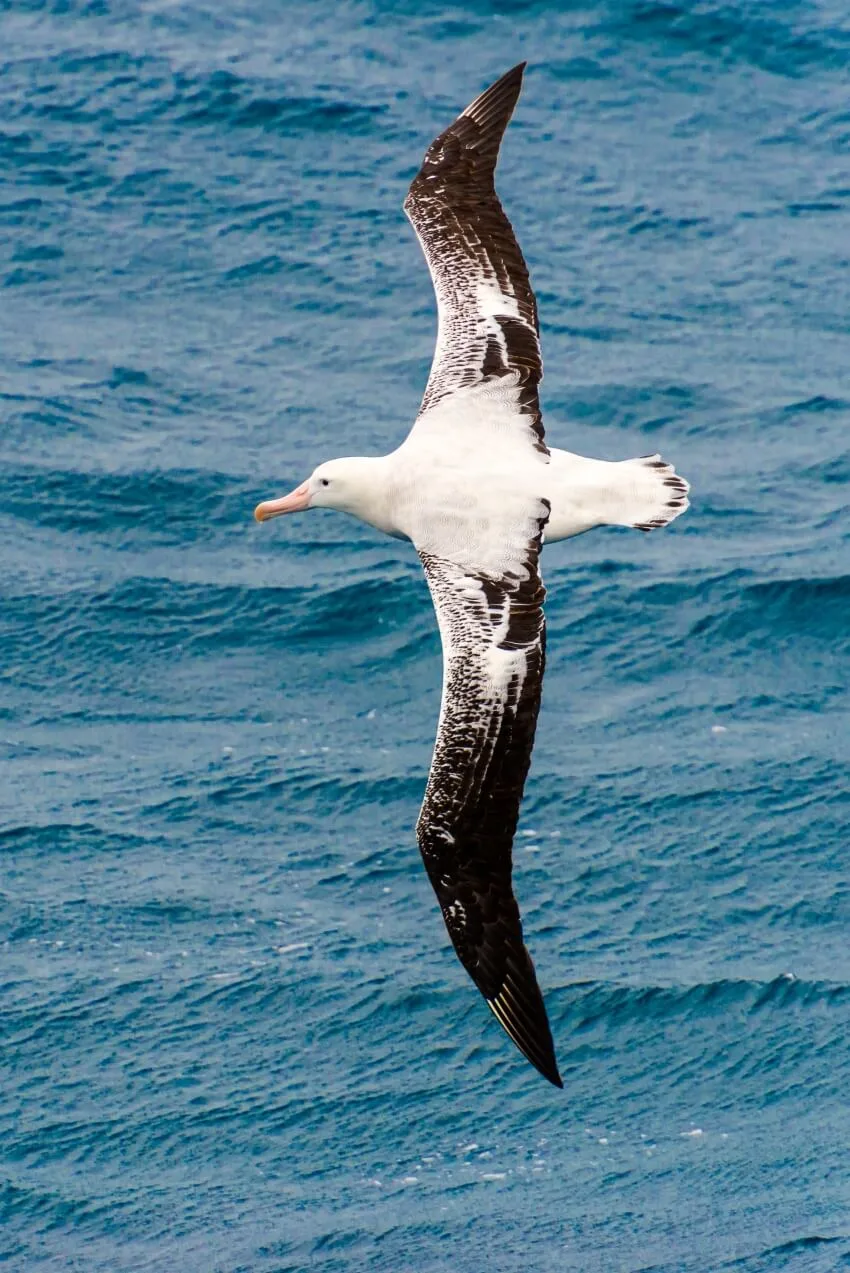
These albatrosses measure 1.1 meters long and can weigh 10 kilograms. Their snowy white feathers and black and white wings give them a handsome appearance, especially contrasted with the ocean’s deep blue, while their beaks are long, sturdy, and yellowish, adapted for snapping up prey. They have the longest wingspan and shallow dives.
The albatross is superbly adapted for soaring flight despite its large size and can glide for hours before it needs to beat its wings to regain height.
When not breeding, these birds spend all their time at sea, far from even the island’s limited land. They sleep on the water’s surface and spend days gliding and flying in search of food.
See Related: Andean Flamingo
Location
The Wandering albatross is found over the oceans of the southern hemisphere. Airborne for much of their lives, these huge birds also rest on the sea’s surface.
They travel to a handful of remote islands outside the Antarctic Circle to breed, including Prince Edward Island, Crozet Island, South Georgia Island, and Macquarie Island.
Its living range covers 65 million square kilometers, and its breeding area is confined to just under 2,000 square kilometers.
Wandering Albatross Habitat
Wandering albatrosses live in the Southern Hemisphere and mainly Antarctica. This seabird flies very long distances to migrate every year, making them one of the most well-traveling birds in the world.
They tend to stay in their typical coastal habitat which is around the sea and land with enough food for them to survive.
Wandering Albatrosses are not just found in one area of the world, they are all over the southern half of the world.
The bird commonly breed on islands off South America, South Africa, Australia, New Zealand, and island territories of the United Kingdom near Antarctica.
Wandering Albatross Diet and Nutrition
Wandering Albatrosses are opportunistic feeders and will consume a variety of prey items. Their diet consists mainly of cephalopods (especially squid), fish, and crustaceans, caught at or near the sea surface. They also scavenge carrion and offal discarded by ships.
The birds are night feeders. Squid and fish schools are their favored feeding areas, though they also follow fishing boats to gobble up refuse – and thus possibly run afoul of long-line fishing lines.
They are prodigious wanderers and can travel up to 6,000 kilometers in twelve days. Patagonian toothfish is a favorite food, but any squid or fish that can be seized at the surface in the bird’s powerful beak will do.
These birds catch their prey with their bills and feet, but will also snatch at prey off the water’s surface. They can swallow small prey whole and regurgitate indigestible parts such as bones, scales, and fins.
Wandering Albatross Mating Habits
Wandering Albatrosses are known for their elaborate mating rituals. The males and females perform a dance together, and the male will offer the female a gift of food.
If the female accepts the gift, the two birds will mate. They are monogamous throughout their lives. The seabird lives in the Southern Hemisphere and ranges widely across the Southern Ocean, but it always stays south of the equator and does not migrate into the Northern Hemisphere.
Wandering albatrosses lay a single egg and breed only once every two years, one of the slowest reproductive rates of any bird. These seabird species are monogamous and mate for life.
Wandering Albatrosses have a courtship ritual that involves circling the mate before copulation. The Wandering Albatross is a very long-lived bird that can live for more than 50 years in the wild, with some individuals reaching about 60.
Albatrosses mate for life and nest in colonies on remote southern islands close to the Antarctic circle. They build large nests out of moss and other vegetation and lay a single elongated, 10-centimeter egg, which is cared for alternately by both parents.
The young albatross takes about nine months to fledge, during which time its parents feed it. If they do not run afoul of fishing lines or die from ingested plastic garbage, albatrosses can live for up to half a century in the wild.
See Related: Most Interesting Birds in the World
Wandering Albatross and Human Relationship
Wandering Albatrosses are well known to have a strong, though not always successful, relationship with humans.
They often mistake boats and wind turbines as resting spots. This is because Wandering Albatrosses often imitate other albatrosses who are sitting on these structures.
The seabird is also threatened by invasive species that humans introduce o their habitats such as rats, pigs, cats, and dogs which prey on their chicks or kill adult Albatrosses by stealing their food caches.
Role in the Ecosystems
Wandering Albatrosses play a very important role in the ecosystem. They are considered “charismatic megafauna”, meaning they are large, easily identifiable animals that are popular with the public.
Their popularity draws attention to the conservation issues that they face and helps to raise awareness about the dangers they face.
They are important in the ecosystem because these birds are large seabirds that mainly feed on crustaceans. They can form massive breeding colonies on coasts and islands occurring at more than one hundred sites, where they nest or lay their eggs.
Wandering Albatross Facts
Here are the interesting facts you need to know about this species.
- The Wandering Albatross is a large seabird and the largest member of the genus Diomedea, the great albatrosses.
- They can be found around almost all of the Southern Ocean.
- They migrate for thousands of miles to spend winter months in Antarctica and summer in the Southern Hemisphere.
- The seabirds nest on many sub-Antarctic islands where they are threatened by many invasive species.
- They are the largest seabird in the world.
- They have a wingspan of up to 11.5 feet (3.5 m) and can weigh up to about 25 pounds (11.5 kg).
- The albatross eat fish and squid and they hunt at night while gliding over the ocean.
See Related: These Are 13 of the Longest Living Animals on Earth
Conservation Status
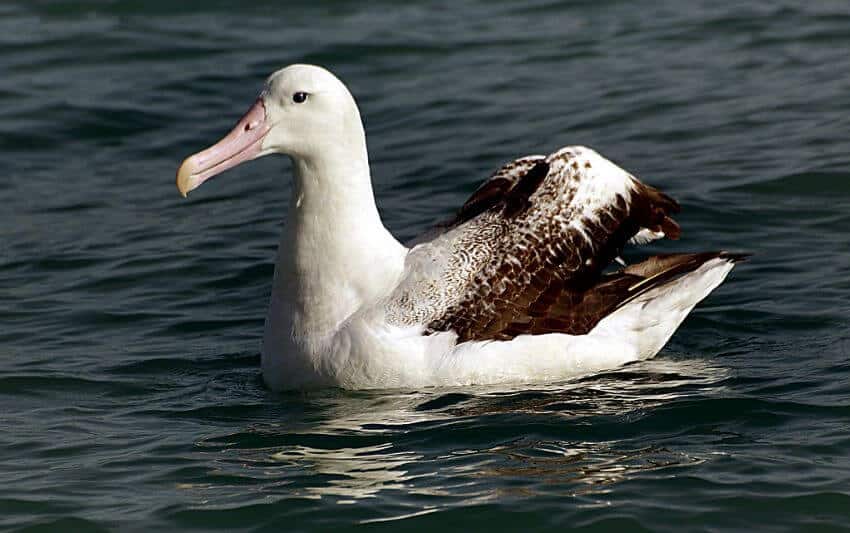
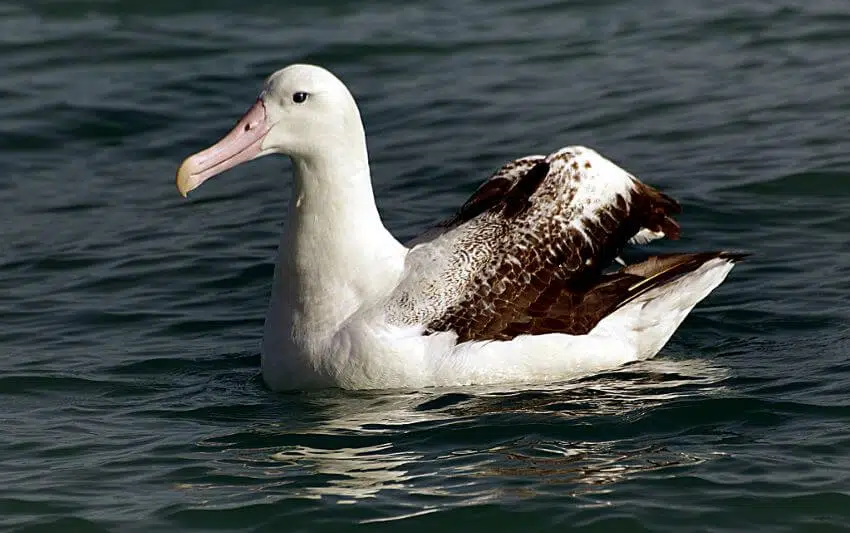
The Wandering Albatross is currently listed as a Vulnerable species by the IUCN, mainly because its population is projected to decline by around 30% over three generations (roughly 70 years), driven largely by longline-fishing bycatch. There are many threats that face albatrosses, and conservationists are working hard to protect these animals.
Their colonies are also jeopardized due to human encroachment on nesting areas without proper conservation efforts.
Threats
The wandering albatross is relatively well protected, both by its remote location and by-laws. However, its population is still slowly declining for slightly mysterious reasons.
The most likely culprits are long-line fishing fatalities, as the birds become hooked and drown, and plastics’ ingestion can kill both chicks and adults.
The birds were once hunted for feathers for women’s hats, but this practice is long gone thanks to changing fashion. Kerguelen Island is infested with feral cats, which have wiped out entire broods of chicks.
See Related: Causes of Extinction You Should Know About
Conservation efforts
The islands where the wandering albatross nests are thoroughly protected as nature reserves and, in one case, as a UNESCO World Heritage Site.
Improved long-line fishing regulations have dramatically reduced the by-catch of these beautiful animals, and more measures are being developed.
Cats have been exterminated from another island they colonized, and further extirpation efforts are being carried out or are planned.
Albatrosses and Petrels Conservation
In 2001, the Agreement on the Conservation of Albatrosses and Petrels (ACAP) was signed to help better protect these seabirds, and it entered into force in 2004. The agreement now has 13 member Parties, including Australia, France, New Zealand, South Africa, and the United Kingdom. The United States takes part as an observer but has not yet joined as a Party.
The main goals of the agreement are to:
- reduce bycatch and mortality of albatrosses and petrels;
- identify and mitigate threats to albatrosses and petrels, including climate change; promote effective management of albatrosses and petrels; and
- increase public awareness of the importance of albatrosses and petrels.
Why Captive Breeding Is Not Used
Captive breeding – raising animals in controlled settings such as zoos or sanctuaries to boost a species’ numbers – is sometimes used to recover endangered wildlife, but it is not a realistic option for the wandering albatross.
In practice, wandering albatrosses are not bred in captivity: as pelagic birds that raise a single chick only once every two years, they cannot be reared that way. Their recovery instead depends on reducing longline and trawl fishing bycatch at sea and removing introduced predators such as mice, rats, and cats from their breeding islands.
Organizations
Do you know of or are you a part of an organization that works to conserve the Wandering Albatross or its close relative the Amsterdam Albatross? Then please contact us to have it featured on Our Endangered World.
See Related: Fascinating Facts About Conservation
Final Thoughts
Wandering Albatrosses are large seabirds that migrate to spend the winter in Antarctica and summer in the Southern Hemisphere.
They face many threats such as pollution, disturbance due to man-made sources like fishing boats and wind turbines, predation by invasive species such as rats, pigs, cats, and dogs. The bird is currently listed as a Vulnerable species because its population is projected to decline by around 30% over three generations.
There are many conservation efforts being undertaken for this animal including improved long-line fishing regulations which have reduced the bycatch of these birds dramatically.
Also eradicating feral cats from one island they had colonized with plans for further extirpations underway. With so much work being done for this animal, Wandering Albatrosses will hopefully become less vulnerable.
FAQ
What is Wandering Albatross?
Wandering Albatross are large seabirds that have a wingspan of up to 11.5 ft (3.5 m) and are larger than the wingspan of any bird– it is the largest living member of the family Diomedeidae.
Wanderers breed on remote subantarctic islands and range widely across the Southern Ocean. Wanderers typically migrate for thousands of miles to spend winter months in Antarctica and summer in the Southern Hemisphere.
Where is the wandering albatross found?
Wandering albatrosses migrate for thousands of kilometers each year to spend the winter in Antarctica and summer in the southern oceans.
How many Wandering Albatrosses are left in the world?
It’s not easy to count Wandering Albatross populations. The IUCN estimates a global population of about 20,100 mature individuals – roughly 6,100 breeding pairs – across breeding islands in the Southern Ocean.
Their numbers are falling, mainly because of accidental deaths in longline and trawl fisheries, so ongoing monitoring is needed to track the trend.
Why is Wandering Albatrosses threatened?
Wandering Albatrosses are threatened by the erosion of their nesting site, habitat destruction caused by people settling around the albatross’s breeding grounds and roosting sites, and predation of the seabird’s chicks.
The greatest single threat is longline and trawl fishing, in which birds are hooked or entangled and drown. Pollution, plastic ingestion, and predation of eggs and chicks by introduced rats, mice, and cats on breeding islands add to the pressure.
Are wandering albatross still alive?
The wandering albatross is still alive! They migrate for vast distances. These albatross is a vulnerable species because they face many different environmental factors that threaten their survival.
How long can a wandering albatross fly nonstop?
Wandering Albatrosses are among the most efficient flyers on Earth. Using a technique called dynamic soaring, they can glide for hours – even days – with barely a wingbeat, and a single foraging trip can cover thousands of kilometers across the open ocean before the bird returns to land.
They feed mainly on squid and fish snatched from the sea surface, and will also follow fishing vessels to scavenge scraps, which is how many birds become hooked on longlines and drown.
Other Species Profile
Related Resources