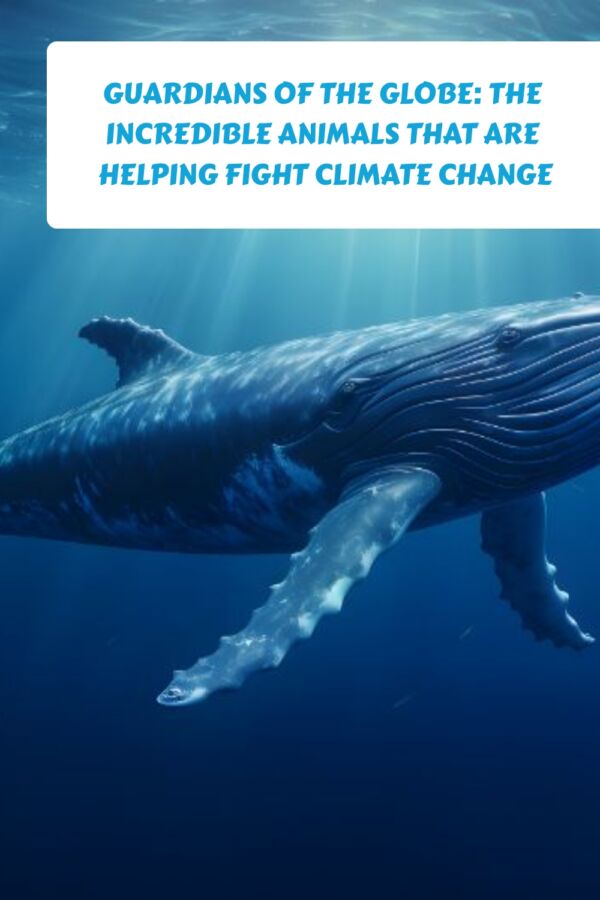
Animals that help fight climate change do so by changing the ecosystems around them. Forest elephants shape tree communities, beavers slow water, whales move nutrients through the ocean, and seed dispersers help forests regrow. These processes can increase carbon storage or make habitats more resilient to drought, wildfire, warming, and sea-level rise.
Wildlife is not a substitute for cutting fossil-fuel emissions. It is one part of a broader response because climate change and biodiversity loss are linked and should be addressed together. The size and direction of an animal’s climate effect depend on the species, location, population density, and timescale.
Research reviewed and source links checked in August 2026.
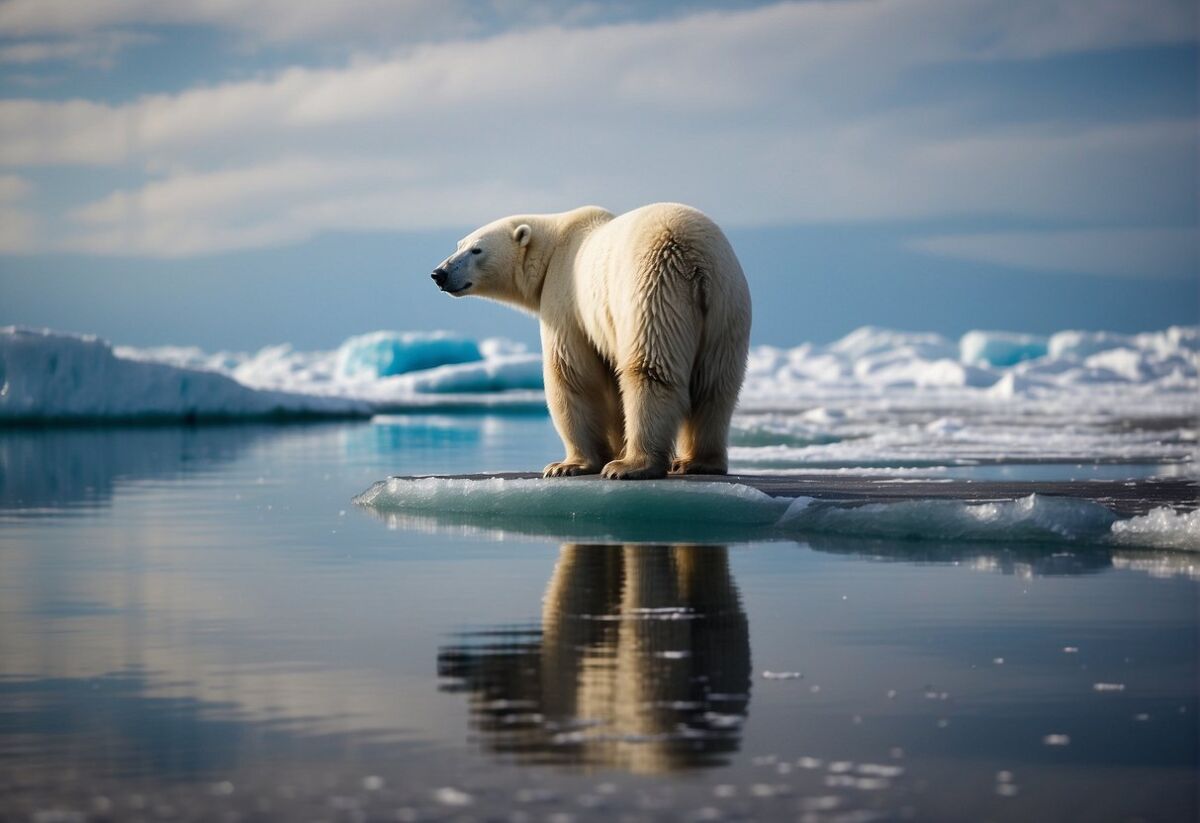
Polar bears illustrate the other side of the story: many species are climate victims rather than climate solutions. Understanding how climate change affects animals helps prevent exaggerated claims about what wildlife can accomplish.
Key takeaways
- Animals influence climate through food webs, seed dispersal, nutrient cycling, habitat engineering, and carbon stored in living biomass.
- Some benefits are primarily climate mitigation, while others are better described as adaptation or resilience.
- The strongest evidence is ecosystem-specific. A result from a Central African rainforest, North Pacific kelp forest, or western U.S. stream should not be treated as a universal rule.
- Restoring an animal’s ecological role requires suitable habitat, movement corridors, healthy population structure, and workable coexistence with nearby communities.
- Wildlife conservation complements rapid emissions cuts; it cannot replace them.
At a glance: seven animals and their climate roles
| Animal | Main climate-related role | Essential caveat |
|---|---|---|
| African forest elephants | Reshape tree communities and move seeds through tropical forests | The clearest carbon evidence is specific to Central African rainforests |
| Beavers | Create wetlands that retain water and can provide drought and wildfire refuges | Water-quality and greenhouse-gas effects vary by site and season |
| Whales | Store carbon in biomass and transport nutrients through the ocean | The global climate contribution remains difficult to quantify |
| Sea otters | Limit sea urchins and support carbon-rich kelp forests | More kelp biomass does not guarantee permanent carbon burial |
| Wildebeest | Graze grass fuel, reducing fire in the Serengeti case study | The result depends on rainfall, grazing pressure, and local ecology |
| Tapirs and other seed dispersers | Move seeds into disturbed forests and support natural regrowth | Benefits fall when habitat fragmentation restricts animal movement |
| Mangrove crabs | Process leaf litter and engineer coastal sediment | Their net greenhouse-gas effect is mixed and may be negative in some sites |
How animals help fight climate change
Animals rarely remove carbon dioxide in the same way plants do. Instead, they change the biological and physical processes that control carbon, water, nutrients, vegetation, and fire. Researchers sometimes describe the restoration of these functions as trophic rewilding.
Climate mitigation reduces the net amount of greenhouse gases in the atmosphere. Climate resilience helps an ecosystem or community withstand impacts such as drought, wildfire, flooding, or warming. One animal can contribute to both, but the distinction matters when evaluating a claim.
- Changing vegetation: Browsing, grazing, trampling, and predation can alter which plants dominate and how much carbon vegetation stores.
- Moving seeds: Fruit-eating mammals and birds transport seeds away from parent plants and into damaged or cleared areas.
- Reshaping food webs: Predators can limit herbivores that would otherwise remove large amounts of vegetation.
- Engineering habitats: Dams, burrows, trails, and feeding activity change water flow, sediment, oxygen, and nutrient availability.
- Moving and storing nutrients: Migrating animals transfer nutrients across habitats, while long-lived animals retain carbon in their bodies.
1. African forest elephants shape carbon-dense rainforests
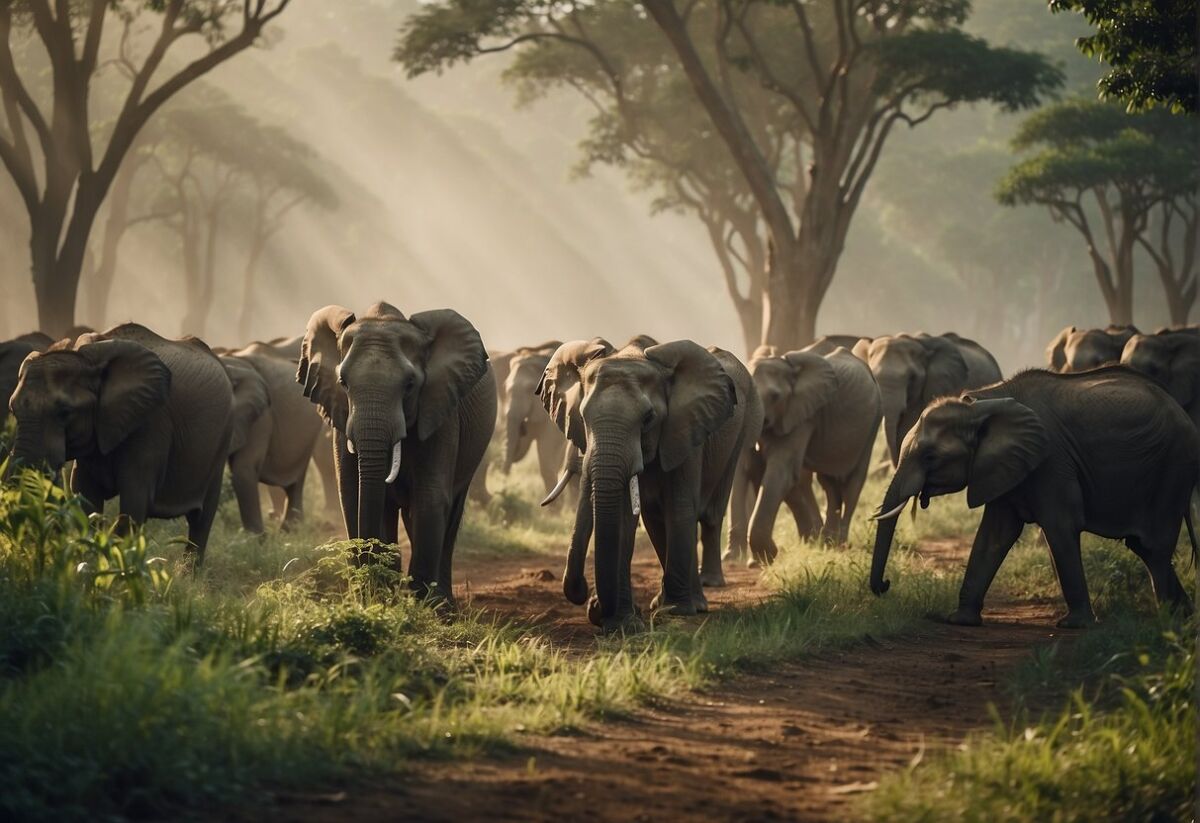
African forest elephants eat fruit, disperse seeds, trample vegetation, and damage or remove some smaller stems. In rainforests, that disturbance can reduce competition and favor fewer, larger trees with denser wood.
A 2019 Nature Geoscience study combined forest inventory data with ecosystem modeling. At a typical density of 0.5 to 1 forest elephant per square kilometer, elephant disturbance increased modeled aboveground biomass by 26 to 60 metric tons per hectare. The study estimated that losing forest elephants could reduce aboveground biomass in Central African rainforests by about 7%.
The mechanism is more specific than the common claim that elephants simply “plant trees.” Their browsing, trampling, and seed dispersal change forest structure over decades. The result should not be generalized to every elephant population or habitat; elephants can affect woody vegetation differently in savannas and other landscapes.
2. Beavers create water and fire refuges

Beaver dams spread water across floodplains, raise local water tables, slow stream flow, and create wetlands. Those changes can support fish, amphibians, birds, insects, and riparian plants while giving landscapes more water during dry periods.
In a 2020 study of five wildfires in the western United States, the decline in vegetation greenness during fire was, on average, 3.05 times greater in riparian corridors without beaver activity than in beaver-influenced corridors. The researchers concluded that beaver-dammed areas can function as fire refuges, although the result does not mean every dam prevents fire.
Beaver effects are not uniformly positive. A U.S. Environmental Protection Agency review of 267 studies found that nitrate and suspended sediment often declined downstream, while methylmercury, dissolved organic carbon, and ammonium sometimes increased. Carbon storage can also rise or fall as flooded soils, vegetation, carbon dioxide, and methane respond over time.
The most defensible climate claim is that beavers can improve local water retention and ecosystem resilience. Their net greenhouse-gas effect needs site-specific measurement. Their wetland-building also shows why biodiversity matters to ecosystems: one species can create habitat for many others.
3. Whales store carbon and move ocean nutrients
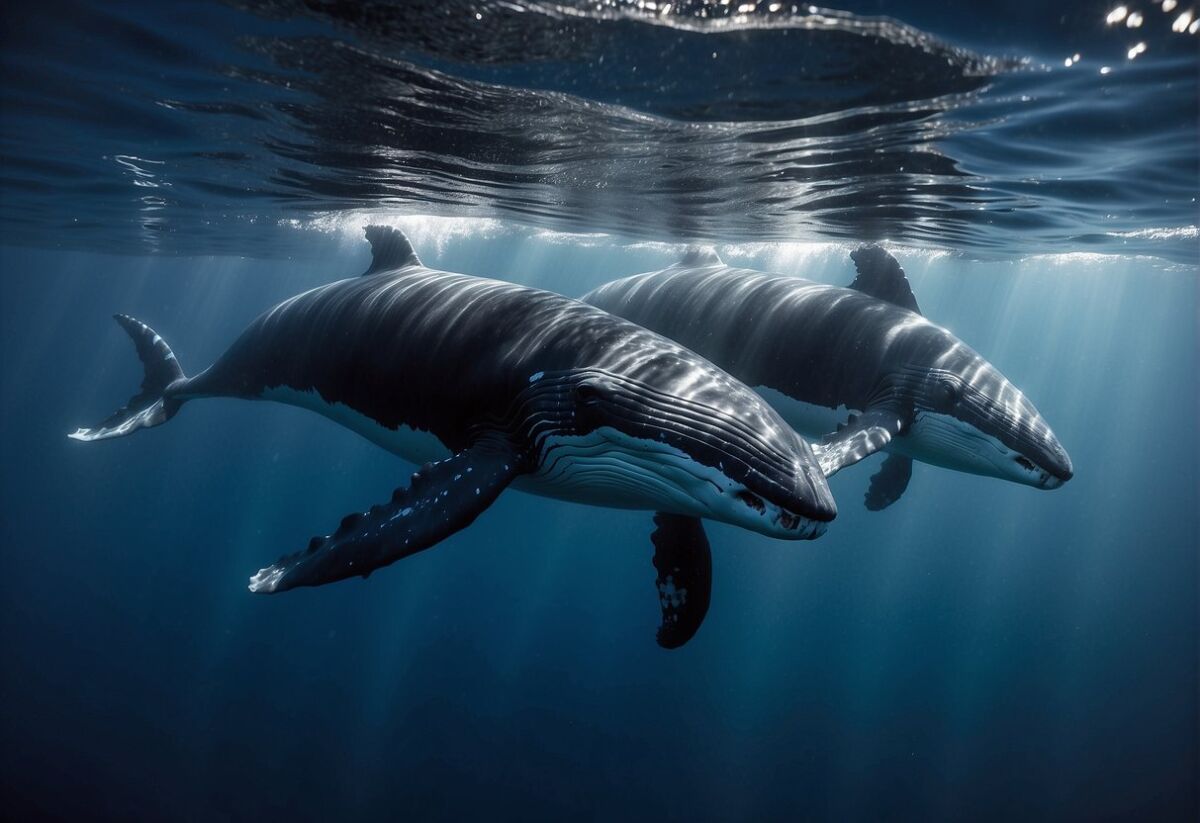
Whales do not absorb atmospheric carbon dioxide through photosynthesis. Carbon first enters marine food webs through phytoplankton and other primary producers, then moves into prey and whale tissue. A long-lived whale can retain some of that carbon in its body for decades.
NOAA Fisheries summarizes an average estimate of about 33 tons of carbon dioxide stored by one whale over its lifespan. When a carcass sinks as a whale fall, some carbon can remain in deep-ocean food webs and sediment for long periods.
Living whales also move nutrients. Deep-diving species feed below the surface and release nutrient-rich waste nearer sunlight, while migrations transport nutrients between feeding and breeding areas. Those nutrients can support phytoplankton growth, but NOAA cautions that the total amount of blue-carbon storage attributable to whales is difficult to quantify.
That uncertainty is a reason to avoid simplistic whale-versus-tree comparisons. The strongest case for whale recovery is broader: healthy whales support marine nutrient cycles and biodiversity while storing some carbon. Reducing whale hunting and other human pressures protects those functions.
4. Sea otters protect kelp through a trophic cascade
Sea otters eat sea urchins. When otters are abundant, urchins are less able to overgraze kelp; when otters disappear, urchin barrens can replace dense kelp forests. This predator-herbivore-plant chain is a classic trophic cascade.
A 2012 analysis of North Pacific sea otters and kelp forests estimated that the otter effect increased living kelp carbon stocks by 4.4 to 8.7 teragrams of carbon—equivalent to 4.4 to 8.7 million metric tons—across the study area. The study combined decades of data on otters, urchins, kelp biomass, and habitat.
That figure is a modeled increase in living kelp biomass, not a guaranteed amount of permanent atmospheric carbon removal. Kelp may be eaten, respired, decomposed, stranded onshore, or exported to deep water. The food-web effect is well established; the fraction of kelp carbon stored for climate-relevant timescales is less certain.
5. Wildebeest can reduce fire in the Serengeti
The Serengeti provides one of the clearest long-term examples of an animal changing fire and carbon dynamics. After cattle vaccination helped eliminate rinderpest, wildebeest populations recovered. More grazing reduced the grass available to burn, which lowered fire frequency and allowed tree density to increase.
A 2009 PLOS Biology study used roughly four decades of ecological data and modeled a shift in the Serengeti’s carbon balance associated with this disease-mediated trophic cascade.
This is not evidence that adding more grazers always stores more carbon. During drought or under excessive grazing pressure, the same relationships can change. The lesson is that animal abundance, disease, fire, vegetation, and climate interact; restoring a functional food web can alter the entire system.
6. Tapirs and other seed dispersers help forests regrow
Many tropical trees depend on animals to carry their seeds. Large fruit-eating mammals such as tapirs can swallow sizable seeds, travel long distances, and deposit them with dung in places where seedlings may establish.
A 2025 Proceedings of the National Academy of Sciences study estimated that 81% of tropical trees rely on animal seed dispersal. Across areas identified as suitable for restoration, current disruption to seed dispersal was associated with an average 57% reduction in local carbon-accumulation potential during natural forest regrowth.
Tapirs offer a concrete example. A 2019 Biotropica study found that lowland tapirs used degraded and burned Amazonian forests and dispersed substantial numbers of seeds there. Protecting seed dispersers alone is not enough, however. Effective habitat loss solutions must also preserve forest cover and movement routes.
7. Mangrove crabs are ecosystem engineers—with a climate asterisk
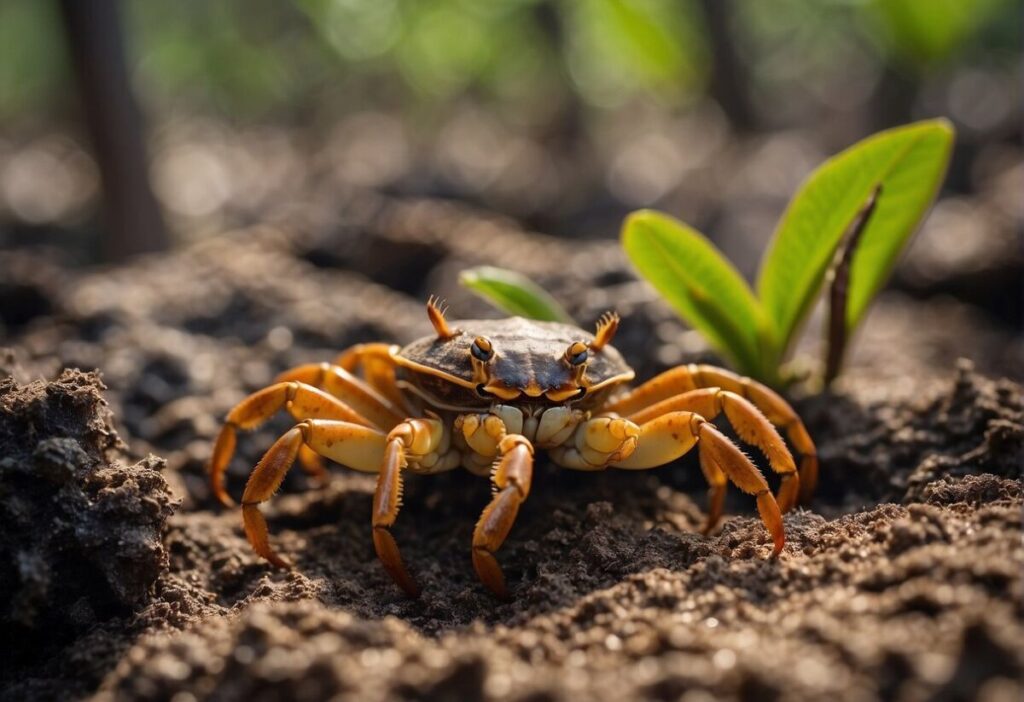
Mangrove crabs retain, shred, bury, and eat leaf litter. Their burrows alter sediment oxygen, drainage, nutrient cycling, and the movement of organic material. A widely cited 2008 review described mangrove crabs as ecosystem engineers because these activities can reshape the habitat around them.
That does not make every crab burrow a climate benefit. A 2024 Communications Earth & Environment study across coastal sites in China found that crab burrows increased carbon dioxide and methane emissions and reduced modeled soil-carbon burial potential in the sampled mangrove and saltmarsh habitats. The authors also stressed that effects were highly heterogeneous and could not be scaled globally from the study alone.
Mangrove crabs belong in this discussion because they reveal an important limit: supporting ecosystem function is not always the same as maximizing carbon storage. Climate claims should account for the full system, including methane, carbon dioxide, sediment burial, vegetation, and local species composition.
What wildlife climate action can—and cannot—do
What it can do
- Restore food-web interactions, seed dispersal, nutrient movement, and habitat engineering.
- Increase ecosystem resilience to drought, fire, erosion, flooding, and warming in suitable settings.
- Strengthen forest, wetland, grassland, kelp, and ocean restoration when species and habitat are recovered together.
- Deliver biodiversity, water, fisheries, cultural, and livelihood benefits that a carbon-only project may overlook.
What it cannot do
- Replace rapid reductions in fossil-fuel emissions and other greenhouse gases.
- Guarantee permanent carbon storage simply because an animal increases plant growth.
- Justify introducing a species outside its native range without ecological and social assessment.
- Support credible carbon credits without a defensible baseline, additionality, permanence, leakage, and full greenhouse-gas accounting.
How to support evidence-based wildlife climate solutions
- Protect habitat and connectivity. Animals cannot disperse seeds, migrate, or maintain food webs when roads, fences, clearing, and development isolate populations.
- Restore ecological roles, not just headcounts. A population must be large, connected, and behaviorally functional enough to influence its ecosystem.
- Support coexistence and local leadership. Reintroductions and population recovery work best when nearby communities have a meaningful role in design, benefits, and conflict management.
- Reduce direct pressures. Habitat destruction, poaching, entanglement, overharvest, invasive species, and pollution can remove the animals that restoration depends on.
- Scrutinize carbon claims. Ask what was measured, over what area and period, and whether methane, decomposition, permanence, and displacement were included.
- Pair conservation with emissions cuts. Protecting wildlife is a climate complement, not an offset for avoidable pollution.
Frequently asked questions
How do animals help fight climate change?
Animals influence climate by moving seeds, changing vegetation, controlling herbivores, recycling nutrients, building wetlands, and storing carbon in living biomass. The effect depends on the species, ecosystem, population density, and timescale.
Which animal helps the climate the most?
There is no universal winner. Forest elephants can affect rainforest carbon stocks, sea otters protect kelp, beavers improve water and fire resilience, and seed dispersers support forest regrowth. The strongest benefit depends on the ecosystem and the climate outcome being measured.
Do whales absorb carbon dioxide like trees?
No. Whales do not photosynthesize. They store carbon that entered the marine food web through primary producers, and they can support phytoplankton by moving nutrients through the ocean.
Are beavers always beneficial for the climate?
No. Beaver wetlands can retain water and create drought or fire refuges, but their effects on methane, carbon dioxide, pollutants, flooding, and infrastructure vary by location. Local assessment is essential.
What is trophic rewilding?
Trophic rewilding restores native animals and the food-web interactions they once performed, such as predation, grazing, seed dispersal, and nutrient transport. The goal is to recover ecosystem function rather than simply increase animal numbers.
Can wildlife conservation replace emissions cuts?
No. Wildlife conservation can protect carbon stocks and strengthen ecosystem resilience, but it cannot replace rapid reductions in fossil-fuel use and other greenhouse-gas emissions.
The bottom line
Wildlife belongs inside climate strategy because animals shape the carbon cycle, water movement, fire, forest recovery, and coastal ecosystems. The most credible approach is to protect or restore native species where their ecological roles are understood, measure the full greenhouse-gas balance, and pair conservation with direct emissions reductions.