
Here are twenty animals whose names begin with E. Each one comes with a representative species, its natural habitat, and its current IUCN Red List conservation status, which ranges from Least Concern all the way to Critically Endangered.
Some letter-E animals are familiar—think elephants, elk, or eagles. Others, like Eld’s deer or the eastern hellbender, barely get a mention in classrooms, even though they’re in much greater need of help.
The International Union for Conservation of Nature assigns conservation status, and it can vary a lot even between close cousins. For example, savanna elephants and forest elephants have different ratings, and a species like the Eurasian lynx can be common in Asia but nearly wiped out in the Balkans.
Some broader lists of extraordinary animals that start with E also throw in earthworms, ermines, and emperor tamarins.
Let’s count down from 20 to 1, starting with small specialists and working up to the planet’s biggest land animal.
20. European Hedgehog

- Scientific name: Erinaceus europaeus
- Habitat: Woodland edges, hedgerows, farmland, parks, and gardens across western and northern Europe
- IUCN status: Near Threatened
The European hedgehog sports about 5,000 hollow keratin spines. It’s a night hunter, searching for beetles, earthworms, slugs, and caterpillars, and then hibernates through winter in a leafy nest.
In Britain and parts of Europe, their numbers have dropped as hedgerows vanish, roads slice up their territory, and insect prey disappears. Gardens can actually help—leaving gaps in fences for roaming, building log piles for shelter, and skipping slug pellets to keep their food safe.
These prickly little guys aren’t rodents; their closest relatives are actually moles and shrews.
19. Emperor Angelfish
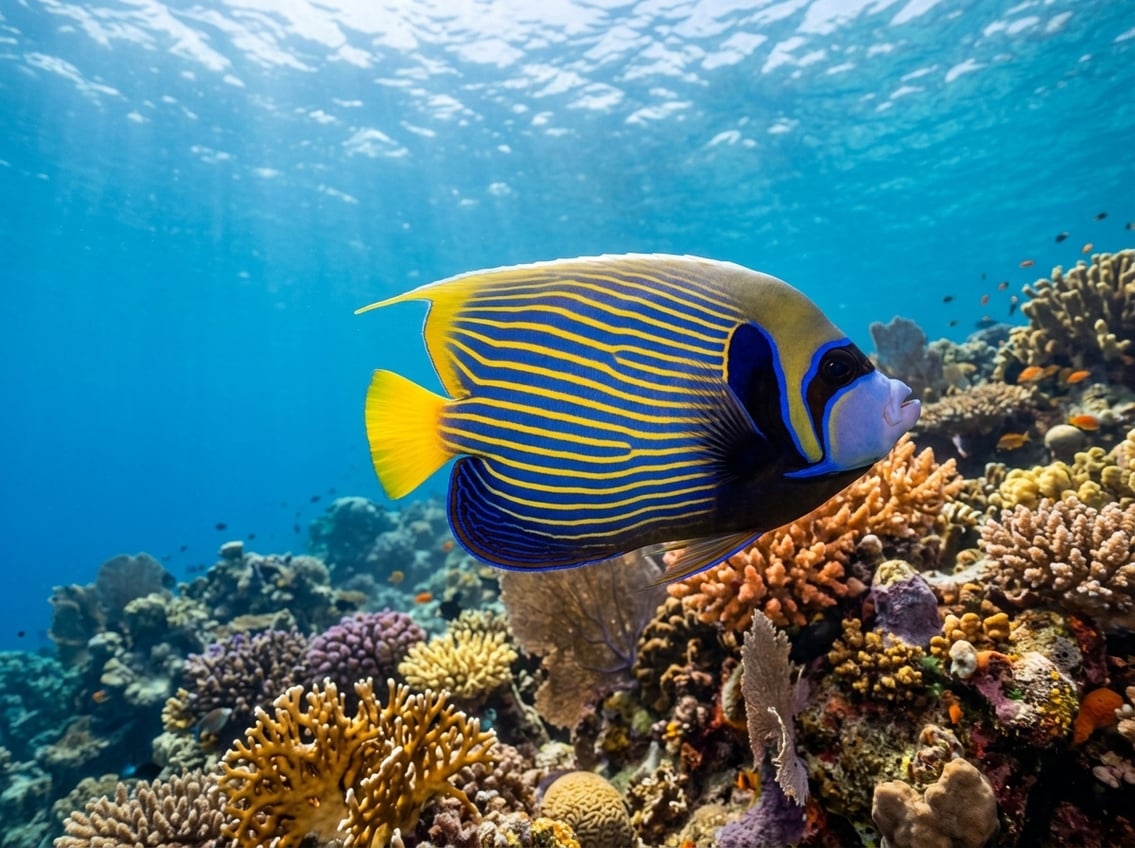
- Scientific name: Pomacanthus imperator
- Habitat: Coral reefs and lagoons of the Indo-Pacific, from the Red Sea to Hawaii
- IUCN status: Least Concern
The emperor angelfish shows off bold blue and yellow stripes as an adult, but as a juvenile, it’s covered in dark blue rings. The difference is so dramatic, people once thought they were two separate species.
Adults snack on sponges and algae along reef slopes, usually sticking to water less than 200 feet deep. They defend small patches of reef and often pair up for long stretches.
While the fish isn’t in trouble right now, its home is. Coral bleaching from warming oceans is the big threat hanging over reef communities.
18. Emerald Tree Boa

- Scientific name: Corallus caninus
- Habitat: Lowland rainforest canopy in the Amazon Basin of South America
- IUCN status: Least Concern
The emerald tree boa coils itself neatly over branches, head nestled in the center. Its green scales and white lightning-bolt markings help it blend in with sun-dappled leaves.
It’s not venomous and kills by constriction. Heat-sensing pits along its jaw help it find warm-blooded prey—like birds, rodents, and even small marsupials—in almost total darkness.
Females give birth to live young, skipping the egg stage. Deforestation in the Amazon and collection for the pet trade put pressure on wild populations.
17. Eagle Ray: Spotted Eagle Ray

- Scientific name: Aetobatus narinari
- Habitat: Warm coastal waters, bays, coral reefs, and estuaries of the western Atlantic and Caribbean
- IUCN status: Near Threatened
The spotted eagle ray glides with slow, graceful wingbeats, reaching up to a 10-foot wingspan. Its dark back is dotted with white spots, and its long tail has venomous barbs for defense.
It uses a shovel-shaped snout to dig up clams, oysters, and crustaceans, then crushes their shells with flat teeth. These rays grow slowly and have very few pups, so when they get caught in fishing nets, the population can’t bounce back quickly.
16. Eurasian Eagle-Owl
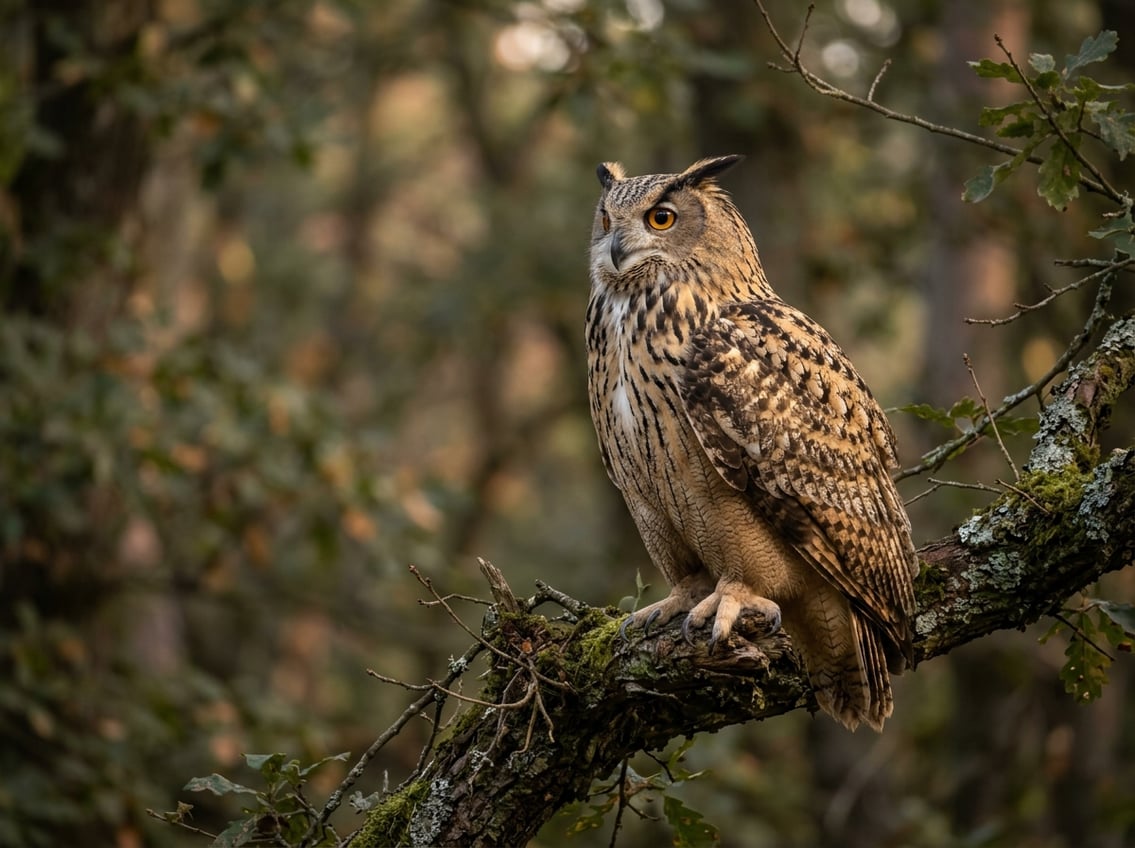
- Scientific name: Bubo bubo
- Habitat: Rocky cliffs, canyons, forests, and semi-deserts across Europe, Russia, the Middle East, and Asia
- IUCN status: Least Concern
The Eurasian eagle-owl is one of the world’s largest owls, with a wingspan close to 6 feet and piercing orange eyes. Its deep, two-note hoot can carry for over a mile on a quiet night.
It hunts voles, rabbits, hedgehogs, ducks, and sometimes even other birds of prey. These owls nest on cliff ledges or in rock crevices, not in trees or buildings.
Population numbers are mostly stable, but power lines and vehicles kill a fair number of birds. Some reintroduction projects have brought them back to parts of western Europe.
15. Egyptian Vulture
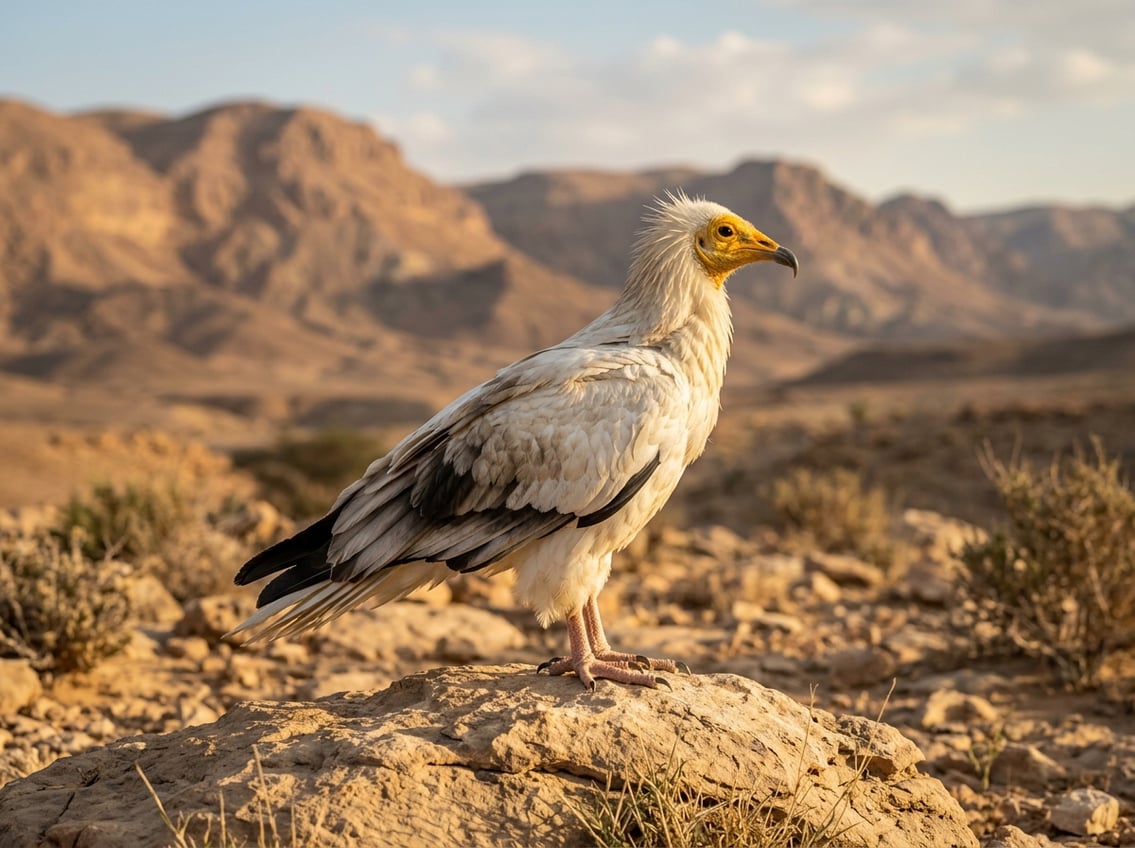
- Scientific name: Neophron percnopterus
- Habitat: Dry open country, cliffs, and semi-deserts in southern Europe, Africa, the Middle East, and South Asia
- IUCN status: Endangered
The Egyptian vulture is a small scavenger with mostly white feathers, black wingtips, and a bare yellow face. It’s one of the rare birds that uses tools, dropping stones to break open ostrich eggs.
By cleaning up carcasses, these birds help slow the spread of disease—a service people often overlook until it’s gone. Poisoned carcasses, drugs like diclofenac, electrocution on power lines, and vanishing food sources have all hammered their numbers, especially in India and Africa.
14. Eastern Hellbender
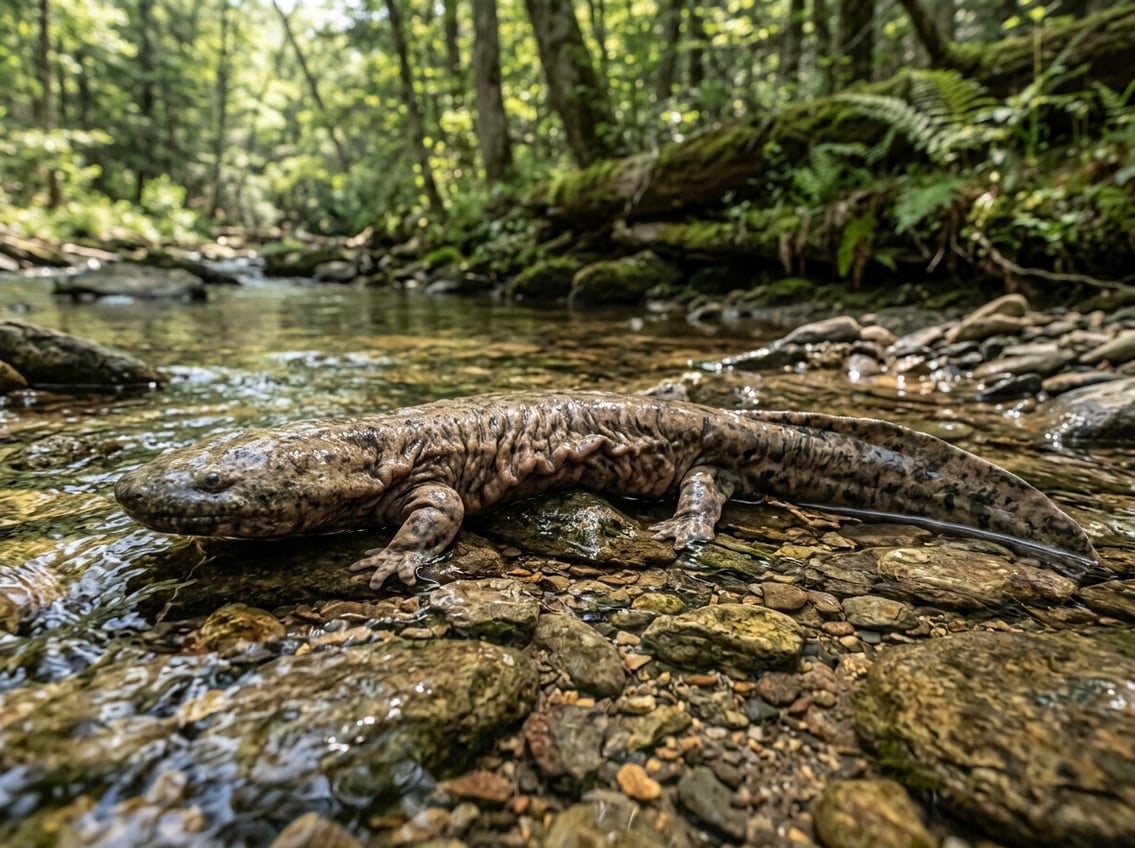
- Scientific name: Cryptobranchus alleganiensis alleganiensis
- Habitat: Cool, fast-flowing rocky streams and rivers in the Appalachian region of the eastern United States
- IUCN status: Vulnerable (species level)
The eastern hellbender is North America’s biggest salamander, sometimes reaching 29 inches long. Loose, wrinkly skin helps it soak up oxygen from the water, so it absolutely needs clean, well-oxygenated streams.
Adults hide under big flat rocks during the day and hunt crayfish at night. Males stick around to guard nests filled with hundreds of eggs.
Silt from erosion buries their hiding spots, and dams stop them from moving between populations. They’re so sensitive to pollution that scientists use hellbenders as stream health indicators—a fact that pops up a lot in freshwater conservation stories at Our Endangered World.
13. Eld’s Deer

- Scientific name: Rucervus eldii
- Habitat: Seasonal wetlands, floodplain grasslands, and open dry forest in Myanmar, Thailand, Cambodia, and northeast India
- IUCN status: Endangered
Eld’s deer, or brow-antlered deer, is easy to spot thanks to its antlers that sweep forward in a bow shape. Stags stand around 4 feet tall at the shoulder.
The Manipur subspecies, called sangai, survives only on floating vegetation mats in Keibul Lamjao National Park, India. There are probably just a few hundred left there.
Draining wetlands for rice, hunting, and small, scattered herds all keep this species on the edge. Protected wetlands are at the heart of every plan to save them.
12. Eurasian Lynx
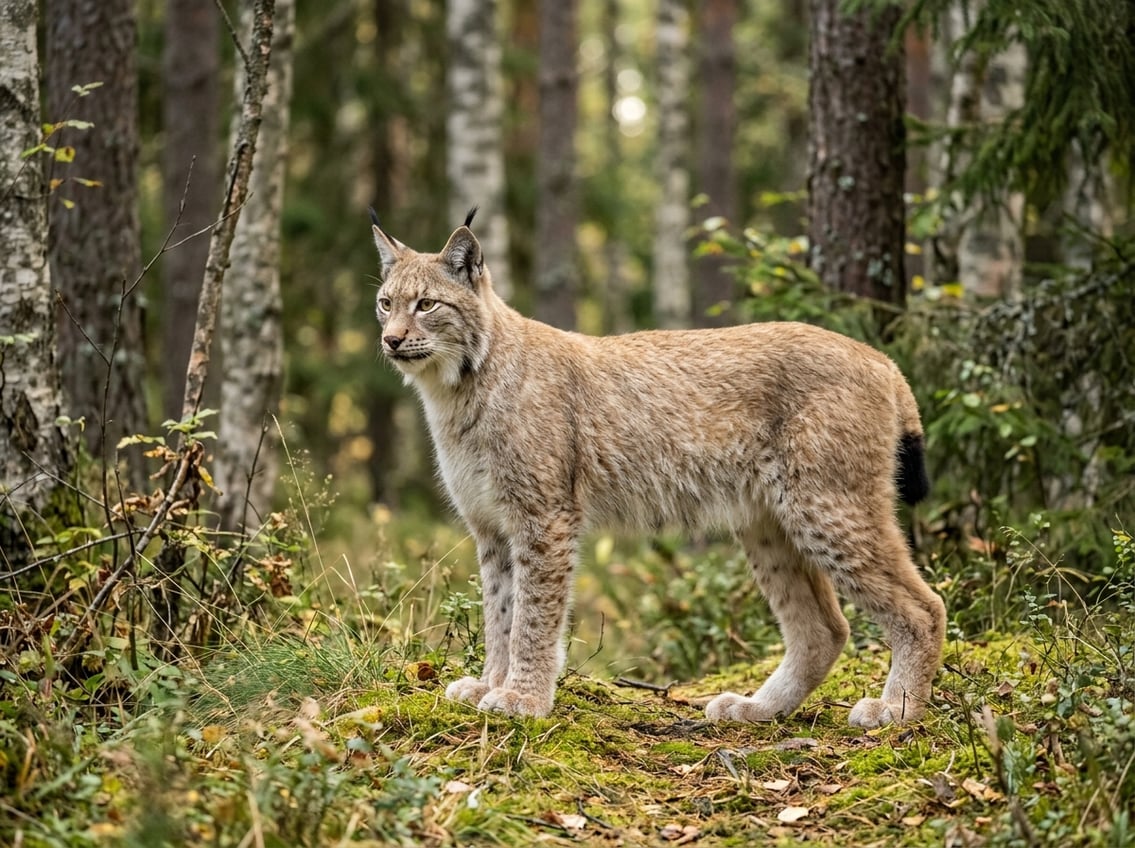
- Scientific name: Lynx lynx
- Habitat: Temperate and boreal forests, rocky mountains, and scrubland from Scandinavia and central Europe across Siberia
- IUCN status: Least Concern (some subpopulations far more threatened)
The Eurasian lynx is the largest of all lynx, weighing up to 66 pounds. Its black ear tufts, short bobbed tail, and big furry paws make it well-suited for deep snow and silent stalking.
Roe deer and chamois make up most of its meals, and one adult can roam over dozens of square miles.
The global status looks okay, but not everywhere. The Balkan lynx—a separate group—is Critically Endangered, with maybe just a few dozen adults left.
11. Emu

- Scientific name: Dromaius novaehollandiae
- Habitat: Grasslands, savanna woodland, and dry scrub across mainland Australia
- IUCN status: Least Concern
The emu stands up to 6.2 feet tall, making it the world’s second-tallest bird after the ostrich. It can’t fly, but those long, three-toed legs help it sprint close to 30 miles per hour.
Males handle all the parenting. They’ll incubate the big green eggs for around eight weeks, barely eating, and then fiercely guard the striped chicks for months.
Emus wander huge distances looking for seeds, fruit, insects, and water. The mainland emu population is doing fine, but the Tasmanian and King Island emus vanished in the 1800s.
10. Elk

- Scientific name: Cervus canadensis
- Habitat: Mountain meadows, forest edges, and grasslands in western North America and eastern Asia
- IUCN status: Least Concern
Elk, or wapiti, are among the largest deer. Bulls can weigh over 700 pounds and grow antlers that stretch 4 feet—then shed and regrow them every year, which is just wild.
In autumn, bulls bugle with high, echoing whistles to gather harems and warn off rivals. Herds migrate between high summer meadows and lower winter valleys, following the seasons.
U.S. populations bounced back after unregulated hunting nearly wiped them out. Restored elk herds now support predators like wolves and grizzlies in places like Yellowstone.
9. Electric Eel

- Scientific name: Electrophorus electricus
- Habitat: Murky rivers, floodplains, and swamps of the Amazon and Orinoco basins in South America
- IUCN status: Least Concern
The electric eel isn’t a true eel—it’s actually a knifefish, more closely related to catfish. It has to surface regularly to breathe air, which you might not expect from a fish.
Three specialized organs packed with electrocytes let it create electric discharges. Weak pulses help it sense its muddy world, while strong ones—up to about 860 volts in a related species—stun prey and scare off predators.
Adults can reach 8 feet long. Pollution and habitat loss threaten this fish, especially since it relies on shallow, oxygen-poor backwaters.
8. Elephant Seal: Southern Elephant Seal

- Scientific name: Mirounga leonina
- Habitat: Sub-Antarctic islands and Southern Ocean waters, breeding on beaches at South Georgia, Kerguelen, and Macquarie Island
- IUCN status: Least Concern
The southern elephant seal is the heavyweight champ of seals. Bulls can hit 20 feet and tip the scales at 8,800 pounds—about six times heavier than females—and inflate their trunk-like snouts to roar during breeding battles.
Their dives are mind-blowing. Some regularly plunge past 3,000 feet and stay down for nearly two hours chasing squid and fish.
Commercial sealing in the 1800s nearly wiped out several colonies. After protection, numbers bounced back, but a few populations are still shrinking slowly.
7. Eastern Gorilla

- Scientific name: Gorilla beringei
- Habitat: Montane and lowland tropical forest in eastern Democratic Republic of the Congo, Rwanda, and Uganda
- IUCN status: Critically Endangered
The eastern gorilla is the biggest living primate—silverback males can weigh up to 440 pounds. Groups revolve around one dominant male and close family ties.
There are two subspecies. Grauer’s gorilla has lost most of its numbers to poaching and mining in war-torn areas, while the mountain gorilla’s outlook improved to Endangered after years of ranger protection and carefully managed tourism.
These gorillas munch leaves, stems, and fruit, shaping the forest as they go. Disease from humans is still a huge threat—honestly, it’s a constant worry for conservationists.
6. Ethiopian Wolf

- Scientific name: Canis simensis
- Habitat: Afroalpine grassland and heathland above 10,000 feet in the Ethiopian Highlands
- IUCN status: Endangered
The Ethiopian wolf is Africa’s rarest wild dog, with maybe 500 adults scattered in a few mountain strongholds. Bale Mountains National Park holds the biggest group.
It looks slim and fox-like, with a narrow muzzle perfect for hunting giant mole-rats and grass rats. Packs share territory, but each wolf hunts rodents solo.
Rabies and canine distemper, mostly from domestic dogs, can wipe out whole packs. Vaccinating local dogs and giving wolves oral rabies vaccines are key to their survival.
5. European Eel
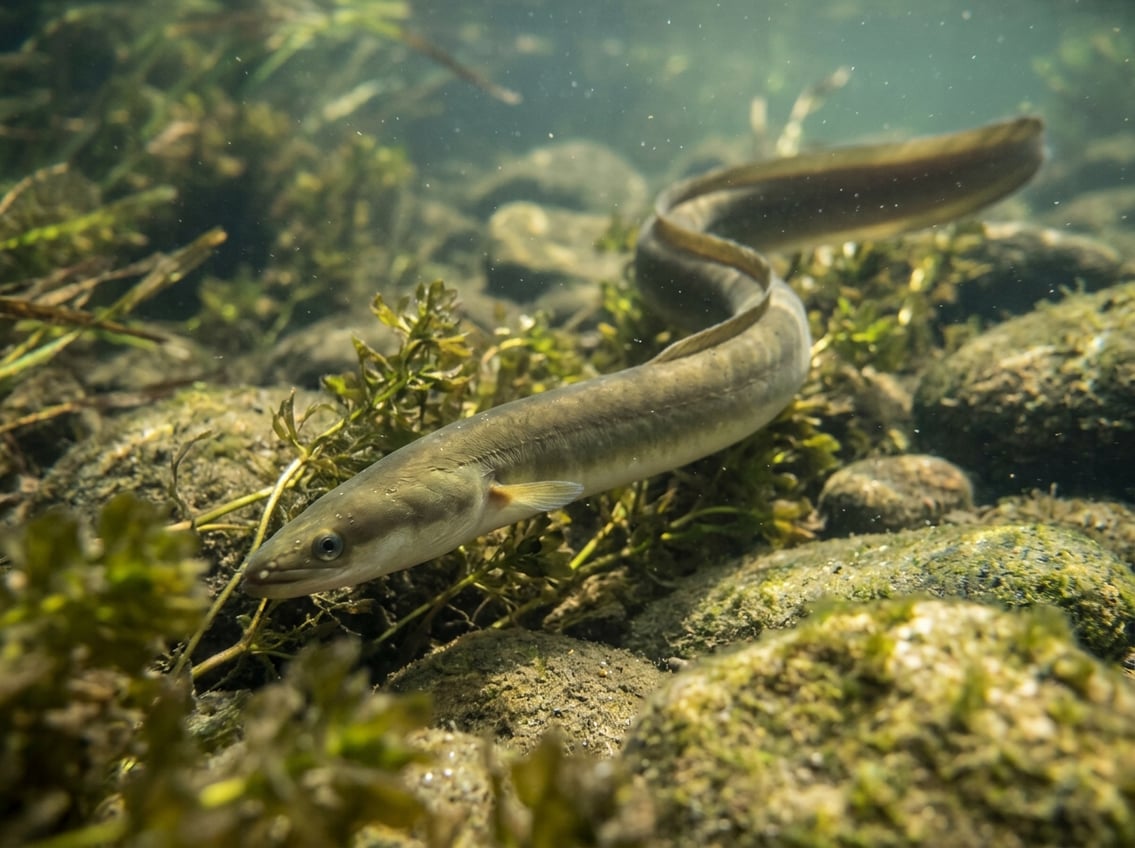
- Scientific name: Anguilla anguilla
- Habitat: Rivers, lakes, and estuaries across Europe and North Africa; spawns in the Sargasso Sea
- IUCN status: Critically Endangered
The European eel has a bizarre life cycle. Larvae drift thousands of miles from the Sargasso Sea, become glass eels at the coast, then grow up in rivers for years before making a single return trip to spawn and die.
Young eel numbers have crashed since the 1980s. Dams block their migration, wetlands have disappeared, parasites spread through trade, and illegal glass eel trafficking is still a headache despite CITES rules.
Fish passes, reconnecting habitats, and cracking down on trafficking are the best bets for helping them out.
4. Echidna: Short-Beaked Echidna
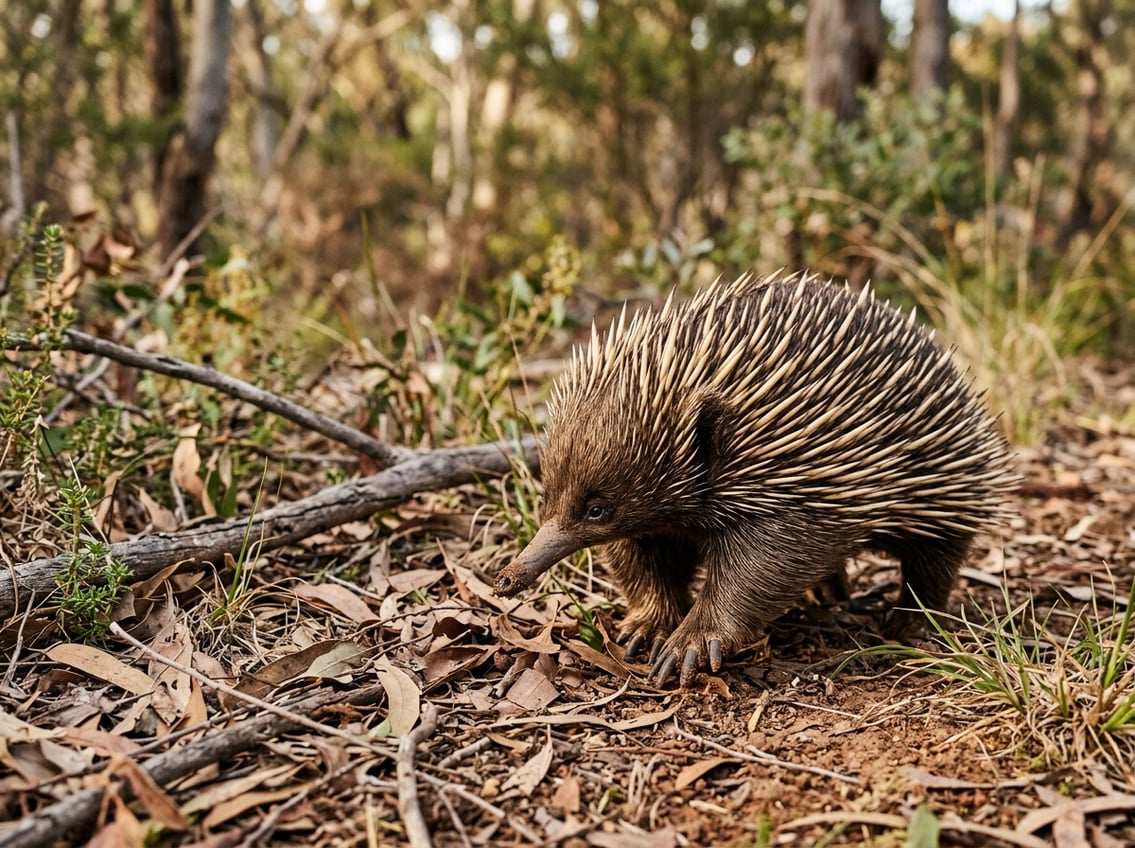
- Scientific name: Tachyglossus aculeatus
- Habitat: Forests, heath, grassland, and desert across Australia, Tasmania, and New Guinea
- IUCN status: Least Concern
The short-beaked echidna is a monotreme—one of just five egg-laying mammals out there. Its closest relative is the platypus, which is honestly just as strange.
No teeth here. It flicks a long sticky tongue in and out of termite mounds and ant nests up to 100 times a minute, which is pretty impressive.
Females lay a single leathery egg into a pouch, and the hatchling (called a puggle!) drinks milk from skin patches, not nipples. If threatened, an echidna digs straight down, leaving just its spines sticking out.
3. Emperor Penguin

- Scientific name: Aptenodytes forsteri
- Habitat: Antarctic sea ice and surrounding Southern Ocean waters
- IUCN status: Near Threatened
The emperor penguin is the tallest and heaviest penguin, reaching almost 4 feet. It breeds during the brutal Antarctic winter, when temps drop below minus 40°F and winds howl over 100 miles per hour.
Males balance a single egg on their feet for about 65 days without eating, huddling tightly with others to keep warm. Females come back from the sea to feed the chick.
Colonies need stable sea ice to survive. Early ice breakup can wipe out a whole generation, so the U.S. listed the species as threatened under the Endangered Species Act in 2022.
2. Eagle: Bald Eagle

- Scientific name: Haliaeetus leucocephalus
- Habitat: Lakes, rivers, reservoirs, and coastlines across North America
- IUCN status: Least Concern
The bald eagle is a fish-eating raptor with a wingspan up to 7.5 feet. Adults only get their famous white head and tail at about five years old, which surprises a lot of people.
Pairs build massive nests, adding sticks every season until some weigh over 2,000 pounds. That’s a lot of home improvement.
The bald eagle’s comeback is one of the best conservation stories in the U.S. DDT nearly wiped them out—down to just 417 nesting pairs—but banning the pesticide and adding legal protections helped numbers soar past 300,000. Lead poisoning from spent ammunition still threatens some eagles today.
1. Elephant: African Savanna Elephant

- Scientific name: Loxodonta africana
- Habitat: Savanna, grassland, woodland, and semi-desert across sub-Saharan Africa
- IUCN status: Endangered
The African savanna elephant stands as the largest land animal on Earth. Bulls can hit 13 feet at the shoulder and tip the scales at a whopping 13,000 pounds.
Its trunk? That thing packs about 40,000 muscle units and does triple duty as a nose, hand, and hose. Pretty wild, right?
Older matriarchs lead the herds, guiding everyone through the grasslands. Elephants use low-frequency rumbles to communicate, and these sounds even travel through the ground—how cool is that? You’ll see that detail pop up in general animal overviews of E species too.
Since 2021, IUCN officially split Africa’s elephants into two species. Savanna elephants are Endangered, while forest elephants now sit at Critically Endangered.
Both face big threats from ivory poaching and habitat loss. It’s honestly a tough situation for these giants.
Frequently Asked Questions
What animals start with the letter E?
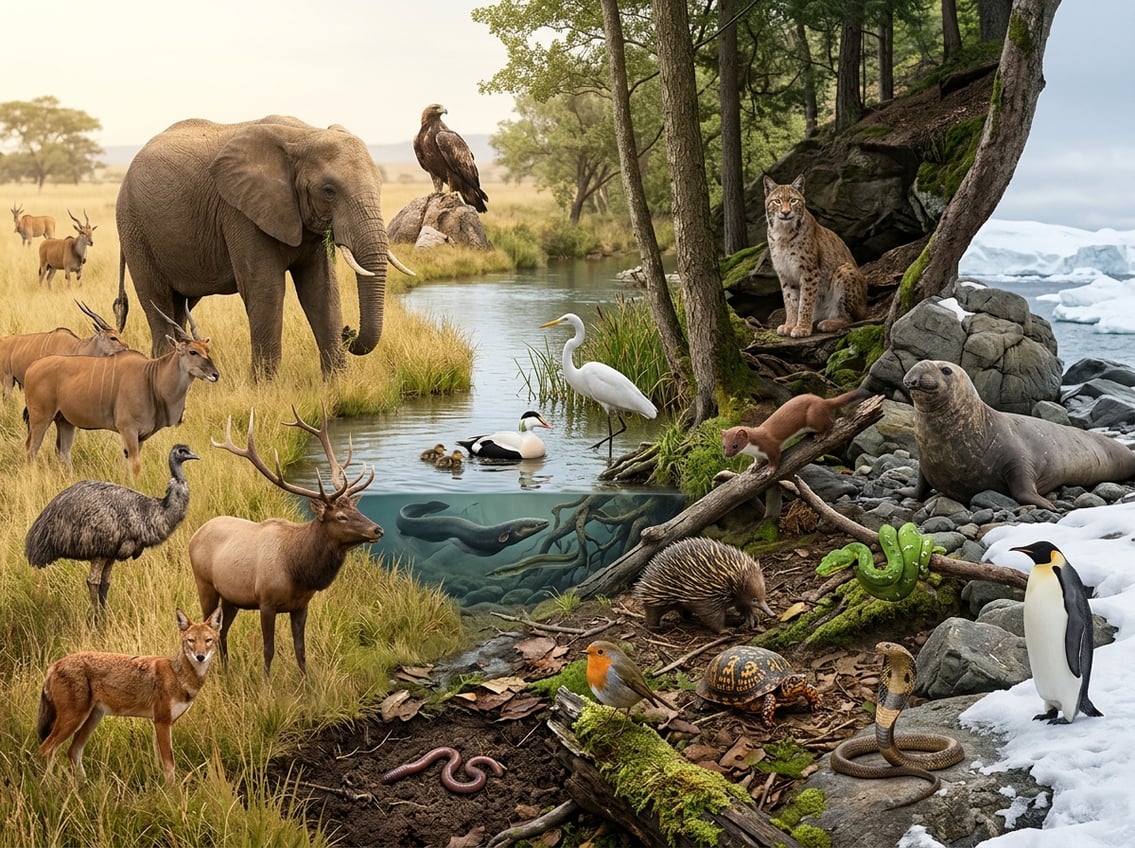
Let’s see—elephants, elk, eagles, emus, echidnas, emperor penguins, electric eels, and Eurasian lynx all make the list. Some less obvious ones? The eastern hellbender, Eld’s deer, Egyptian vulture, and European eel.
If you’re curious, this catalog of animal species that start with E even includes earthworms, earwigs, and ermines. There’s more “E” out there than you’d guess.
What are some mammals that start with E?
Eastern gorilla, elephant, elk, echidna, Ethiopian wolf, Eurasian lynx, European hedgehog, southern elephant seal, ermine, and Eurasian beaver—yep, all mammals. Their conservation statuses are all over the map, honestly.
For example, the echidna is Least Concern, but the eastern gorilla? That one’s Critically Endangered. It’s a mixed bag.
What zoo animals start with E?
Zoos often feature elephants, emus, emperor penguins, eastern gorillas, Eurasian lynx, echidnas, and elk. Some places also house rare species like Eld’s deer—if you’re lucky.
Many zoos pitch in with conservation, breeding, and research, especially for threatened species. It’s not just about putting animals on display.
What are dangerous animals that start with E?
Electric eels? They can zap you with a shock strong enough to knock out prey and injure people. Elephants sometimes cause human fatalities during defensive charges.
There are also venomous reptiles like the eastern brown snake and eastern diamondback rattlesnake. Most run-ins happen when animals feel threatened or cornered, so it’s usually best to give them space.
What land animals start with E?
Here’s a quick roll call: elephant, elk, emu, echidna, Ethiopian wolf, Eurasian lynx, European hedgehog, European bison, and eastern grey kangaroo. All land-dwellers, all different vibes.
They live everywhere from Australian deserts to high-altitude grasslands in Ethiopia. Nature really doesn’t run out of surprises, does it?
What animals start with E and end with A?
Let’s see—echidna, emerald tree boa, and eastern gorilla all fit the bill. Pretty cool lineup, right?
If you look at scientific names, you get even more. For example, Loxodonta africana is the African savanna elephant, and Egretta garzetta is the little egret.