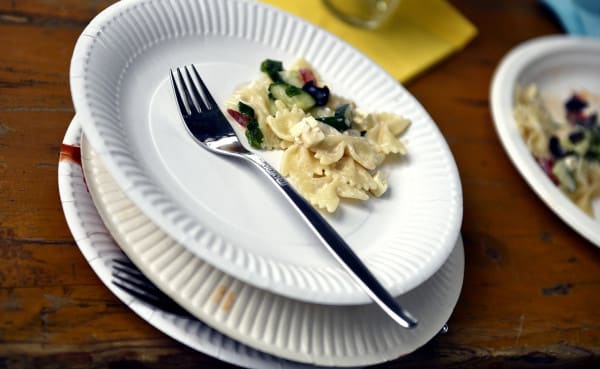
Compostable plates are worth buying when you need disposable dinnerware and have access to a composting program that accepts them. Many molded-fiber plates are designed for commercial composting, not an unmanaged backyard pile, so the disposal route matters as much as the material. For reusable meals at home, washable plates remain the lower-waste default.
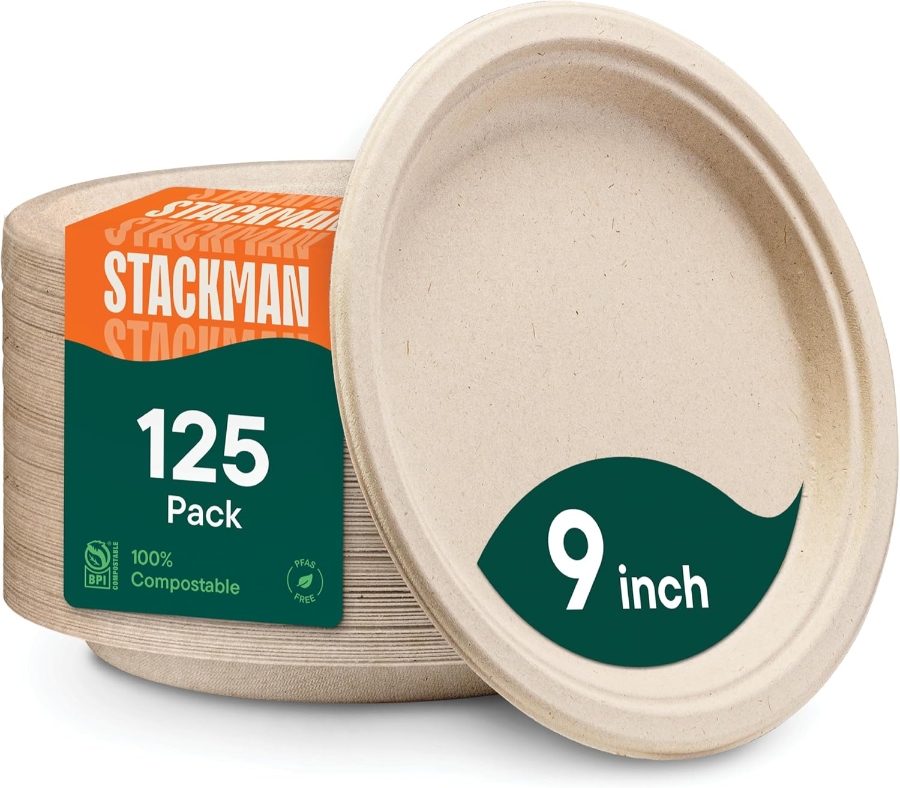
For most households, the Repurpose 10-Inch Dinner Plate is the most practical full-size option because it comes in a manageable 44-count pack and clearly states that it is commercially compostable. For larger parties, the Stack Man 9-Inch 125-Pack offers a useful bulk quantity. Caterers and event planners get the widest choice of sizes and shapes from World Centric.
Disclosure: This article contains affiliate links. We may earn a commission at no extra cost to you. Rankings are based on current manufacturer and retailer specifications, certification disclosures, availability, and use-case fit—not controlled laboratory or hands-on performance testing. Product details were last verified July 13, 2026.
Best compostable plates at a glance
| Pick | Best for | Size and pack | End-of-life note |
|---|---|---|---|
| 1. Repurpose 10-Inch Compostable Dinner Plates | overall for households and medium-size gatherings | 10-inch round plate; 44 plates per pack | Commercial composting; verify local acceptance |
| 2. Stack Man 9-Inch Compostable Paper Plates, 125-Pack | bulk consumer pack | 9-inch round plate; 125 plates | Commercial composting; seller lists BPI certification |
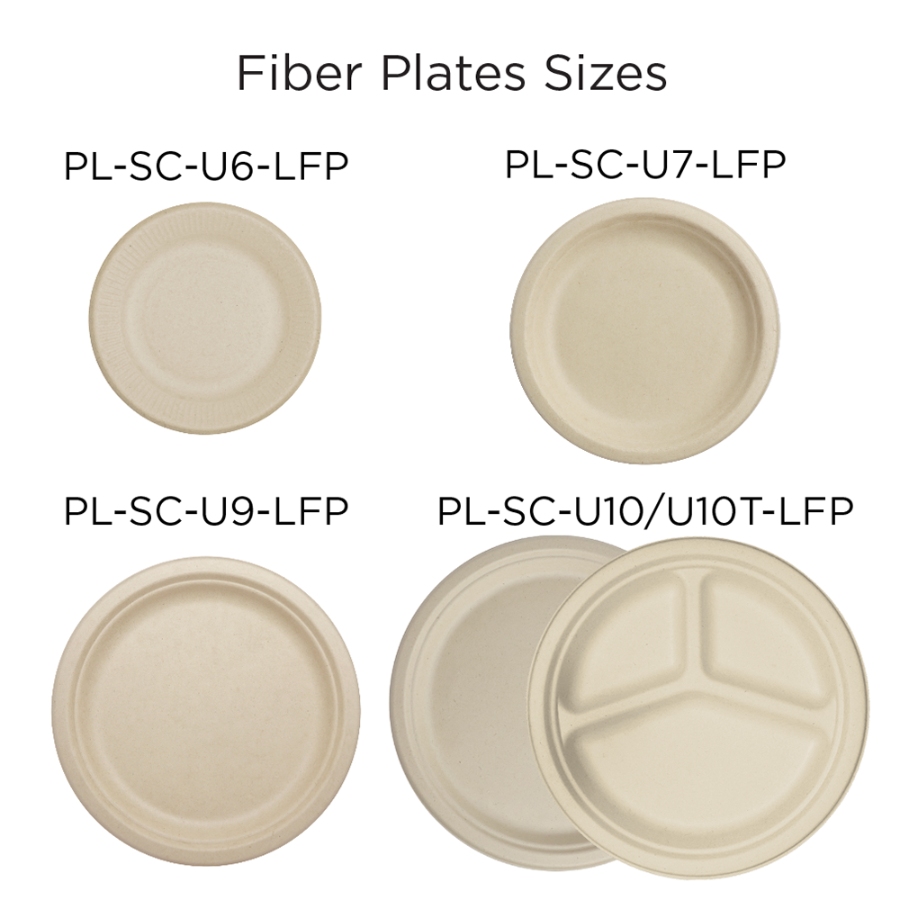
| 3. World Centric 9-Inch Fiber Round Plate | standard plate for catered events | 9-inch round plate; pack of 50 or case of 1,000 | Commercial composting; verify local acceptance |
| 4. World Centric 10-Inch Fiber Round Plate | full dinner portions | 10-inch round plate; pack of 50 or case of 800 | Commercial composting; verify local acceptance |
| 5. World Centric 10-Inch Three-Compartment Fiber Plate | divided compostable plate | 10-inch round plate with three compartments; pack of 50 or case of 700 | Commercial composting; verify local acceptance |
| 6. World Centric 10-Inch Fiber Square Plate | formal presentation | 10-inch square plate; pack of 50 or case of 500 | Commercial composting; verify local acceptance |
| 7. World Centric 12-Inch Fiber Oval Plate | compostable platter for buffets | 12-inch oval plate; pack of 125 or case of 500 | Commercial composting; verify local acceptance |
| 8. Repurpose 9-Inch Compostable Everyday Plates | everyday retail-size pack | 9-inch round plate; 44 plates per pack | Commercial composting; verify local acceptance |
| 9. Repurpose 6-Inch Compostable Dessert Plates | small pack for dessert and appetizers | 6-inch round plate; 20 plates per pack | Commercial composting; verify local acceptance |
| 10. World Centric 7-Inch Fiber Round Plate | bulk cake and snack plate | 7-inch round plate; pack of 50 or case of 1,000 | Commercial composting; verify local acceptance |
| 11. World Centric 6-Inch Ripple-Edge Fiber Plate | canapés and tasting portions | 6-inch round plate with a ripple edge; pack of 50 or case of 1,000 | Commercial composting; verify local acceptance |
Before you buy: confirm where the plate will go
A plate labeled “compostable” is not automatically suitable for home composting. The Federal Trade Commission’s compostable-claims guidance says claims should be qualified when an item is not suitable for home composting or when appropriate facilities are not widely available.
- Commercially compostable: Designed for controlled composting facilities with managed heat, moisture, oxygen, and processing time.
- Home compostable: The exact product carries a recognized home-compost certification and is intended to break down under well-managed backyard conditions.
- Biodegradable: A broad term that does not, by itself, prove a product will become usable compost within a defined time or setting. See our explanation of biodegradable vs. compostable.
Look for a recognized certification mark, then check the exact product in the BPI certified-product database or the certifier’s database. Finally, ask your municipal program, hauler, or receiving facility whether it accepts certified compostable plates. A valid certification does not force every facility to take the item.
How we chose these plates
We favored current products with clear specifications and an explicit end-of-life claim. We did not rank products by star ratings alone, and we removed older recommendations when the listing was unavailable, the brand and description did not match, or compostability claims could not be stated responsibly.
- Certification and claim clarity: Preference for third-party certification or manufacturer documentation tied to recognized compostability standards.
- Disposal transparency: Clear distinction between commercial and home composting.
- Practical formats: Useful sizes for dinners, desserts, buffets, divided meals, and catering.
- Material and chemical disclosure: Preference for molded plant fiber and explicit “no added PFAS” information where available.
- Current availability: Product pages and pack options checked on July 13, 2026.
- Honest limitations: No claim of hands-on testing, leak testing, microwave testing, or comparative strength testing by Our Endangered World.
The 11 best compostable plates
1. Repurpose 10-Inch Compostable Dinner Plates — Best overall for households and medium-size gatherings
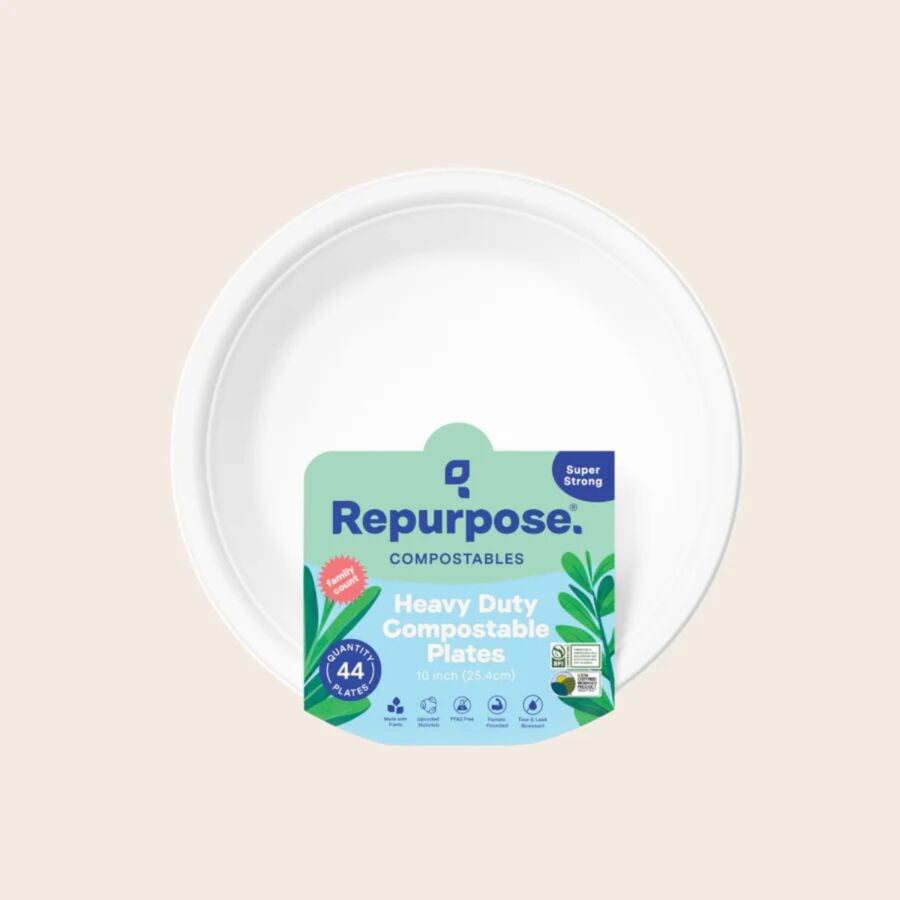
- Best for: overall for households and medium-size gatherings.
- Published specifications: 10-inch round plate; 44 plates per pack; made from sugarcane scraps and wood pulp; no PFAS added according to the manufacturer.
- Composting route: Certified for commercial composting only; local facilities may not accept compostable serviceware.
This is the most practical starting point for readers who need a full-size dinner plate without buying a foodservice case. Repurpose states the plate is intended for heavier servings and clearly distinguishes commercial compostability from backyard compostability.
Tradeoff: The per-plate cost is usually higher than large cases, and the environmental benefit depends on access to an accepting commercial compost program.
View current Repurpose 10-inch plate details
2. Stack Man 9-Inch Compostable Paper Plates, 125-Pack — Best bulk consumer pack
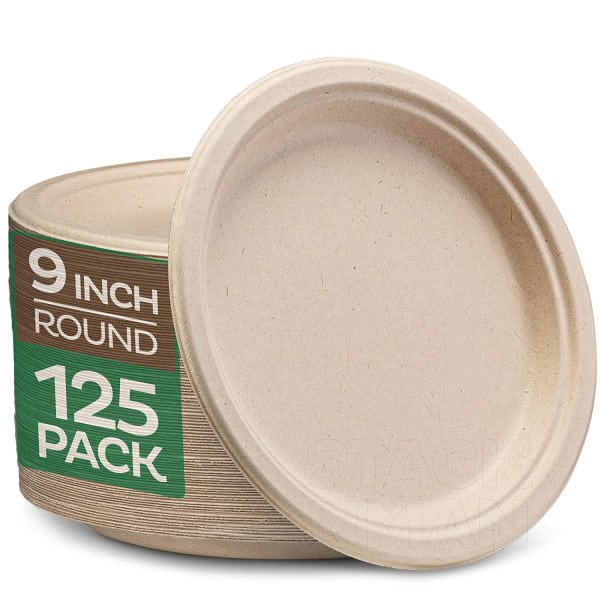
- Best for: bulk consumer pack.
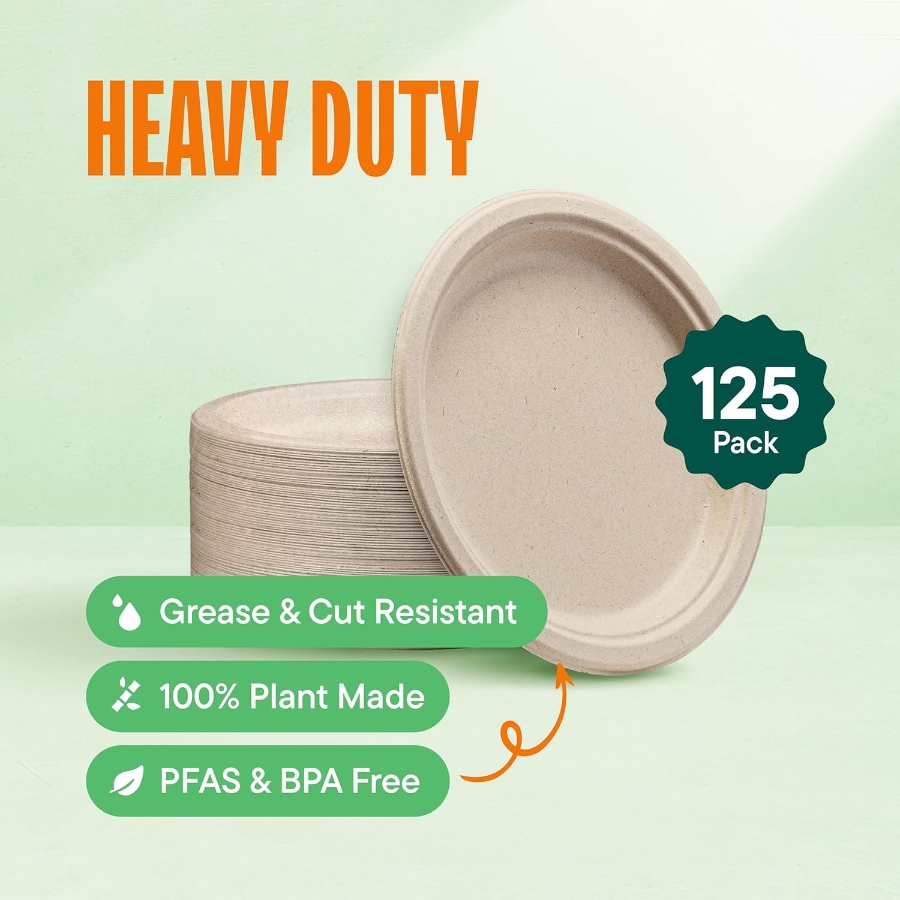
- Published specifications: 9-inch round plate; 125 plates; unbleached bagasse-based molded fiber; Amazon’s current listing says BPI certified, PFAS-free, and microwave safe.
- Composting route: Commercial composting; confirm the certification mark on the delivered package and verify local acceptance.
The 125-count format is convenient for weddings, cookouts, office meals, and other events that need more than a supermarket-size pack but less than a full foodservice case. The neutral brown color also avoids the bleached-paper look.
Tradeoff: Certification and performance details are taken from the seller listing rather than independent testing by this site. Marketplace inventory and product variants can change.
Check current Stack Man price on Amazon
3. World Centric 9-Inch Fiber Round Plate — Best standard plate for catered events
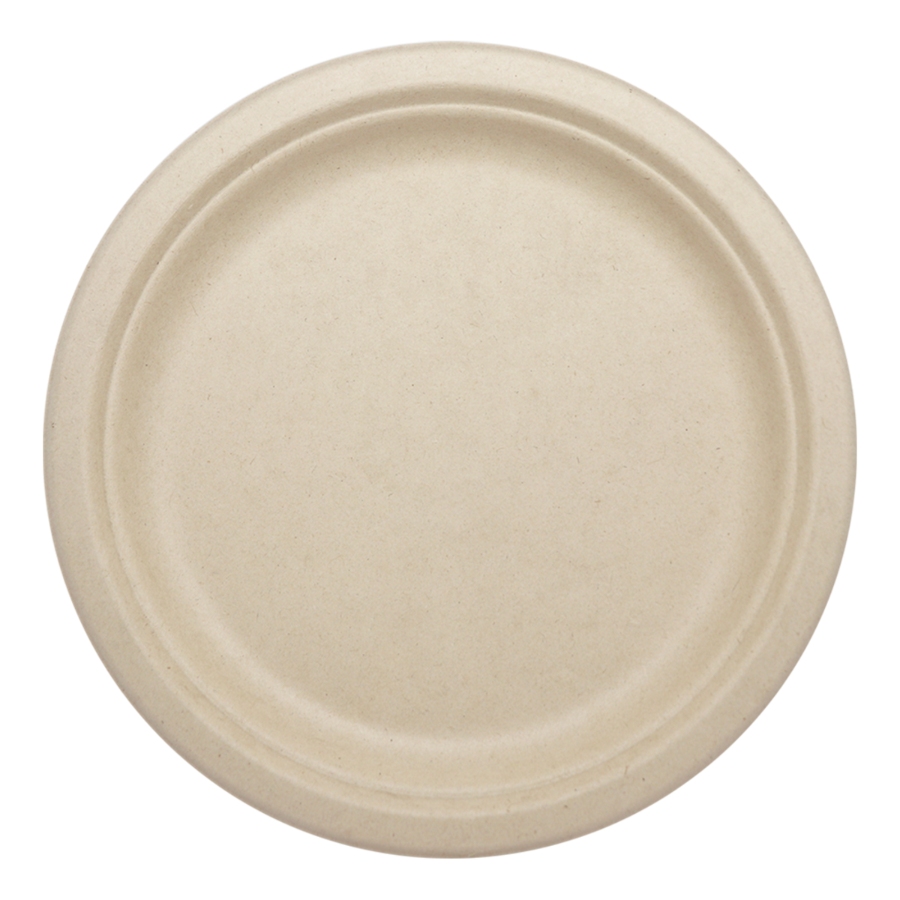
- Best for: standard plate for catered events.
- Published specifications: 9-inch round plate; pack of 50 or case of 1,000; unbleached plant fiber; no added PFAS according to the manufacturer.
- Composting route: Designed for commercial composting; ask the receiving facility whether it accepts certified fiber foodservice ware.
Nine inches is a useful middle ground for buffets and mixed menus: large enough for an entrée and sides without the extra material and table space of a 10-inch plate. World Centric also publishes pack and case options, which helps planners match quantity to guest count.
Tradeoff: A 1,000-count case is excessive for most households, and manufacturer claims about heat and grease resistance are not a substitute for hands-on testing with your menu.
View current World Centric 9-inch plate details
4. World Centric 10-Inch Fiber Round Plate — Best for full dinner portions
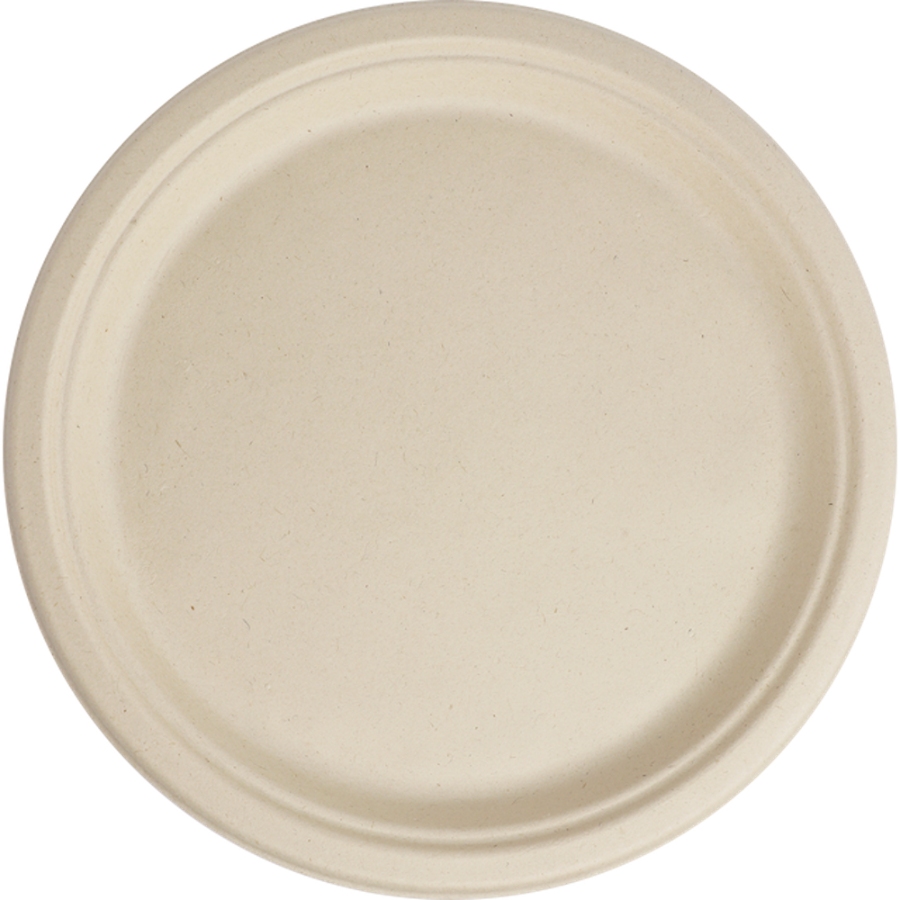
- Best for: full dinner portions.
- Published specifications: 10-inch round plate; pack of 50 or case of 800; unbleached plant fiber; no added PFAS according to the manufacturer.
- Composting route: Commercial composting; local acceptance is required.
Choose the 10-inch version when guests will serve a main dish, two sides, or foods with sauces. The larger surface provides more separation than a 9-inch plate while retaining a familiar round shape.
Tradeoff: It uses more material and storage space than smaller plates. For cake, snacks, or light lunches, a 6- or 7-inch plate is more efficient.
View current World Centric 10-inch round plate details
5. World Centric 10-Inch Three-Compartment Fiber Plate — Best divided compostable plate
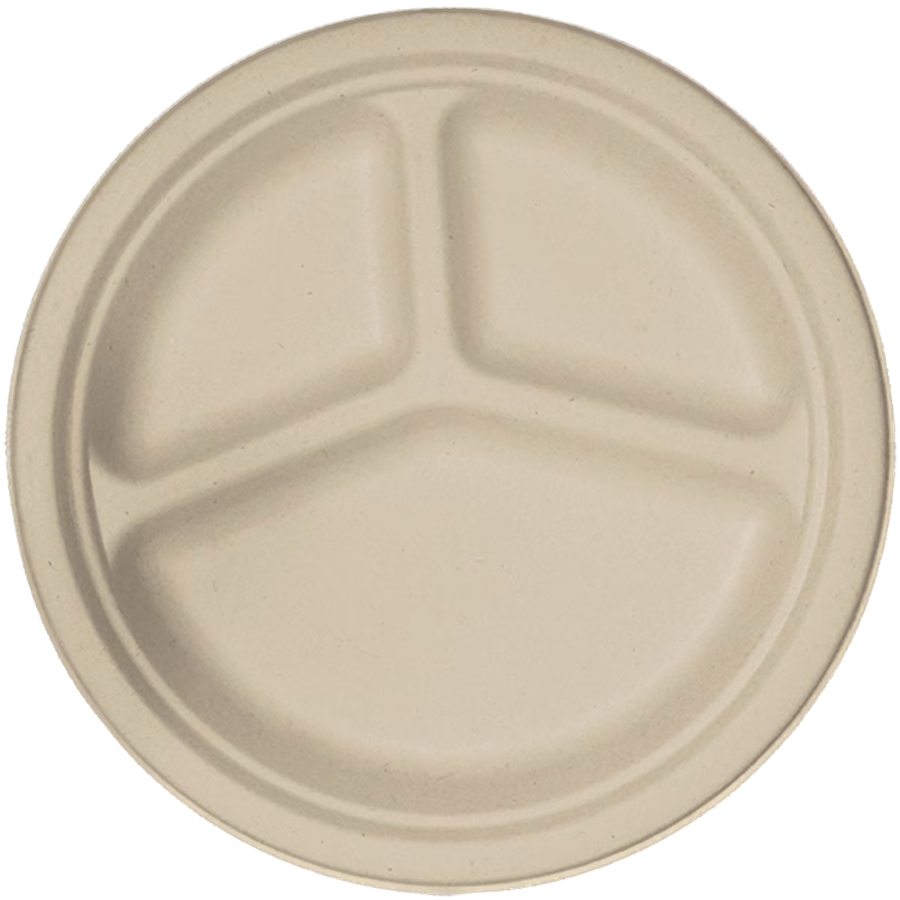
- Best for: divided compostable plate.
- Published specifications: 10-inch round plate with three compartments; pack of 50 or case of 700; unbleached plant fiber; no added PFAS according to the manufacturer.
- Composting route: Commercial composting; confirm acceptance with the local organics program.
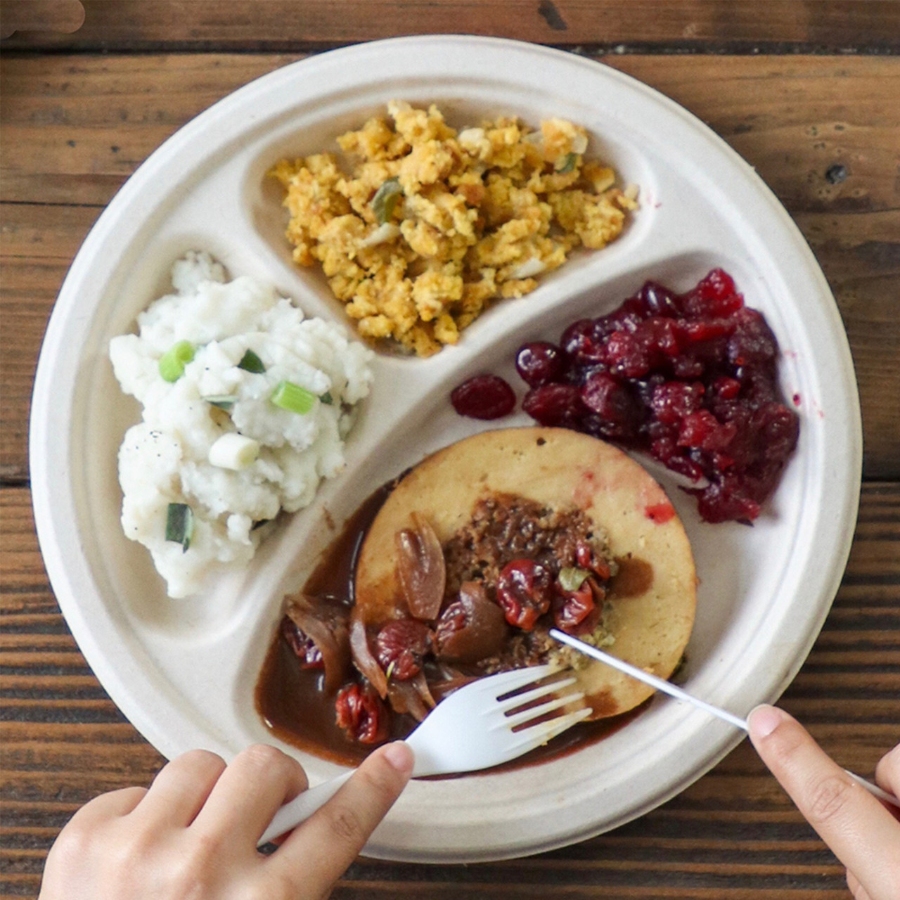
Three compartments help keep entrées, salads, fruit, sauces, and side dishes separate. That makes this format especially useful for school events, catered buffets, meal service, and guests who prefer foods not to mix.
Tradeoff: Compartments reduce the usable area for a single large item such as pizza or a sandwich, and the molded ridges can make the plate less flexible for varied menus.
View current World Centric three-compartment plate details
6. World Centric 10-Inch Fiber Square Plate — Best for formal presentation
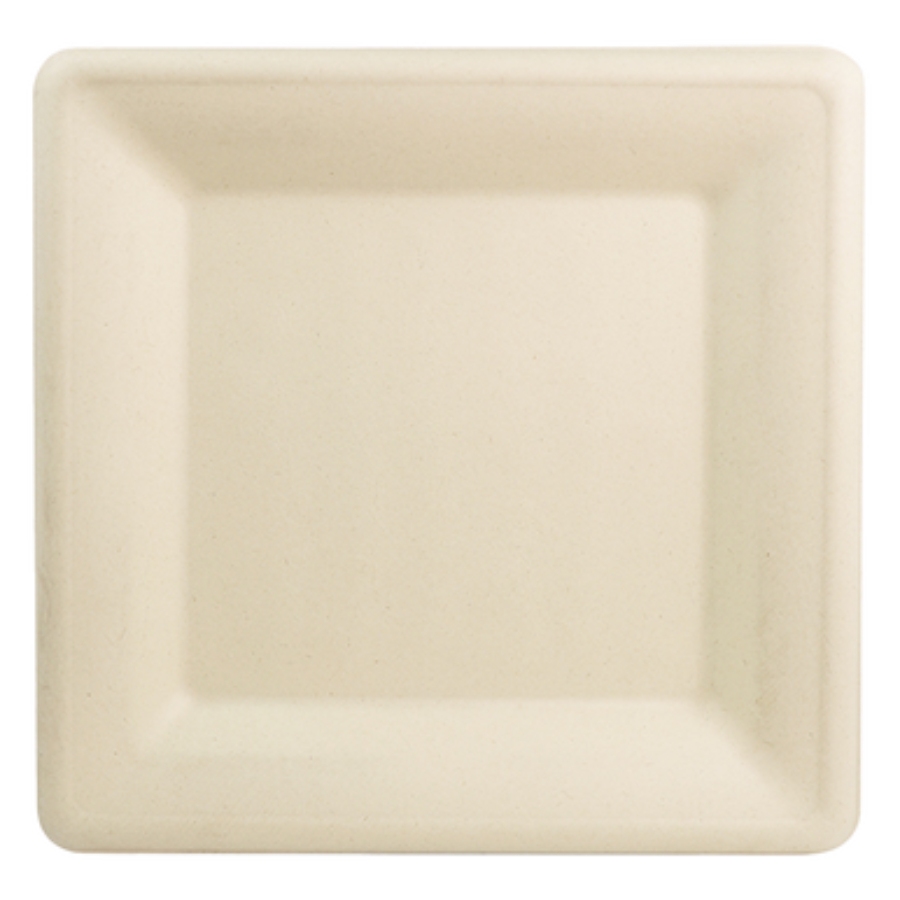
- Best for: formal presentation.
- Published specifications: 10-inch square plate; pack of 50 or case of 500; unbleached plant fiber; no added PFAS according to the manufacturer.
- Composting route: Commercial composting; local acceptance is required.
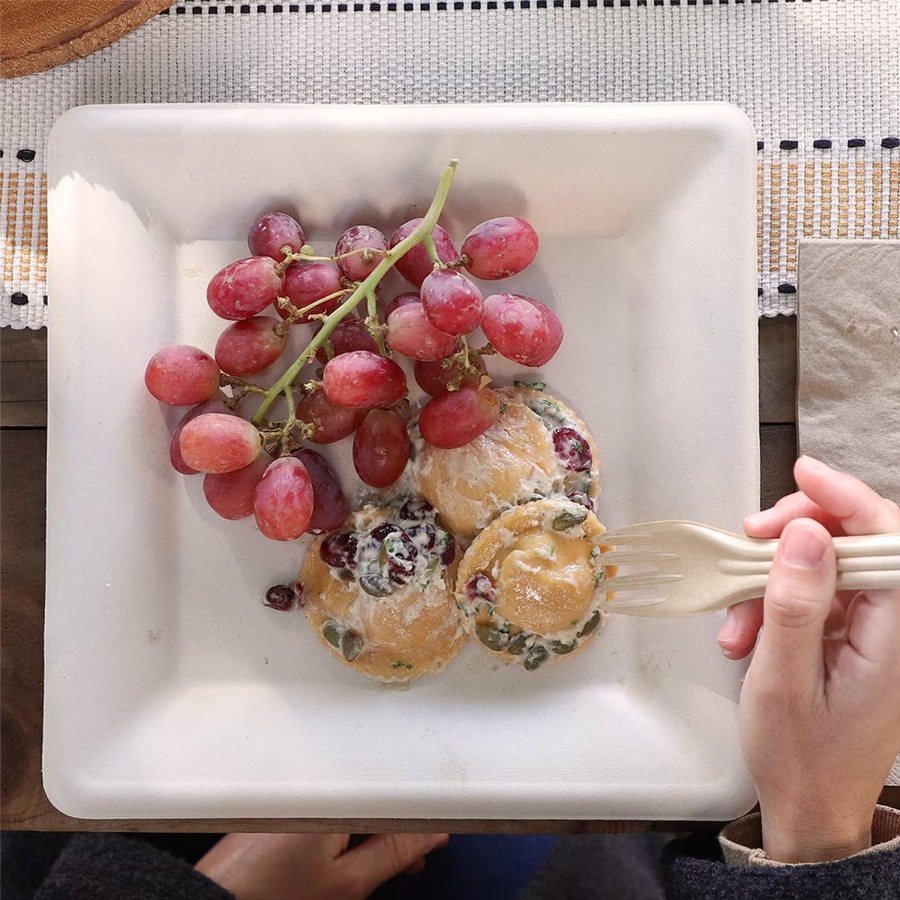
The square shape works well for weddings, plated desserts, corporate receptions, and other events where presentation matters. It provides a more polished look than a standard round molded-fiber plate without switching to plastic.
Tradeoff: Square plates often cost more, stack less efficiently, and occupy more table space than round plates of similar capacity.
View current World Centric square plate details
7. World Centric 12-Inch Fiber Oval Plate — Best compostable platter for buffets
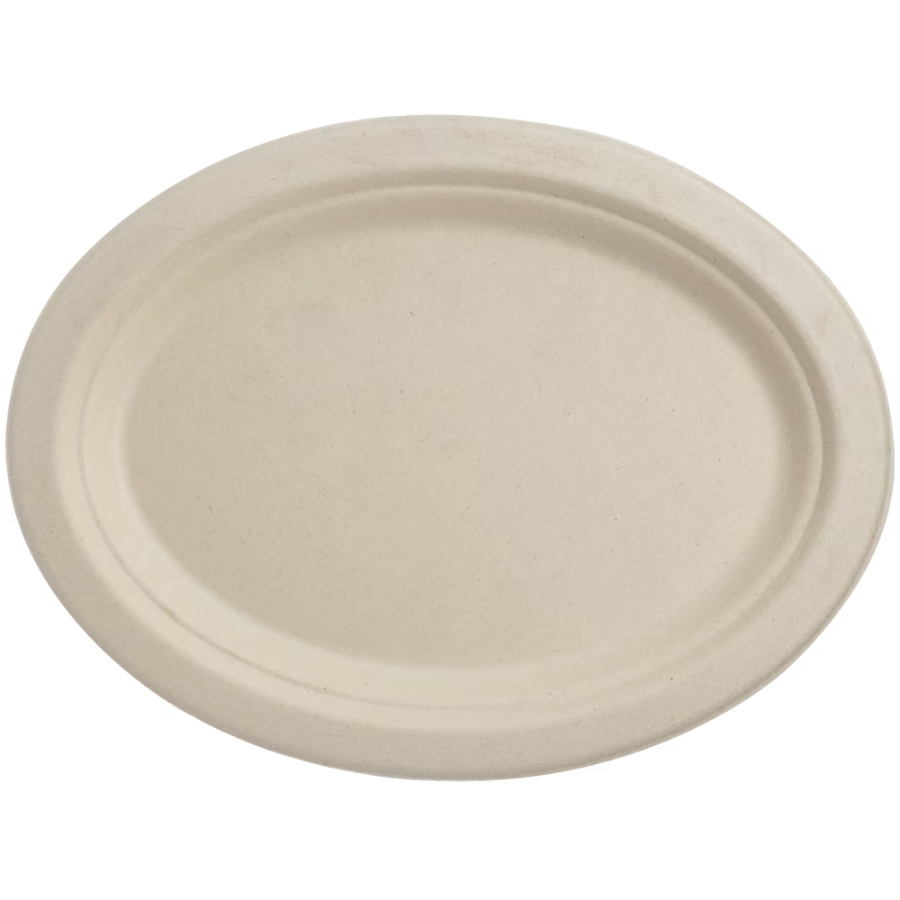
- Best for: compostable platter for buffets.
- Published specifications: 12-inch oval plate; pack of 125 or case of 500; unbleached plant fiber; no added PFAS according to the manufacturer.
- Composting route: Commercial composting; confirm local acceptance.
This oversized oval format is better treated as a serving platter or large buffet plate than as everyday dinnerware. It suits sandwiches, shared appetizers, barbecue portions, and catered meals that need extra room.
Tradeoff: It is too large for many place settings, requires more storage, and may encourage guests to take more food than they can finish.
View current World Centric 12-inch oval plate details
8. Repurpose 9-Inch Compostable Everyday Plates — Best everyday retail-size pack
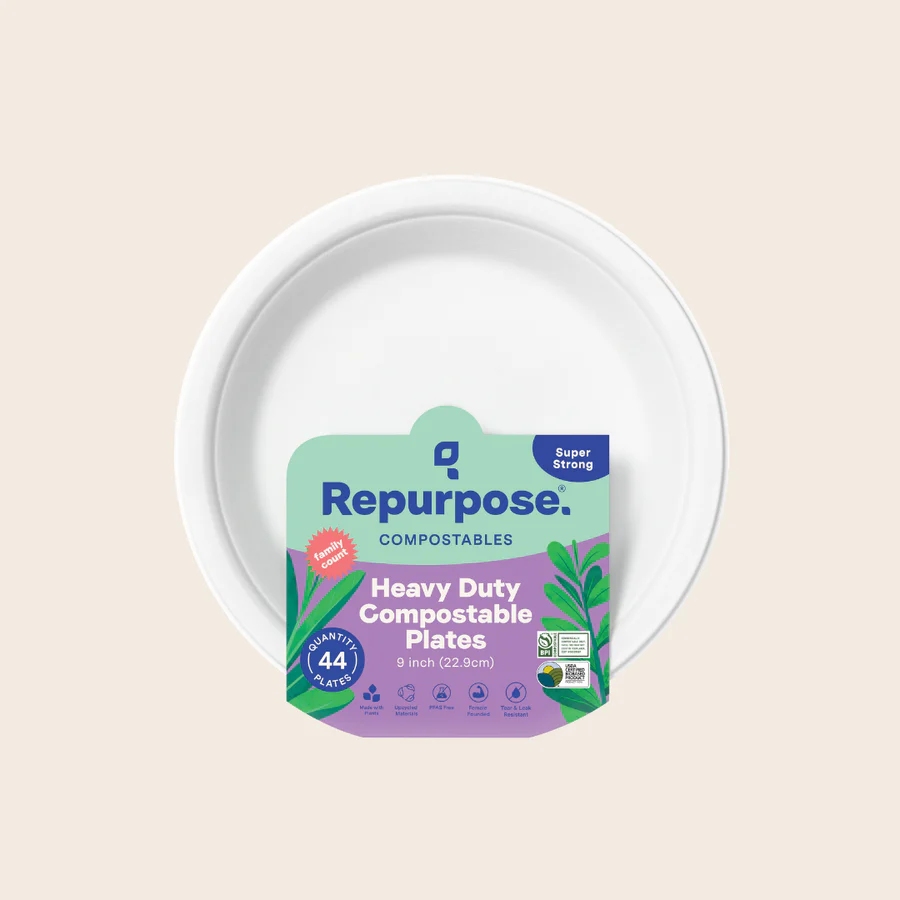
- Best for: everyday retail-size pack.
- Published specifications: 9-inch round plate; 44 plates per pack; sugarcane scraps and wood pulp; no PFAS added according to the manufacturer.
- Composting route: Certified for commercial composting only; facilities may not be available locally.
This is a sensible size for lunches, potlucks, and moderate portions. The 44-count package is easier to store than a catering case and provides enough plates for a small party with extras.
Tradeoff: It offers less room than the 10-inch version for saucy or multi-course meals, and it should not be placed in a backyard pile unless the exact package carries a separate home-compost certification.
View current Repurpose 9-inch plate details
9. Repurpose 6-Inch Compostable Dessert Plates — Best small pack for dessert and appetizers
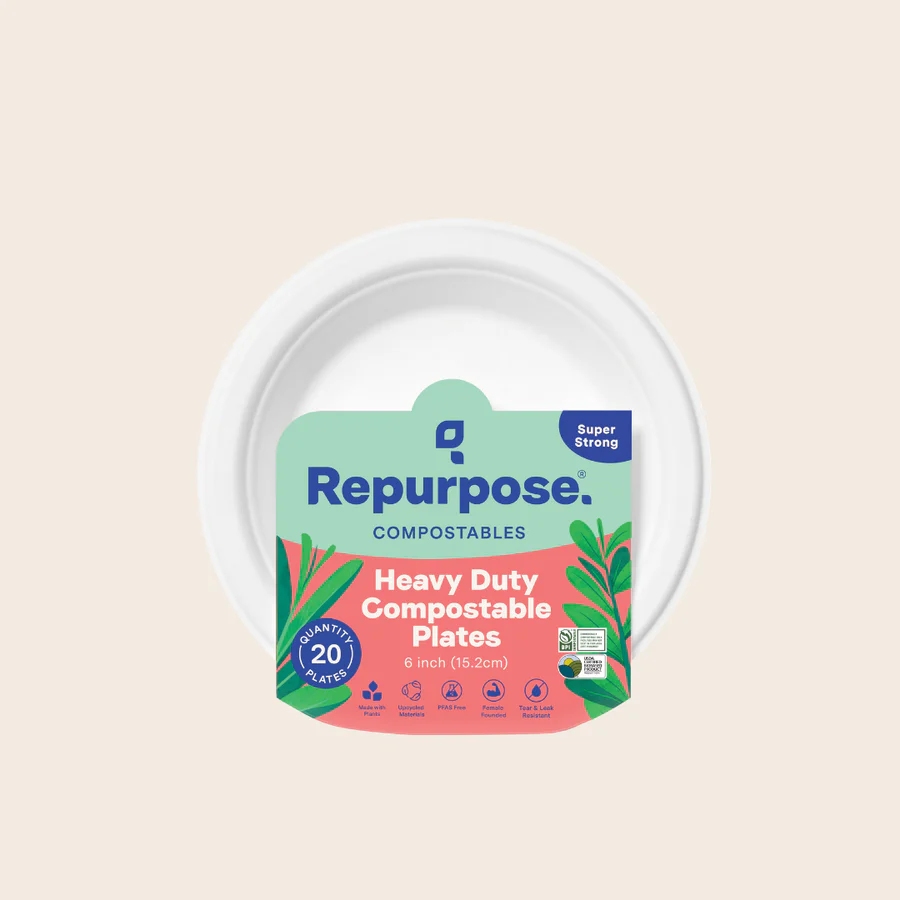
- Best for: small pack for dessert and appetizers.
- Published specifications: 6-inch round plate; 20 plates per pack; sugarcane scraps and wood pulp; no PFAS added according to the manufacturer.
- Composting route: Certified for commercial composting only.
The 6-inch size is appropriate for cake, cookies, fruit, hors d’oeuvres, and tasting portions. Buying a small, purpose-fit plate avoids using a full dinner plate for a single slice of dessert.
Tradeoff: Twenty plates may not cover a larger gathering, and the small diameter is unsuitable for meals with multiple sides.
View current Repurpose 6-inch plate details
10. World Centric 7-Inch Fiber Round Plate — Best bulk cake and snack plate
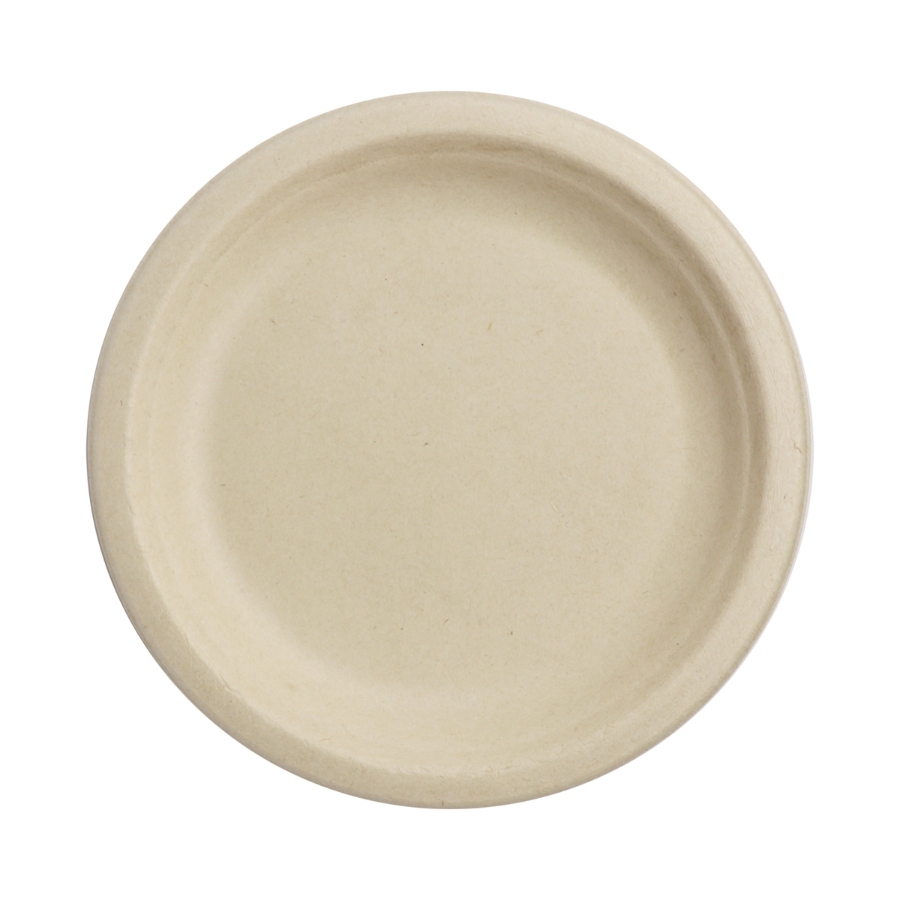
- Best for: bulk cake and snack plate.
- Published specifications: 7-inch round plate; pack of 50 or case of 1,000; unbleached plant fiber; no added PFAS according to the manufacturer.
- Composting route: Commercial composting; ask the local facility before purchasing a case.
Seven inches gives cake, sandwiches, and light lunches more room than a dessert plate while using less material than a dinner plate. The pack-of-50 option is practical for birthdays and community events.
Tradeoff: It is still too small for a full meal, and the 1,000-count case only makes sense for frequent events or foodservice operations.
View current World Centric 7-inch plate details
11. World Centric 6-Inch Ripple-Edge Fiber Plate — Best for canapés and tasting portions
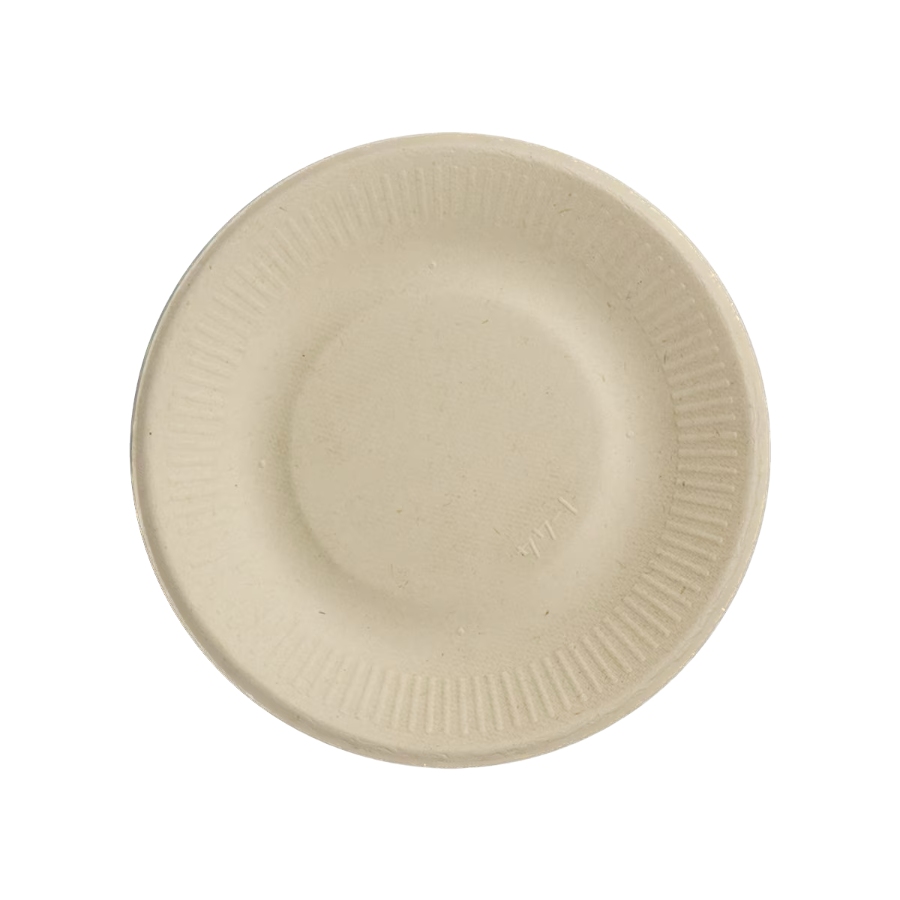
- Best for: canapés and tasting portions.
- Published specifications: 6-inch round plate with a ripple edge; pack of 50 or case of 1,000; unbleached plant fiber; no added PFAS according to the manufacturer.
- Composting route: Commercial composting; confirm local acceptance.
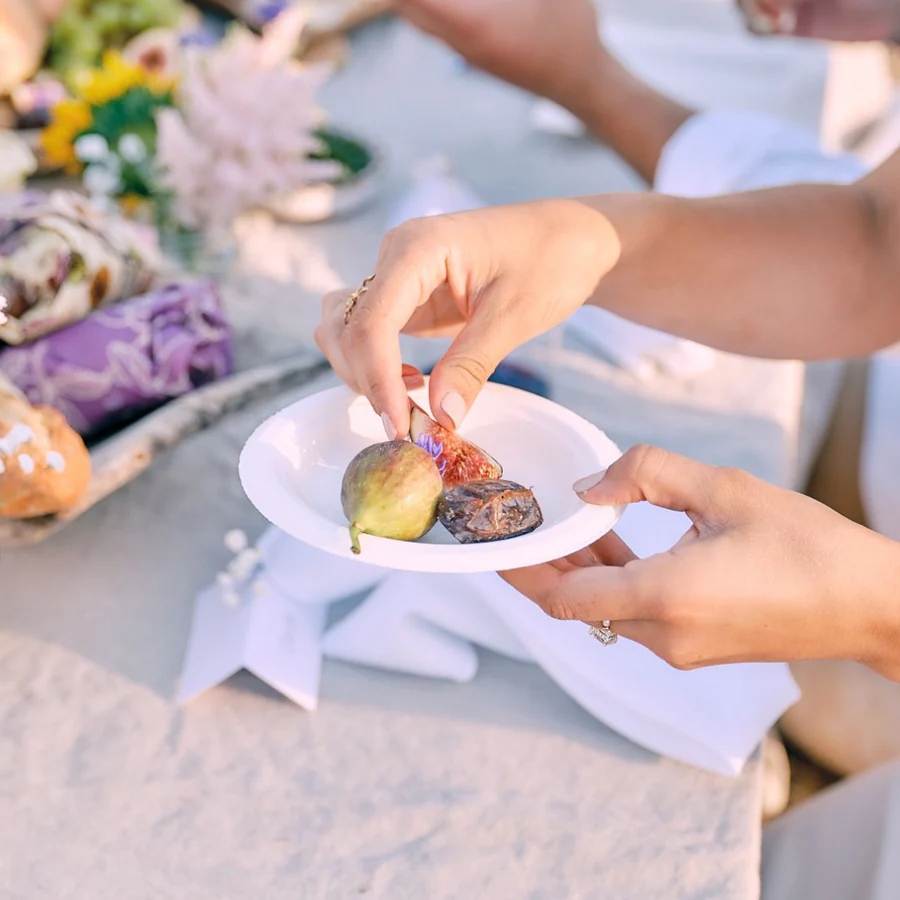
The small size and textured edge suit passed appetizers, tasting events, cake, and bite-size portions. It is a more intentional choice than handing every guest a 9- or 10-inch plate for one snack.
Tradeoff: It has limited capacity and should not be marketed or used as a dinner plate.
View current World Centric 6-inch plate details
How to choose compostable plates
Choose the plate size for the food, not the guest count
- 6 inches: Cake, cookies, fruit, passed appetizers, and tastings.
- 7 inches: Sandwiches, snacks, cake with sides, and light lunches.
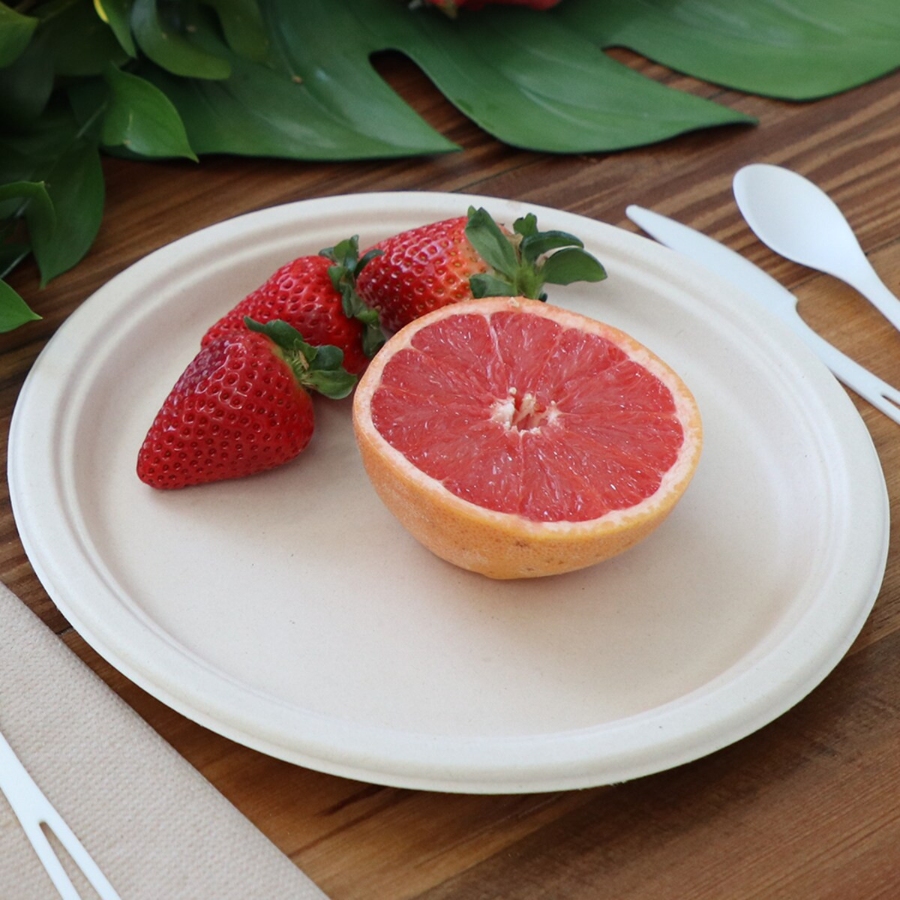
- 9 inches: Standard meals, potlucks, picnics, and mixed buffets.
- 10 inches: Full dinner portions, saucy food, barbecue, and multiple sides.
- 12-inch oval: Shared appetizers, catering platters, or oversized buffet portions.
Buying the smallest size that comfortably holds the meal reduces material use, storage space, and often cost.
Match the material to the meal
Bagasse and molded plant fiber are common for sturdy dinner plates because they can be formed into rigid shapes without a conventional plastic shell. Paper plates vary widely: plain uncoated paper may be compostable, while plastic-, wax-, or polymer-coated paper needs a specific compostability claim. Palm-leaf plates can be rigid and decorative, but current U.S. availability is inconsistent. PLA- or biopolymer-coated fiber generally needs a commercial composting facility unless the exact item is separately certified for home composting.
Check certification before marketing language
Words such as “earth-friendly,” “natural,” and “biodegradable” are not substitutes for a product-specific certification. In North America, the BPI certification mark indicates that a product meets the organization’s compostability criteria, including ASTM-based requirements and limits for total fluorine. For backyard composting, look for an explicit home-compost mark tied to the exact SKU.
Treat “no added PFAS” as a transparency signal, not the whole decision
The U.S. Food and Drug Administration announced in 2024 that grease-proofing materials containing PFAS were no longer being sold for use in U.S. food packaging. Product-specific “no added PFAS” disclosures and certification criteria can still help buyers compare current stock, imported products, and older inventory, but they do not establish every other environmental attribute of a plate.
Confirm heat-use instructions
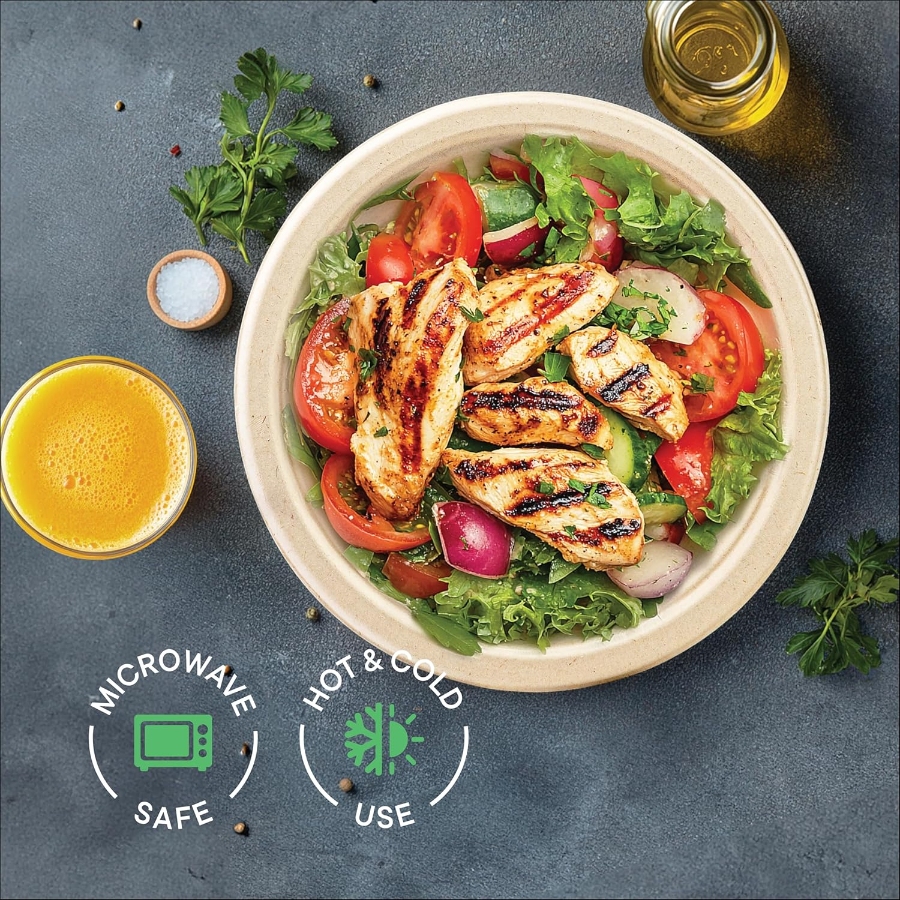
Some molded-fiber plates are labeled microwave safe or suitable for short periods in an oven. Follow the exact package instructions. Do not assume every compostable plate is oven safe, dishwasher safe, or reusable simply because another product made from similar fiber is.
How to dispose of compostable plates correctly
The right bin depends on the exact plate and the rules of the facility that will receive it. The U.S. Environmental Protection Agency describes composting as a managed aerobic process, and acceptance rules vary because facilities use different equipment, timeframes, and contamination controls.
- Read the plate and package. Identify whether it says commercial compostable, home compostable, or only biodegradable.
- Verify the certification. Search the certifier’s database using the brand, product name, or SKU when possible.
- Ask the receiving program. Check your city, hauler, event venue, or compost facility—not only the manufacturer’s website.
- Remove prohibited contamination. Follow local rules for foil, condiment packets, plastic cutlery, stickers, and other non-compostable items.
- Use the organics bin only when accepted. Pair accepted plates with certified compostable trash bags only if your program also accepts those liners.
- Home-compost only certified products. BPI notes that managed home systems may take 6–12 months or longer, and smaller pieces generally break down faster. Practical references in these composting books can help with pile management.
- Use trash when no accepted route exists. A landfill outcome is disappointing, but wish-cycling a plate into recycling or organics can contaminate a larger load. See the main types of waste disposal and follow local instructions.
To locate larger U.S. facilities, start with the EPA composting resources and facility map. Always confirm acceptance directly before organizing an event around compostable serviceware.
Can paper plates be composted?
Some paper plates can be composted, but not all. Plain, uncoated paper or molded-fiber plates may be acceptable in a home or commercial system, depending on local rules. A glossy, plastic-lined, wax-coated, or otherwise treated paper plate should not be assumed compostable. A certified compostable coating may still require commercial conditions.
Food residue also changes the answer. Commercial organics programs may accept meat, dairy, oil, and food-soiled fiber, while a backyard pile may attract pests or fail to reach conditions needed for those materials. Use the same product-specific approach you would use when deciding whether brown paper bags are compostable: identify the coating, certification, and local rules first.
Are compostable plates better than plastic plates?
They can be a better fit when three conditions are met: the plate is credibly certified, it replaces conventional single-use plastic, and it reaches an accepting compost facility with food scraps. Compostable plates are not automatically the lowest-impact choice in every situation.
The EPA’s waste-management hierarchy places source reduction and reuse above recycling and composting. That means washable plates are usually the first option when practical. Compostable plates are most useful for events, takeout, emergency service, and food-soiled situations where reuse is impractical and organics collection is available. They do not erase the resource use of manufacturing or the wider harms of plastic pollution on their own.
Products we removed or did not recommend
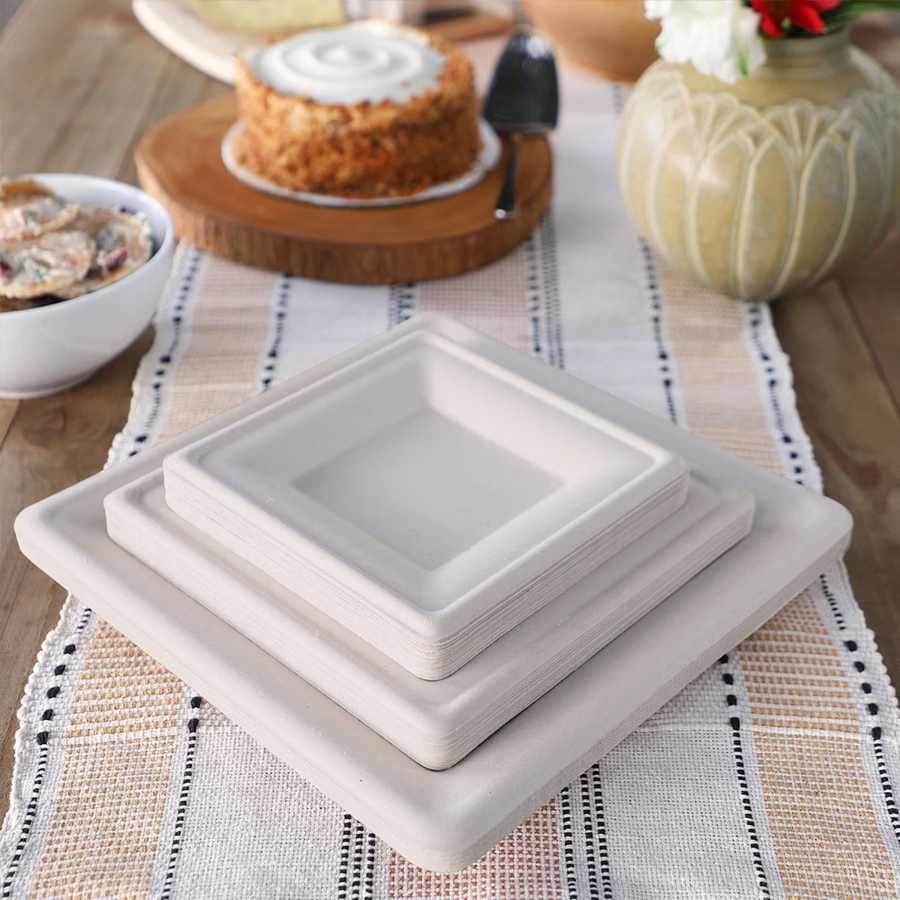
The previous version included several marketplace products with stale links, mismatched brand descriptions, unclear certifications, or current availability problems. Palm-leaf plates were also de-emphasized because current U.S. availability and product-level documentation were inconsistent across the listings reviewed. Exclusion does not prove a product is poor; it means we could not verify enough current information to recommend it confidently in this update.
Frequently asked questions about compostable plates
Are compostable plates safe for a backyard compost pile?
Only when the exact product is labeled and certified for home composting. Many molded-fiber plates are commercially compostable and should go to an accepting facility, not automatically into a backyard pile.
How long do compostable plates take to break down?
Time depends on certification, material, temperature, moisture, oxygen, particle size, and pile management. Commercial facilities use controlled conditions and may process accepted products in a matter of months. BPI says managed home systems may take 6–12 months or longer.
Can compostable plates go in the microwave?
Some can, but microwave safety is product-specific. Follow the package instructions and avoid assuming that every bagasse, paper, palm-leaf, or biopolymer plate has the same heat tolerance.
Can ordinary paper plates go in compost?
Plain, uncoated paper plates may be accepted, but plastic-, wax-, or polymer-coated plates need a specific compostability claim. Local programs may also have rules for food residue and coatings.
Can compostable plates go in the recycling bin?
Usually not. Compostable serviceware can contaminate paper or plastic recycling streams. Put it in organics only when the receiving program accepts it; otherwise follow local trash guidance.
What certification should I look for on compostable plates?
In North America, BPI certification is a useful commercial-compostability signal. For backyard use, look for a recognized home-compost certification tied to the exact product, then verify it in the certifier’s database.
The bottom line
Choose a reusable plate when washing and reuse are practical. When disposables are necessary, buy the smallest certified compostable plate that fits the meal and confirm the disposal route before ordering. For most households, Repurpose’s 10-inch plate is the easiest full-size choice; for a high guest count, Stack Man’s 9-inch 125-pack is the more convenient bulk format.
A credible compostable plate is not a free pass to consume without limits. Its value comes from pairing a fit-for-purpose product with correct collection, an accepting facility, and a realistic plan to keep conventional plastic out of the waste stream.
Related sustainable-living resources