
Asian elephants are Endangered because their habitat is being lost, degraded, and divided by farms, roads, settlements, plantations, mines, and other development. Fragmentation forces elephants and people into the same spaces, increasing crop damage, injury, death, and retaliatory killing. Poaching, illegal trade in ivory and other body parts, dangerous infrastructure, and the capture of wild elephants add further pressure.
WWF summarizes the wild population as fewer than 50,000. The IUCN Red List assessment for Elephas maximus compiled 2018 country estimates of 48,323 to 51,680 wild elephants, while warning that the total is uncertain because survey methods and data quality vary across the species’ range.
This profile explains where Asian elephants live, how they differ from African elephants, why their numbers are declining, and which conservation actions offer the strongest protection. For broader context, see these facts about elephants.
Asian elephant quick facts
| Fact | Current answer |
|---|---|
| Scientific name | Elephas maximus |
| Global status | Endangered on the IUCN Red List; population trend decreasing |
| Estimated wild population | Fewer than 50,000 is the commonly cited current estimate; the IUCN’s 2018 country compilation totaled 48,323–51,680, with substantial uncertainty |
| Native range | 13 countries across Asia, including India, Sri Lanka, southern China, Sumatra, and Borneo |
| Largest remaining population | India, which held more than 60% of the estimated wild population in the IUCN’s 2018 compilation |
| Habitat | Grasslands, scrub, secondary forest, and several tropical forest types from sea level to more than 3,000 meters |
| Diet | Herbivorous: grasses, leaves, bark, roots, shoots, vines, and fruit |
| Adult size | About 2,750–5,420 kilograms (6,000–12,000 pounds) and 1.8–3.8 meters (6–12 feet) at the shoulder |
| Pregnancy | Usually 18–22 months |
| International trade protection | Listed in CITES Appendix I |
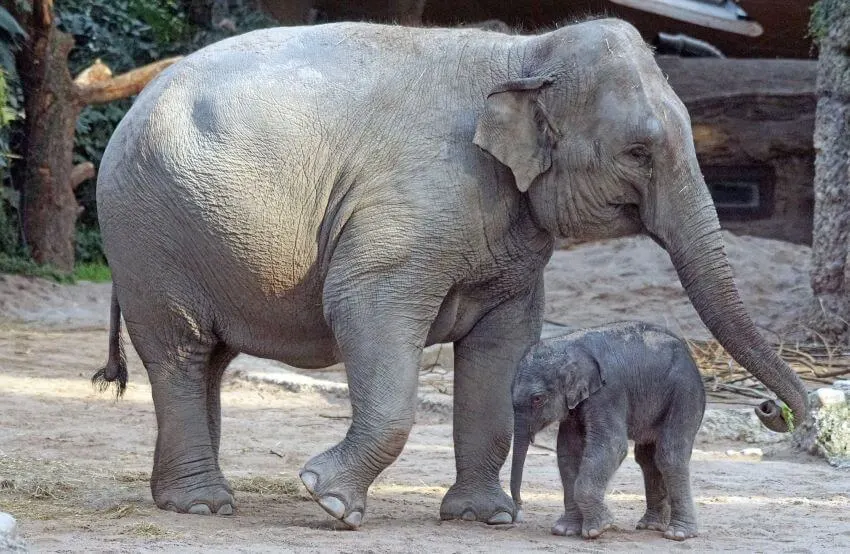
Why are Asian elephants endangered?
The main threat is not a single event. It is the loss of connected landscapes large enough for elephants to find food, water, mates, and safe seasonal routes. Habitat fragmentation then intensifies other threats, especially conflict with people and deaths linked to roads, railways, power lines, and retaliation.
A 2023 study in Scientific Reports modeled a loss of more than 64% of suitable Asian elephant habitat since 1700. It also estimated that average habitat-patch size fell by 83%. These are modeled historical estimates, not a direct count of every hectare, but they show why surviving forest alone is not enough: elephants also need connected routes between feeding and water areas.
Habitat loss and fragmentation
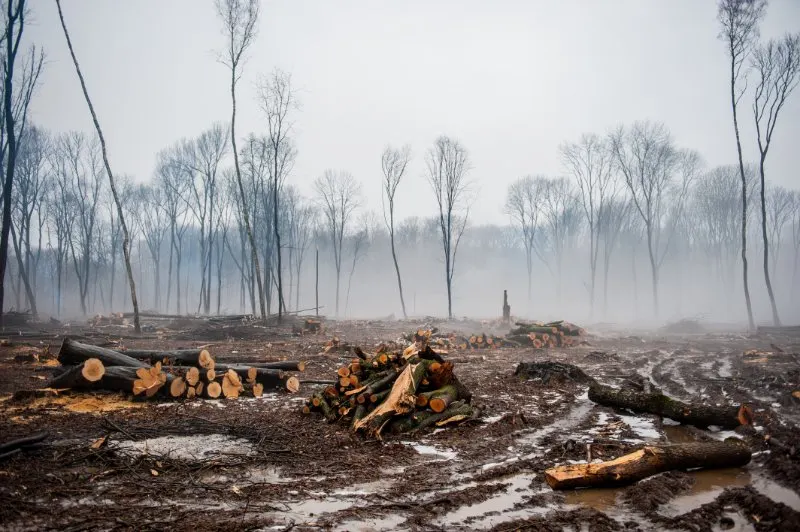
Elephant range is converted or divided by agriculture, settlements, plantations, industry, mining, fences, canals, roads, and railways. WWF reports that about 70% of Asian elephants are now found outside protected areas. This makes conservation on farms, plantations, community land, and transport corridors as important as protection inside national parks.
Small, isolated populations also face greater risk from disease, disasters, inbreeding, and local extinction. A forest fragment can look intact on a map yet still fail as elephant habitat if access to water, forage, or neighboring groups has been cut off.
Human-elephant conflict
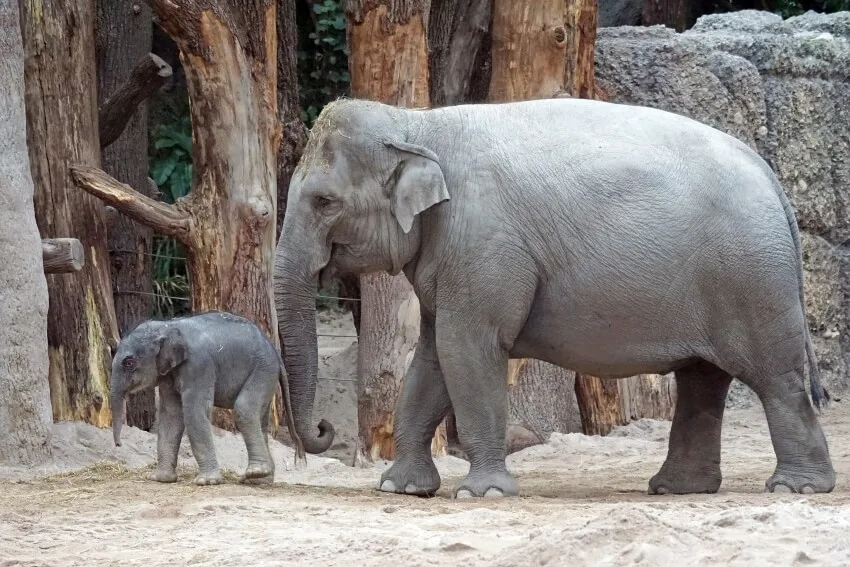
Human-elephant conflict is better understood as a land-use and safety problem than as a simple struggle between people and wildlife. Elephants may enter fields for calorie-rich crops or pass through settlements that now occupy older movement routes. Families can lose food, income, homes, or relatives; elephants may be poisoned, electrocuted, shot, trapped, or otherwise killed in retaliation.
The IUCN assessment identifies conflict as a leading source of wild Asian elephant mortality. Effective responses therefore need to protect human life and livelihoods as well as elephants. Measures may include locally designed early-warning systems, safer crop protection, rapid-response teams, fair compensation or insurance, land-use planning, and protection of movement corridors.
Poaching and illegal wildlife trade
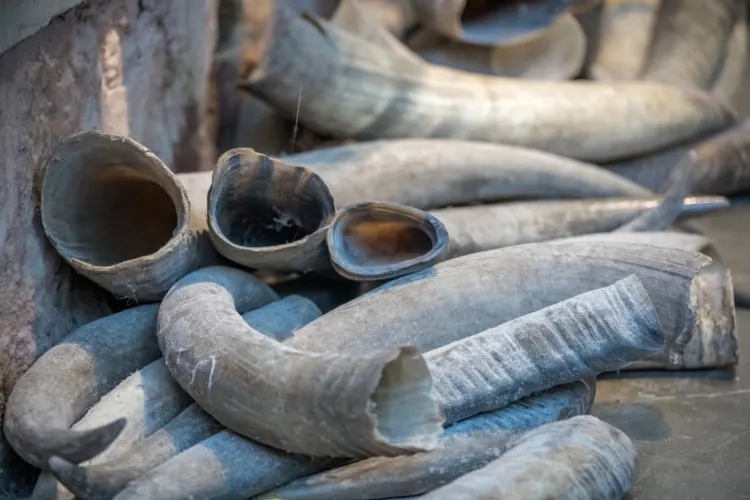
Asian elephants are killed not only for ivory but also for skin, meat, tail hair, and other products. Ivory poaching disproportionately removes tusked males, while the skin trade can target elephants of either sex. Illegal capture of live elephants also removes animals from already small wild populations. See our separate explanation of elephant poaching and the ivory trade.
The Convention on International Trade in Endangered Species of Wild Fauna and Flora lists the Asian elephant in Appendix I. That provides strong restrictions on international commercial trade, but protection still depends on national enforcement, market controls, investigations, prosecutions, and reduced consumer demand.
Roads, railways, power lines, and other infrastructure
Linear infrastructure can split habitat, block migration routes, isolate populations, and cause direct deaths through train or vehicle collisions and electrocution. Safer planning may require rerouting projects away from critical habitat, retaining wide corridors, designing effective crossings, controlling speed in collision hotspots, insulating dangerous electrical equipment, and monitoring whether mitigation actually works.
Capture and low-welfare tourism
Illegal capture of wild elephants and calves for tourism or other uses remains a threat in parts of Asia. Tourism can also perpetuate poor welfare when elephants are made to carry riders, perform, bathe with visitors, pose for photos, or accept unprotected direct contact.
ABTA’s animal-welfare guidance classifies riding, bathing, shows, and tourist contact or feeding without a barrier as unacceptable. The safer choice is a transparent, observation-only experience where elephants can move away, socialize, forage, and behave naturally.
Asian elephant population and conservation status
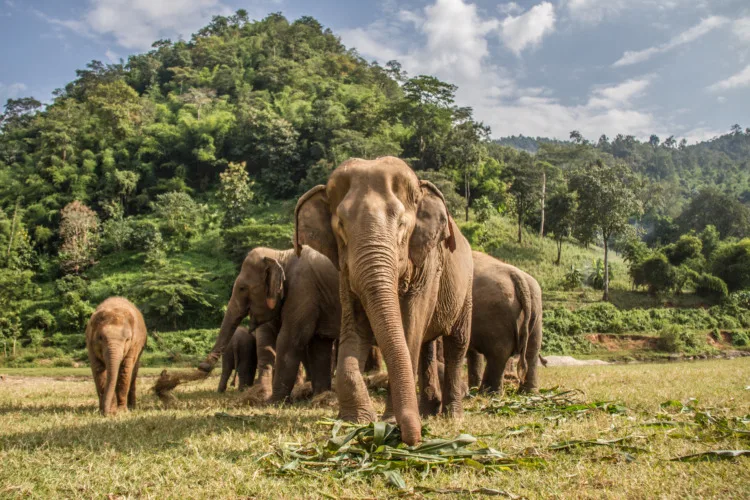
The Asian elephant is globally classified as Endangered, and the overall population trend is decreasing. The often-repeated total of roughly 40,000 to 50,000 should not be treated as a precise census. Dense vegetation, difficult terrain, cross-border movement, inconsistent survey methods, and incomplete monitoring create wide uncertainty.
The latest global IUCN assessment, published in 2020, compiled 2018 estimates totaling 48,323–51,680 wild elephants and concluded that more than 60% were in India. WWF currently uses the simpler figure “fewer than 50,000.” Both figures communicate the same practical point: the species is spread across many fragmented populations, and some national or regional populations are far more precarious than the global total suggests.
| Population or taxon | IUCN status | What readers should know |
|---|---|---|
| Asian elephant Elephas maximus | Endangered | The global assessment found an inferred decline of at least 50% over three generations and a continuing downward trend. |
| Sumatran elephant E. m. sumatranus | Critically Endangered | This subspecies faces severe habitat loss, fragmentation, conflict, and poaching on Sumatra. |
| Bornean elephant E. m. borneensis | Endangered | First assessed separately in 2024; IUCN estimated about 1,000 wild elephants, including roughly 400 breeding adults. |
Taxonomy has changed as genetic and morphological evidence has improved. The 2024 Bornean elephant assessment formally recognized the Borneo population as a distinct subspecies for Red List purposes. That is one reason older articles may list only three subspecies while newer sources discuss four living regional forms.
Where do Asian elephants live?
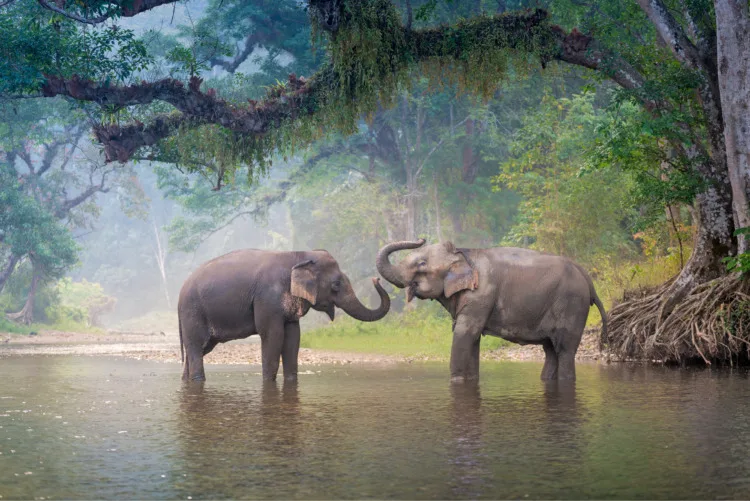
Wild Asian elephants survive in 13 range countries:
- Bangladesh
- Bhutan
- Cambodia
- China
- India
- Indonesia
- Lao People’s Democratic Republic
- Malaysia
- Myanmar
- Nepal
- Sri Lanka
- Thailand
- Vietnam
The species occupies varied wildlife habitats, including grassland, tropical evergreen and semi-evergreen forest, moist and dry deciduous forest, thorn forest, scrub, secondary forest, and some cultivated landscapes. In the eastern Himalayas, elephants occur from sea level to more than 3,000 meters.
They do not simply need “forest.” They need enough seasonal forage, reliable water, low-risk resting areas, and connected routes across a large home range. Habitat quality therefore depends on landscape configuration as well as the number of trees.
What does an Asian elephant look like?
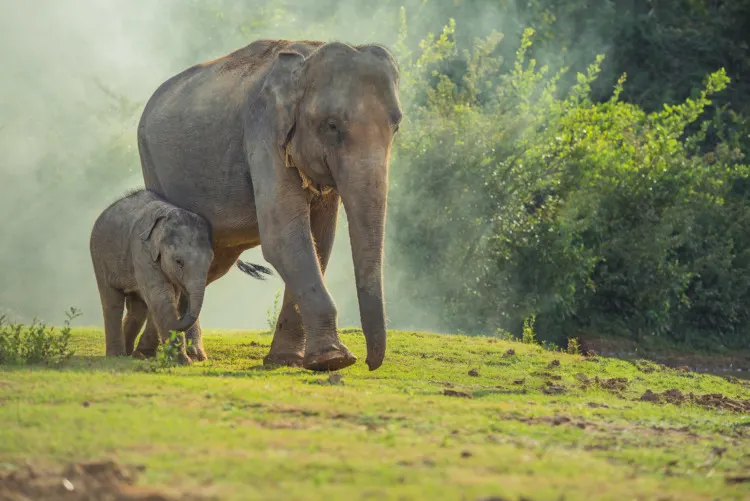
Anatomy and appearance
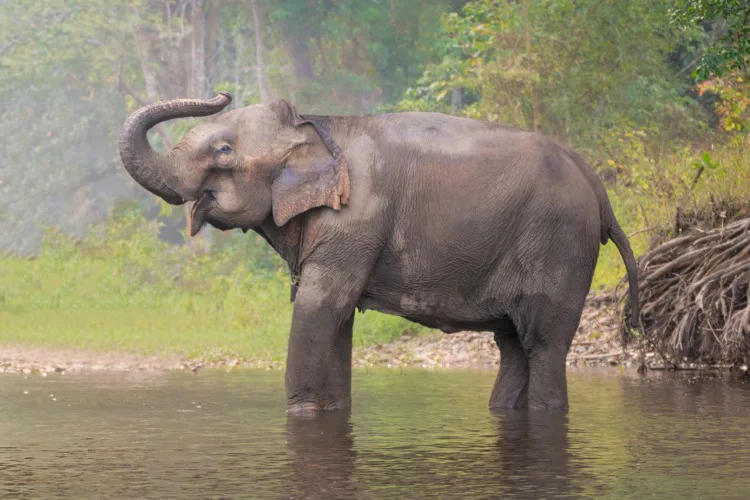
Adult Asian elephants generally weigh about 2,750 to 5,420 kilograms (6,000 to 12,000 pounds) and stand about 1.8 to 3.8 meters (6 to 12 feet) at the shoulder. Males are usually larger than females.
The head has two rounded domes, but those forehead bulges are not tusks. The trunk ends in one finger-like projection used for precise handling; African elephants have two. Asian elephant ears are smaller than those of African savanna elephants, and the back is often level or gently arched.
Not every Asian elephant has visible tusks. Only some males develop large, prominent tusks. Most females and some males have small tusks called “tushes,” which may barely extend beyond the lip. The Smithsonian’s Asian elephant profile provides a detailed anatomy reference.
Asian elephant vs. African elephant
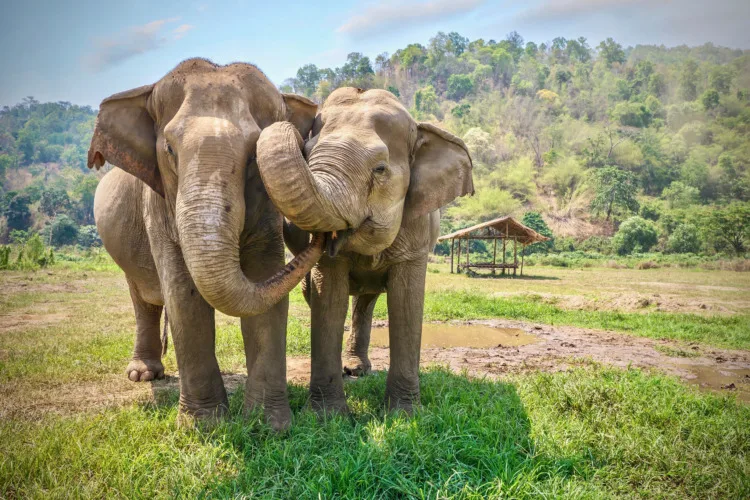
| Feature | Asian elephant | African elephants |
|---|---|---|
| Living species | One: Elephas maximus | Two: African savanna and African forest elephants |
| Range | 13 countries across Asia, including India, Sri Lanka, southern China, Sumatra, and Borneo | Sub-Saharan Africa |
| Overall size | Generally smaller | African savanna elephants are the largest living land animals; forest elephants are smaller than savanna elephants |
| Ears | Smaller and more rounded | Generally larger |
| Trunk tip | One finger-like projection | Two finger-like projections |
| Visible tusks | Large tusks occur mainly in some males; most females have tiny tushes or no visible tusks | Visible tusks are more common in both sexes, although tusklessness occurs |
For more detail, compare the African elephant profile and our guide to the differences between African and Asian elephants.
Diet, behavior, and reproduction
What Asian elephants eat
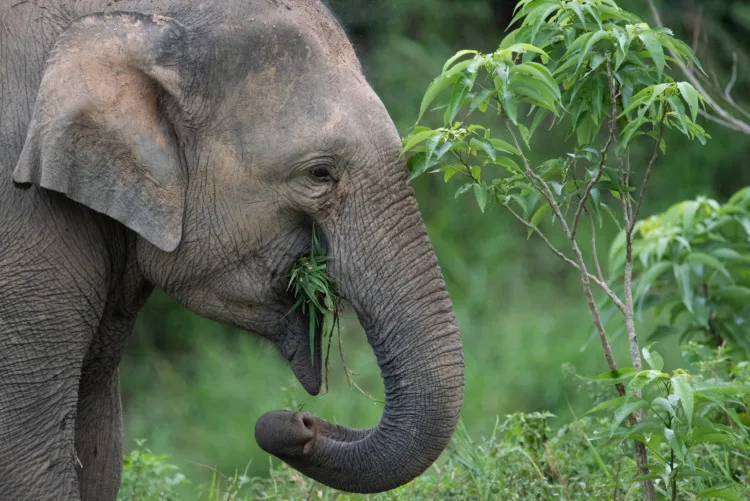
Asian elephants are herbivores. Their diet changes with habitat and season but can include grasses, leaves, bark, roots, vines, shoots, twigs, and fruit. Cultivated crops such as bananas and sugar cane can also attract elephants and increase conflict with farmers.
An adult may consume roughly 74 to 150 kilograms (165 to 330 pounds) of food a day and about 189 liters (50 gallons) of water. Because elephants digest plant matter relatively inefficiently, they spend much of the day feeding or moving between food and water sources.
Social life and communication
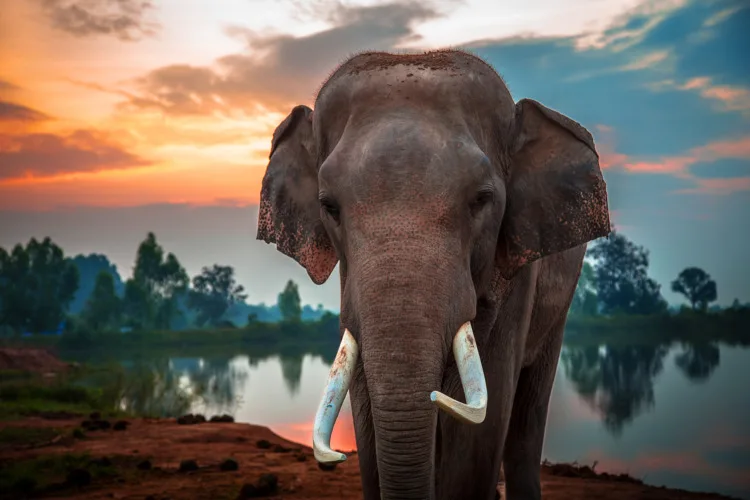
Females and young live in matrilineal communities with fluid “fission-fusion” grouping: smaller groups separate and rejoin within a wider social network. Young males eventually leave their natal group, while adult males often travel alone or form loose associations.
Elephants communicate through touch, scent, posture, trumpets, and low-frequency rumbles. Some infrasonic calls can be detected by other elephants more than 2 miles away, helping animals coordinate across dense habitat where sightlines are short.
Mating, pregnancy, and calves
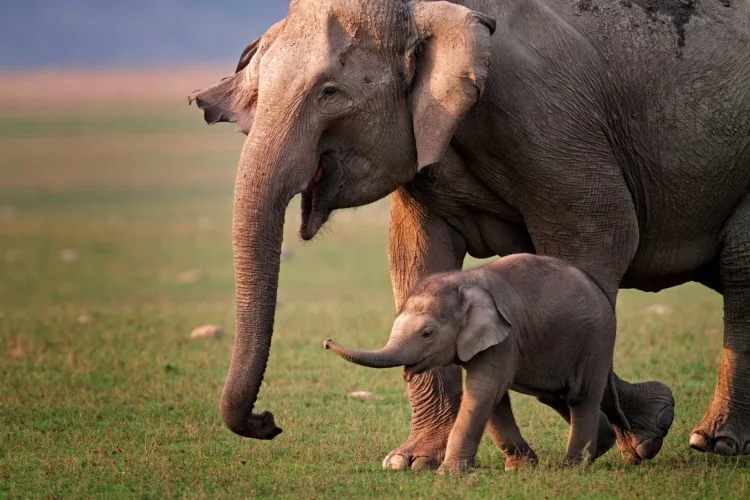
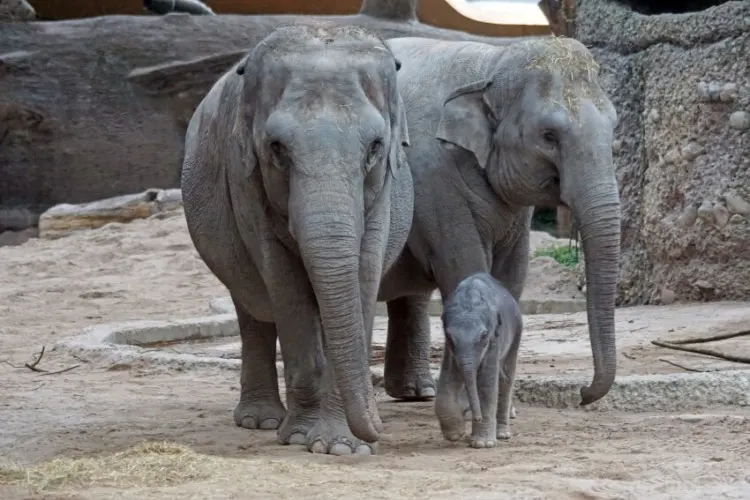
Asian elephant pregnancy usually lasts 18 to 22 months, averaging about 659 days. Newborn calves generally weigh about 68 to 158 kilograms (150 to 350 pounds). Females usually give birth to one calf, and the minimum interval between births is often four to five years.
This slow reproductive rate is central to the species’ vulnerability. A population cannot quickly replace adults or calves lost to conflict, poaching, disease, capture, or infrastructure. The Smithsonian’s elephant FAQs explain pregnancy and calf development in more detail.
Why Asian elephants matter to ecosystems
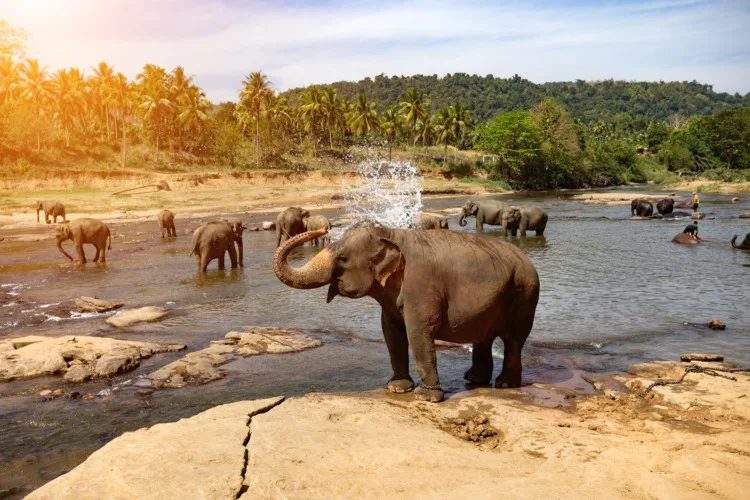
Asian elephants are ecosystem engineers. As they move, feed, and defecate, they disperse seeds over long distances, alter vegetation, open pathways, and influence plant diversity. Their need for large connected landscapes also makes them an umbrella species: protecting enough habitat for elephants can protect many smaller species living in the same places.
They are also flagship and keystone species with deep cultural significance across Asia. That importance should support—not replace—evidence-based decisions about land use, community safety, animal welfare, and the broader importance of wildlife conservation.
What conservation strategies work?
The strongest strategies address whole landscapes rather than isolated animals. The central goal is to keep viable populations connected while reducing the costs and risks borne by people who share those landscapes. This is the practical difference between short-term rescue and long-term conservation and preservation.
Protect and reconnect habitat
Protected core areas remain essential, but corridors between them are equally important. Conservation may involve preventing conversion of critical habitat, restoring degraded links, negotiating conservation agreements on private or community land, and maintaining access to water and seasonal feeding grounds.
Support safer coexistence
Conflict programs work best when they are designed with affected communities. Useful tools vary by place and may include reliable alerts, trained response teams, safer fencing, crop planning, compensation, insurance, livelihood support, and clear procedures for emergencies. Interventions should be monitored for safety and adjusted when elephants learn to bypass them.
Build wildlife-friendly infrastructure
Transport and energy projects should identify elephant movement routes before construction. Avoidance is usually stronger than trying to repair a badly placed project later. Where infrastructure already exists, crossings, speed controls, fencing that guides rather than traps animals, vegetation management, warning systems, and electrical safeguards can reduce harm.
Stop illegal killing, trade, and capture
Effective enforcement follows the full supply chain: poaching sites, transport routes, online marketplaces, processors, traders, and buyers. It also requires legal protection for live elephants, transparent records for captive animals, and cooperation across borders.
Improve monitoring and regional cooperation
Population estimates are only as useful as the methods behind them. DNA-based capture-recapture, camera traps, standardized surveys, mortality records, and movement data can reveal which populations are stable, declining, or isolated. In February 2025, representatives from all 13 range countries adopted the Siem Reap Declaration for Asian Elephant Conservation, reinforcing priorities such as corridors, conflict mitigation, standardized data, transboundary cooperation, and range-wide planning.
Treat captive care as a welfare responsibility, not a substitute for habitat protection
Well-managed breeding and care programs can support research, veterinary knowledge, and assurance populations. They do not replace protection of wild elephants and connected habitat. Programs should maintain high welfare standards, transparent provenance, and genetic management without creating demand for wild capture. Our overview of the benefits and limits of captive breeding explains the tradeoffs.
How can you help Asian elephants?
- Never buy ivory, elephant skin, tail-hair jewelry, or other elephant products. “Antique,” “traditional,” or “legal-looking” labels do not guarantee lawful or ethical origin.
- Choose observation-only elephant tourism. Avoid riding, bathing, shows, painting, forced photo opportunities, and direct feeding or touching without a barrier.
- Check the organization before donating. Review current field programs, published results, financial reporting, local partnerships, and whether claims are specific enough to verify.
- Support coexistence as well as animal protection. Durable conservation must reduce risks and economic losses for communities living with elephants.
- Share accurate population figures. Present global totals as estimates and distinguish wild, captive, regional, and subspecies counts.
Organizations working on Asian elephant conservation
The organizations below use different approaches. Inclusion is informational, not an endorsement of every program or fundraising claim. Review each group’s current work, governance, financials, and local partnerships before donating.
International Elephant Foundation

The International Elephant Foundation supports elephant conservation through research, partnerships, grants, and field projects. Its stated priorities include reducing conflict, combating poaching, protecting habitat, and supporting communities. Current programs are available on the organization’s official website.
Wildlife Conservation Society

The Wildlife Conservation Society reports working in nine of the 13 Asian elephant range states. Its programs focus on large landscapes, protected areas, law enforcement, science, and coexistence. See the WCS Asian elephant program for current scope and strategy.
Earth League International, formerly Elephant Action League

The organization covered in our Elephant Action League profile now operates as Earth League International. It applies intelligence and investigative methods to wildlife trafficking and other environmental crime. The current Earth League International website documents its active name and operations.
World Wildlife Fund

WWF’s Asian elephant work includes habitat connectivity, conflict mitigation, population monitoring, anti-poaching measures, and wildlife-friendly infrastructure. Its Asian elephant species page provides current program examples and population context.
The bottom line
Asian elephants are Endangered primarily because connected habitat is disappearing. Habitat fragmentation brings elephants into closer contact with farms, roads, railways, power lines, and settlements, where conflict can be deadly for people and elephants. Illegal trade and capture add pressure to populations that reproduce slowly and are difficult to count.
The most credible path forward is landscape-scale conservation: protect and reconnect habitat, reduce conflict with locally appropriate measures, make infrastructure safer, stop illegal trade and capture, improve population data, and share responsibility across borders. That approach reflects the broader goal of wildlife conservation: maintaining viable wild populations while respecting the people who live alongside them.
Frequently asked questions
Why are Asian elephants endangered?
The main drivers are habitat loss and fragmentation, followed by human-elephant conflict, poaching and illegal trade, dangerous infrastructure, and illegal capture. Habitat fragmentation often links these threats by pushing elephants into farms and settlements.
How many Asian elephants are left in the wild?
WWF reports fewer than 50,000. The IUCN’s 2020 assessment compiled 2018 country estimates of 48,323–51,680, but warned that the total is uncertain because survey quality and methods vary.
Where do Asian elephants live?
Wild populations remain in 13 countries: Bangladesh, Bhutan, Cambodia, China, India, Indonesia, Laos, Malaysia, Myanmar, Nepal, Sri Lanka, Thailand, and Vietnam.
Are Asian elephants critically endangered?
The species as a whole is Endangered, not Critically Endangered. The Sumatran subspecies is Critically Endangered. The Bornean elephant was assessed separately as Endangered in 2024.
Do female Asian elephants have tusks?
Most females do not have large visible tusks. Many have small tusks called tushes, and some males are also tuskless. Only some males develop prominent tusks.
How long is an Asian elephant pregnancy?
Pregnancy typically lasts 18 to 22 months, averaging about 659 days. A newborn usually weighs about 68 to 158 kilograms (150 to 350 pounds).
What is the most ethical way to see elephants?
Choose observation-only experiences with no riding, bathing, performances, forced photo opportunities, or direct feeding and touching. Look for substantial barriers, room for natural behavior, transparent animal histories, and independent welfare standards.
What conservation actions help Asian elephants most?
Protecting and reconnecting habitat, reducing conflict with communities, making roads and railways safer, stopping illegal trade and capture, and improving population monitoring are the strongest landscape-level priorities.
Related reading
See Related: South Asian River Dolphin: Is It Endangered?