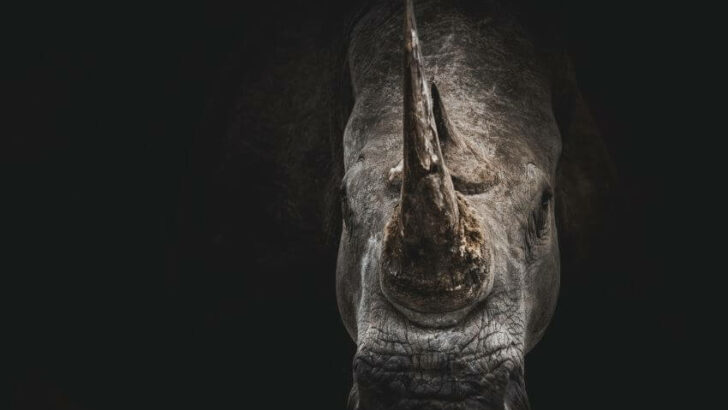
Rhino poaching is the illegal killing of rhinoceroses, usually to remove and sell their horns. Recent national totals show some improvement, but the threat remains severe and uneven. South Africa recorded 352 poached rhinos in 2025, 16% fewer than in 2024, while losses in Kruger National Park nearly doubled to 175. Worldwide, the latest combined estimates indicate that about 26,700 wild rhinos remain across five species.
This article explains why rhinos are targeted, how the five species are faring, and which conservation measures have the strongest evidence. Population and poaching figures were last verified on August 6, 2026.
Rhino poaching: key takeaways
- About 26,700 wild rhinos remain. Three species are Critically Endangered, one is Vulnerable, and one is Near Threatened.
- South Africa’s national poaching total fell from 420 rhinos in 2024 to 352 in 2025, but the risk shifted between reserves rather than declining everywhere.
- Illegal demand is linked to supposed health uses, status display, gift-giving, ornaments, and speculation within specific consumer networks. It should not be generalized to an entire continent or culture.
- Rhino horn is primarily keratin and associated proteins. There is no high-quality clinical evidence that it safely or effectively treats cancer, hangovers, or other modern conditions promoted by illegal sellers.
- A major 2025 study found that dehorning reduced poaching by about 78% across the reserves studied, but horns regrow and dehorning does not replace security, intelligence work, or community-based conservation.
- The strongest conservation programs combine secure habitat, intelligence-led enforcement, local participation and benefits, population management, cross-border investigations, and targeted demand reduction.
What is rhino poaching?
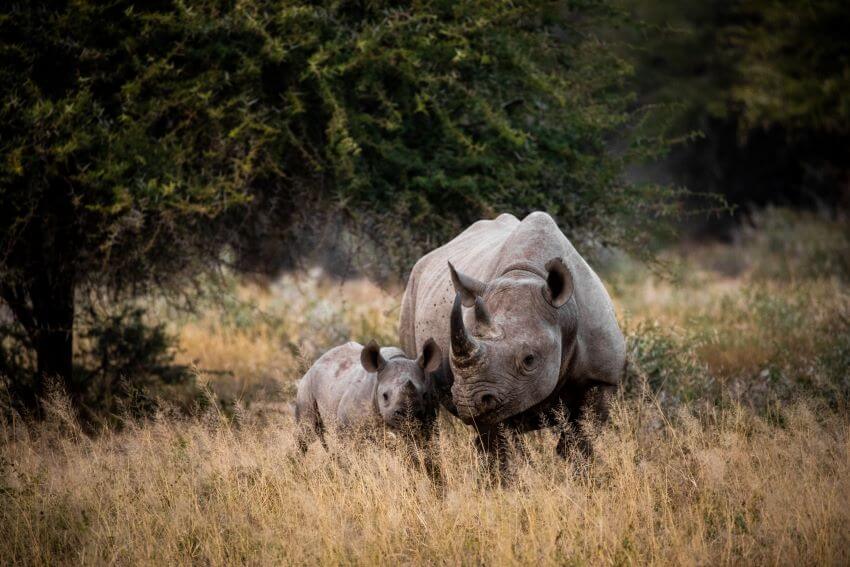
Poaching means hunting, killing, capturing, or possessing wildlife in violation of the law. In a rhino case, the usual objective is to obtain the horn for illegal sale. Poachers may kill the animal before cutting away the horn, or leave a gravely injured rhino that later dies. If a breeding female is killed, a dependent calf may also be left without protection or milk.
Poaching is not the same as legally authorized wildlife management or regulated trophy hunting. Those practices are separate and contested policy issues governed by national law and permit systems. Our analysis of whether hunting is good or bad for the environment examines that broader debate; this page focuses on illegal killing and trafficking.
How many rhinos are left?
The latest IUCN and TRAFFIC assessment reported 22,540 rhinos in Africa at the end of 2024 and 4,159 to 4,172 in Asian range states by early 2025. These are scientific estimates assembled from surveys with different dates and methods, not a simultaneous count of every animal.
| Rhino species | Latest estimated wild population | IUCN status | Main conservation concern |
|---|---|---|---|
| White rhino | 15,752 | Near Threatened | The population fell sharply in 2024; nearly all surviving animals are southern white rhinos. |
| Black rhino | 6,788 | Critically Endangered | Numbers are improving overall, but many populations remain small, isolated, and exposed to poaching. |
| Greater one-horned rhino | 4,075 | Vulnerable | Recovery in India and Nepal depends on continued protection, connected habitat, and population management. |
| Javan rhino | About 50 | Critically Endangered | All known wild animals are concentrated in one Indonesian park, and 26 were poached between 2019 and 2023. |
| Sumatran rhino | 34–47 | Critically Endangered | Tiny, fragmented populations make it difficult for breeding animals to find one another. |
How many rhinos are poached each year?
The answer depends on the year and location. The 2025 State of the Rhino report recorded 516 poaching incidents in Africa during 2024. The continental poaching rate fell to 2.15%, its lowest level since 2011, but African rhino numbers still declined overall because poaching interacts with drought, management pressures, survey revisions, and other sources of mortality.
South Africa illustrates why a national total must be read alongside local data. Its 2025 total fell to 352 rhinos, down from 420 in 2024. Yet Kruger National Park recorded 175 losses, up from 88, while Hluhluwe-iMfolozi Park fell from 198 to 63. A falling national number can therefore coexist with an acute crisis in a particular stronghold.

Why are rhinos poached?
Rhinos are poached because their horns command high prices in illegal markets. Demand is not uniform across Asia or within any single country. Research by TRAFFIC identifies particular consumer groups and trafficking networks in Viet Nam and China, with motivations that include supposed health benefits, status display, high-value gifts, and luxury consumption.
Supposed health and medicinal uses
Rhino horn has a history of use in some traditional medicine systems, but illegal sellers have also attached newer claims to it, including treatments for cancer and hangovers. Rhino horn is a dense, fibrous structure made primarily of keratin, with smaller amounts of minerals and other components. It is not chemically identical to a human fingernail, but the central health point remains: there is no high-quality clinical evidence that rhino horn safely or effectively treats cancer, hangovers, or other modern conditions for which it is marketed.
Evidence-based demand reduction should avoid mocking cultures or treating all traditional medicine practitioners as a single group. More effective programs identify the specific buyers, beliefs, social pressures, and sales channels involved, then use locally credible messengers and legal deterrence.
Status, gifts, ornaments, and investment
Horn can also be purchased to signal wealth, given as an elite gift, carved into decorative objects, or held as a scarce commodity. These motives matter because a campaign focused only on medical misinformation will miss buyers motivated by prestige, business relationships, or anticipated resale value.
Organized trafficking networks
The illegal trade is transnational. Networks recruit poachers, move horn through source and transit countries, exploit corruption, conceal shipments, launder proceeds, and sell to end users. IUCN and TRAFFIC identified recurring trade links involving South Africa, Malaysia, and Viet Nam. That is why arrests inside a reserve are only one part of the response; investigators also need financial intelligence, digital evidence, customs cooperation, and prosecutions higher in the supply chain.
Is the rhino horn trade legal?
Commercial international trade in wild-sourced rhino horn remains prohibited under the Convention on International Trade in Endangered Species of Wild Fauna and Flora. At CITES CoP20 in December 2025, Parties rejected proposals to open international trade in registered Namibian white and black rhino horn. Domestic rules can differ, but legal possession or domestic sale in one jurisdiction does not create permission to export horn internationally. Travelers should never buy horn, powder, carvings, jewelry, or products claimed to contain rhino material.
What happens when a rhino is poached?
Methods vary, but poachers commonly use firearms and cutting tools. Removing a horn from a living animal causes catastrophic injuries; removing it after a shooting still leaves conservation teams with a dead breeding animal, a crime scene, and sometimes an orphaned calf. Rangers and investigators may also face armed suspects, making wildlife crime a direct human-safety issue as well as an animal-welfare and conservation problem.
Not every wounded rhino dies. A small number survive if veterinary teams reach them quickly, but treatment is expensive, repeated immobilization carries risk, and recovery can take months. Preventing the attack remains far more effective than attempting rescue afterward.
Why rhino poaching matters
- Rhinos reproduce slowly. Each adult female and calf matters, particularly in small or declining populations.
- Poaching can distort population structure. Repeated loss of breeding adults or males can reduce future growth and genetic resilience.
- Calves may be orphaned. Rescue centers can provide care, but hand-rearing is intensive and cannot replace keeping wild families intact.
- Rhinos influence ecosystems. As very large grazers and browsers, they alter vegetation, create habitat structure, and redistribute nutrients across savannas and grasslands.
- Protection costs can crowd out other conservation work. Reserves must spend heavily on security, monitoring, veterinary care, investigations, and staff integrity systems.
- Communities and rangers bear the risk. Armed trafficking networks threaten conservation workers and can weaken trust when local people see wildlife benefits flow elsewhere.
Other threats to rhino populations
Poaching is not the only pressure. Rhino conservation can fail even where illegal killing falls if animals lack enough secure, connected habitat or if populations become too small and isolated.
Habitat loss and fragmentation
Agriculture, roads, settlements, fencing, resource extraction, and other land-use changes can shrink or divide rhino range. Fragmentation limits access to food, water, mates, and dispersal routes. It also concentrates animals into smaller areas where disease, conflict, or a security failure can have outsized effects. Protecting corridors and applying effective habitat loss solutions are therefore part of anti-poaching strategy, not a separate concern.
Drought, fire, invasive plants, and climate pressure
Drought can reduce water and forage, while severe fires or invasive plants can change the habitat available to particular species. Greater one-horned rhinos, for example, depend on floodplain grasslands and wetlands; Sumatran and Javan rhinos depend on tropical forest habitat. A single conservation formula cannot be applied to every species and landscape.
Small and isolated populations
A reserve may report population growth while still holding too few animals for strong long-term genetic and reproductive health. Managers sometimes translocate rhinos, open corridors, exchange breeding animals, or establish additional secure populations. These decisions require veterinary, genetic, ecological, security, and community planning.
Conflict, corruption, and weak governance
War, political instability, corruption, and underfunded law enforcement can make protected areas easier to exploit. They can also interrupt monitoring and reduce the safety of staff and nearby communities. Effective conservation requires accountable institutions as well as fences and patrols.
What happened to the northern white rhino?
The northern white rhino is a subspecies of the white rhino, not a sixth rhino species. Only two females, Najin and Fatu, remain, making the subspecies functionally extinct through natural reproduction. The BioRescue consortium is developing embryos and testing transfers into southern white rhino surrogates. As of April 2026, six embryo transfers had been attempted without a lasting pregnancy. The project may preserve genetic material and reproductive knowledge, but it does not replace habitat protection and prevention for rhino populations that can still recover naturally.
Which anti-poaching strategies work?
No single intervention can end rhino poaching. The most credible programs reduce immediate risk to animals while also disrupting criminal networks, strengthening local stewardship, managing populations, and reducing demand.
| Intervention | What it can do | Limits and tradeoffs |
|---|---|---|
| Strategic dehorning | Quickly reduces the amount of horn available and can sharply lower poaching risk in high-pressure reserves. | Requires veterinary immobilization, repeat treatment as horn regrows, secure handling of removed horn, and continued protection against attacks for stumps or regrowth. |
| Intelligence-led enforcement | Targets recruiters, traffickers, financiers, corrupt facilitators, and repeat offenders rather than only arresting people at a crime scene. | Needs trusted information systems, specialist investigators, cross-border cooperation, and courts capable of handling complex cases. |
| Rangers, dogs, cameras, sensors, and aerial support | Improve detection, response, evidence collection, monitoring, and staff safety when deployed as an integrated system. | Equipment alone does not remove demand or corruption; maintenance, training, welfare, and operational discipline determine results. |
| Community-led conservation and shared benefits | Builds local support, improves information flow, creates legitimate livelihoods, and makes living rhinos valuable to nearby communities. | Benefits must be fair, durable, locally designed, and paired with meaningful participation rather than one-way outreach. |
| Demand reduction and law enforcement in consumer markets | Addresses the motivation to buy horn and increases the legal and social costs of trafficking or consumption. | Generic awareness campaigns may fail; programs must target specific buyer groups, channels, beliefs, and decision points. |
| Habitat and population management | Creates viable breeding populations through secure habitat, translocation, corridors, monitoring, and veterinary care. | Moves can be costly and risky, and a new site must have ecological capacity, long-term funding, security, and local legitimacy. |
What the 2025 dehorning study found
A seven-year study published in Science examined 11 reserves in South Africa’s Greater Kruger landscape. Dehorning 2,284 rhinos across eight reserves was associated with an approximately 78% reduction in poaching and used 1.2% of the protection budget assessed by the researchers.
The study also found that some dehorned rhinos were still killed for horn stumps and regrowth. Horns grow back, so high-risk populations may need repeat procedures roughly every 18 to 24 months. Immobilization carries veterinary risk. Dehorning is therefore an emergency risk-reduction tool, not a permanent or consequence-free solution.
The same study did not detect a statistically significant reduction in poaching attributable to the largely reactive security spending it evaluated, despite its importance for arrests and response. That result should not be read as “rangers do not work.” It shows that expensive equipment and arrests can fail to reduce killings when demand, corruption, inequality, and embedded trafficking networks remain intact. Security has to be designed around measurable outcomes and combined with interventions that reduce reward and dismantle networks.
Organizations working to protect rhinos
The organizations below use different models. Before donating, check recent annual reports, audited accounts, program geography, local partnerships, safeguarding practices, and whether the organization publishes measurable results rather than relying only on emotional appeals.
World Wildlife Fund and TRAFFIC
World Wildlife Fund supports rhino protection, habitat management, population recovery, and community-based conservation. TRAFFIC, founded by WWF and IUCN and now operating as a specialist nongovernmental organization, focuses on wildlife-trade research, market analysis, policy, and enforcement support. Together, these capabilities connect protection in range states with action along trafficking routes and in consumer markets.
Save the Rhino International
Save the Rhino International funds field programs, ranger and canine capacity, community conservation, veterinary and monitoring work, efforts to stop illegal trade, and collaboration among rhino specialists. Its portfolio spans African and Asian rhino programs rather than treating every species as the same conservation problem.
Tusk

Tusk channels funding and support to African conservation partners, including projects that protect black rhinos, strengthen local ranger teams, secure habitat, and create community benefits. Its partnership model is useful where experienced local organizations need sustained finance and wider visibility.
International Rhino Foundation

The International Rhino Foundation supports all five rhino species through protection, scientific research, habitat and population management, conservation breeding, community programs, and action against illegal trade. Its annual State of the Rhino report is also a useful synthesis of population estimates and major developments.
Helping Rhinos
Helping Rhinos focuses on secure “Rhino Strongholds” that combine wildlife protection, habitat conservation, and benefits for people. It also supports partners involved in monitoring, orphan rehabilitation, community engagement, and long-term landscape protection.
Endangered Wildlife Trust and Education for Nature Vietnam
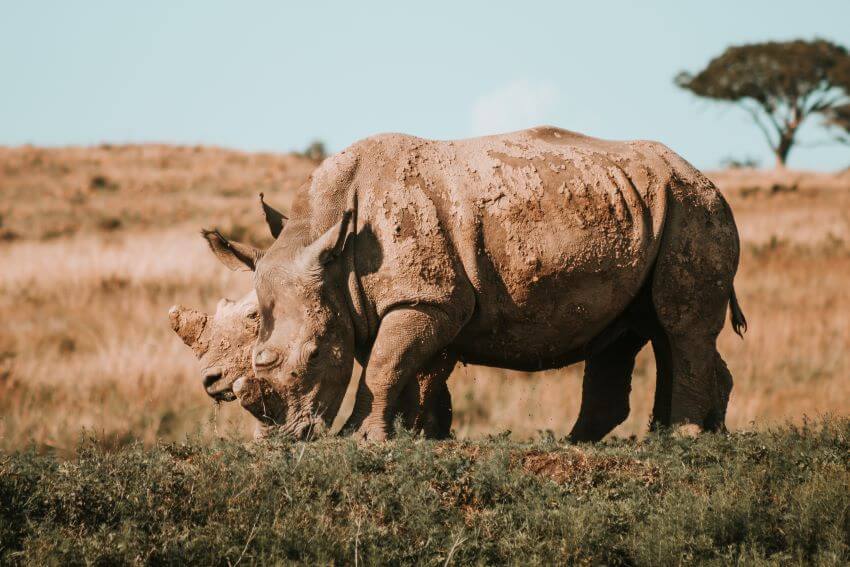
South Africa’s Endangered Wildlife Trust works on wildlife crime, species conservation, and resilient landscapes. Education for Nature Vietnam combines public campaigns, law and policy work, and support for wildlife-crime enforcement. Partnerships between organizations in range and consumer countries help connect the consequences of a purchase with the criminal supply chain behind it.
How individuals can help stop rhino poaching
- Never buy rhino horn or products claimed to contain it. This includes powder, medicine, carvings, jewelry, and “antique” pieces without reliable legal documentation.
- Report suspicious online listings. Use the marketplace’s reporting system and the relevant national wildlife-crime authority; do not confront a seller or attempt an investigation yourself.
- Donate with due diligence. Review audited finances, local governance, program outcomes, and how an organization protects staff, communities, and animal welfare.
- Choose responsible wildlife tourism. Favor operators and reserves that publish conservation practices, respect viewing distances, employ local people fairly, and do not stage unsafe animal encounters.
- Support habitat and community programs as well as security. The best long-term projects make wildlife protection compatible with local safety, land rights, services, and livelihoods.
- Share accurate information. Avoid graphic content without context, stereotypes about cultures, inflated statistics, and claims that a single technology will solve the crisis.
For broader action ideas, see our guide to ways to save animals facing extinction and our overview of the African Wildlife Conservation Fund.
Frequently asked questions
Why are rhinos poached?
Rhinos are poached mainly for their horns. Illegal buyers may seek horn for supposed health uses, status display, high-value gifts, carvings, or speculation. Demand is concentrated in particular consumer networks and should not be generalized to an entire country, continent, or culture.
How many rhinos were poached in South Africa in 2025?
South Africa recorded 352 poached rhinos in 2025, down 16% from 420 in 2024. The national decline hid major local differences: Kruger National Park rose to 175 losses, while Hluhluwe-iMfolozi Park fell to 63.
Does rhino horn have proven medical benefits?
There is no high-quality clinical evidence that rhino horn safely or effectively treats cancer, hangovers, or other modern conditions promoted by illegal sellers. Laboratory or animal findings are not proof of a safe, effective treatment in people.
Does dehorning stop rhino poaching?
Dehorning can substantially reduce risk but does not eliminate it. A 2025 study found an approximately 78% reduction across the reserves studied. Horn regrows, some poachers target stumps, and the procedure must be paired with security and broader conservation work.
Is buying or selling rhino horn legal?
Commercial international trade in wild-sourced rhino horn is prohibited under CITES. Domestic rules differ, but a domestic transaction does not authorize international export. Travelers should not buy horn, carvings, powder, jewelry, or products claimed to contain rhino material.
Are rhinos extinct?
No. Five rhino species survive in the wild, with a combined population of about 26,700. However, the Javan and Sumatran rhinos number only in the tens, and the northern white rhino subspecies has only two surviving females.
Rhino conservation works when the whole system works
Recent results show both progress and fragility. National poaching totals can fall while a major reserve deteriorates; a species can increase while remaining Critically Endangered; and a strong security budget can produce arrests without reducing the incentive to kill. The useful question is not which single tactic “wins,” but whether the full system protects animals, disrupts traffickers, supports people living beside wildlife, and keeps populations large and connected enough to recover.
Rhino recovery is possible. Greater one-horned and black rhino populations demonstrate that sustained protection and management can reverse long declines. The practical next step is to support transparent, locally grounded programs that measure outcomes and adapt when the threat moves.