
Yes—conventional epoxy resin can be bad for the environment, particularly before it cures and after the finished product reaches the end of its useful life. Most common epoxy systems rely on fossil-derived chemistry, the liquid resin and hardener require careful handling, and cured epoxy is a cross-linked thermoset that is difficult to recycle and generally does not biodegrade.
That does not make every use equally harmful. A small, well-planned repair that adds years to furniture, a boat, or a building can have a better lifecycle case than a large decorative pour or short-lived resin object. The useful questions are: Which formulation is being used? How much is required? What function does it serve? How long will it last? What happens at the end of its life?
Key takeaways
- Uncured resin and hardener present the greatest immediate concern. They can irritate or sensitize skin, and spills should be kept out of drains, soil, and stormwater.
- Fully cured epoxy is less reactive than its liquid components, but it is not impact-free. It remains a persistent thermoset that is difficult to recycle.
- “Low-VOC,” “bio-based,” and “natural” describe different attributes. None establishes that a product is non-toxic, biodegradable, or environmentally preferable across its full lifecycle.
- Durability can improve the environmental case for epoxy. A small amount used for a long-lasting repair may prevent the manufacture and disposal of a replacement product.
- Product-specific instructions take priority. Read the label and safety data sheet, use only the amount required, and follow local waste rules.
What is epoxy resin?
Epoxy resin is a family of polymers containing reactive epoxide groups. A typical consumer or industrial system has two parts: a resin and a curing agent, commonly called a hardener. When the components are mixed in the correct ratio, they react and form a tightly cross-linked thermoset.
The Occupational Safety and Health Administration identifies reaction products of epichlorohydrin and bisphenol A as common industrial epoxy compounds. However, “epoxy resin” is not one uniform substance. Hardeners, reactive diluents, fillers, solvents, pigments, flame retardants, and other additives can materially change a product’s hazards and environmental profile.
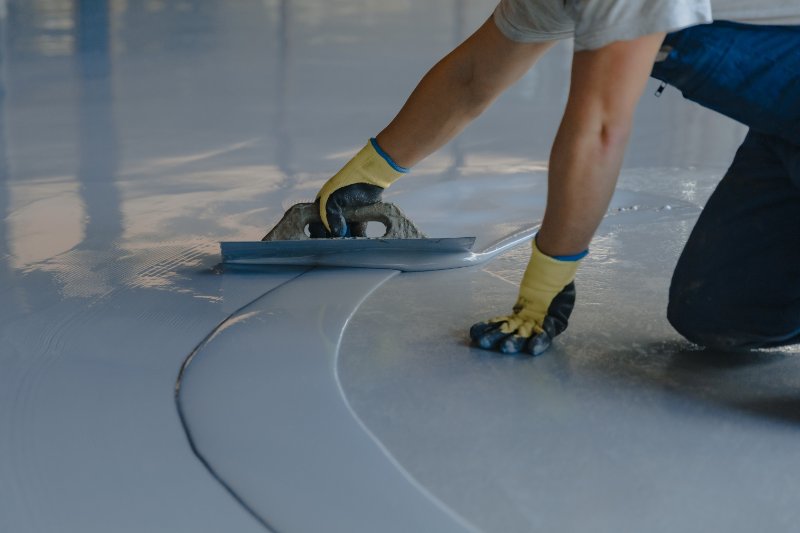
Epoxy is used in adhesives, protective coatings, electronics, composite materials, flooring, boats, countertops, repairs, and resin art. Other resin families have different chemistries and tradeoffs; see our explanation of the environmental impact of other resin types for a broader comparison.
Epoxy resin’s environmental impact at a glance
| Lifecycle stage | Main concern | What it means in practice | Lower-impact action |
|---|---|---|---|
| Raw materials | Petrochemical inputs, energy use, and formulation ingredients | The footprint varies by resin, hardener, additives, plant energy, and material performance. | Use the least material that meets the performance requirement and look for product-specific lifecycle evidence. |
| Mixing and curing | Reactive liquid components, spills, skin contact, emissions, and excess mixed material | This is normally the stage with the greatest direct user exposure. | Follow the safety data sheet, control spills, ventilate as directed, and measure batches accurately. |
| Use | Long service life versus abrasion, damage, or unnecessary material use | Durability can prevent replacement, but large decorative pours use more material without always providing a functional benefit. | Prioritize repairs and long-lived applications over disposable or novelty uses. |
| End of life | Poor biodegradability and limited recycling access | Ordinary cured epoxy cannot be remelted through standard thermoplastic recycling. | Design for long service, repairability, lower material volume, and separation from recoverable components where possible. |
Why epoxy resin can be bad for the environment
1. Conventional epoxy relies on resource-intensive chemistry
Most conventional epoxy systems begin with petrochemical feedstocks. Their impacts include fossil-resource extraction, chemical processing, transportation, manufacturing energy, packaging, and eventual disposal. These issues overlap with the broader environmental tradeoffs of petroleum.
There is no single carbon-footprint figure that applies to every epoxy product. The resin may be only one part of a system that also includes an amine or anhydride hardener, fillers, fibers, pigments, solvents, and other additives. A fair comparison must also account for performance: a material that requires less frequent replacement may produce a different lifecycle result than a lower-impact material that fails prematurely.
2. Liquid components should not enter waterways
It is inaccurate to describe every epoxy resin as highly water-soluble or uniformly lethal to aquatic life. A Government of Canada assessment reported water solubility below 10 milligrams per liter for several DGEBA resins, characterized their aquatic toxicity as moderate to low, and found estimated exposure below harmful levels in the Canadian uses it assessed.
That conclusion is not a blanket safety declaration for every product. Hardeners, reactive diluents, pigments, and other additives differ, and concentrated spills are not the same as modeled population-level exposure. Liquid resin and hardener should never be poured into sinks, toilets, soil, gutters, or storm drains. Those pathways can contribute to multiple types of water pollution.

3. Low-VOC does not mean non-toxic
Some epoxy products are marketed as low-VOC, no-VOC, solvent-free, or 100% solids. Those claims may provide useful information about one part of the formulation, but they do not establish the product’s overall safety or sustainability.
The U.S. Environmental Protection Agency explains that products labeled low-VOC or no-VOC can still contain toxic volatile chemicals. Total VOC content also does not describe the toxicity of each individual ingredient.
Review the product’s safety data sheet, especially the sections covering hazards, handling, exposure controls, ecological information, and disposal. Follow the manufacturer’s ventilation requirements rather than relying on odor as a safety test.
4. Cured epoxy is difficult to recycle
During curing, epoxy forms a permanent cross-linked network. Unlike many thermoplastics, it cannot simply be heated, melted, and remolded through ordinary recycling equipment. Standard epoxy is also not designed to biodegrade under normal environmental conditions.
Mechanical grinding, thermal processing, solvolysis, and chemical depolymerization can recover value from certain epoxy products or fiber-reinforced composites. Access remains limited, and the appropriate process depends on the exact resin, hardener, reinforcement, and additives.
For example, a 2023 NREL-led chemical-recycling study recovered useful chemical components from amine-cured epoxy substrates. This is promising research, but it does not mean household epoxy objects can currently be placed in curbside recycling.
5. Durability is both a benefit and a drawback
The same cross-linked structure that makes epoxy persistent also makes it useful. Epoxy can resist moisture, chemicals, wear, and mechanical stress. When it repairs a damaged object, prevents corrosion, or extends the life of a structure, that durability may reduce the need for replacement materials.

A useful decision rule: Reserve epoxy for jobs where its adhesion, moisture resistance, or durability materially extends service life. Avoid using large quantities when a simpler, repairable, or lower-impact material can perform the same task.
Uncured versus cured epoxy resin

| Material state | Main concern | Practical interpretation |
|---|---|---|
| Unmixed resin or hardener | Reactive chemicals, spills, skin and eye contact, and formulation-specific aquatic hazards | This is generally the highest-concern stage. Keep containers labeled and closed, prevent contact, and contain spills. |
| Mixed and curing | Heat generation, emissions, incorrect ratios, incomplete cure, and excess mixed material | Follow the specified ratio, batch limit, temperature range, ventilation requirement, and maximum pour depth. |
| Fully cured and intact | Persistence, difficult recycling, and possible exposure from unreacted ingredients if the cure was incomplete | Properly cured epoxy is generally less reactive than the liquid components, but it is not automatically biodegradable, recyclable, or approved for food contact. |
| Cut, drilled, or sanded | Dust and particles containing cured resin, fillers, pigments, or residual components | Use effective dust extraction and the protective equipment specified for the product and task. Keep dust out of living areas and drains. |
Is epoxy resin toxic to people?
Uncured epoxy resin systems can irritate skin and cause allergic sensitization. Once sensitized, a person may react to much smaller future exposures. Hardeners and reactive diluents can introduce additional skin, eye, or respiratory hazards.
An NIOSH workplace investigation linked epoxy exposure and inadequate dust control with dermatitis among furniture workers. It also emphasized avoiding skin contact, selecting chemically compatible gloves, controlling sanding dust, and washing contamination promptly with soap and water.
Fully cured, intact epoxy is generally less reactive than the unmixed resin and hardener. However, “fully cured” depends on the correct ratio, temperature, curing time, thickness, and any required post-cure. Cutting or sanding the finished material can create inhalable dust.
This is general safety information, not product-specific medical advice. The product label and safety data sheet take priority. Seek prompt professional guidance after significant exposure, persistent skin or respiratory symptoms, or an eye splash.
Is cured epoxy food-safe?
Do not assume that any clear or fully cured craft epoxy is suitable for direct food contact. The U.S. Food and Drug Administration lists certain epoxy resins for specified uses and conditions. Authorization depends on the exact substance, intended use, and applicable regulation—not simply on the fact that a product has hardened.
Use only a product whose manufacturer explicitly documents suitability for the intended food-contact conditions, preparation method, cure schedule, temperature, and wear environment.
Is epoxy resin biodegradable?
Standard cured epoxy is not designed to biodegrade under ordinary environmental conditions. Its cross-linked structure resists the biological and chemical processes that break down many natural materials.
There is no reliable universal number of years that applies to every epoxy object. Degradation depends on the formulation, object size, temperature, sunlight, abrasion, moisture, and disposal environment. Claims that all epoxy disappears after a fixed number of years should be treated cautiously.
Researchers are developing cleavable, reprocessable, and biologically degradable epoxy networks, but these specialized systems are not representative of ordinary craft, floor, marine, or countertop epoxy. “Bio-based” also does not mean biodegradable. Our explanation of the difference between biodegradable and compostable covers the terminology in more detail.
Is bio-based epoxy resin environmentally friendly?
Bio-based epoxy replaces some fossil-derived feedstock with carbon from renewable biological sources such as plant oils, lignin derivatives, or other biomass. That can reduce dependence on fossil raw materials, but the label alone does not establish a lower overall impact.
A product may contain a partly bio-based resin combined with a fossil-derived hardener. It may still form a non-biodegradable thermoset. Agricultural inputs, manufacturing energy, curing time, material strength, expected lifespan, and end-of-life treatment can also change the result. Likewise, natural and organic are not interchangeable with biodegradable, non-toxic, or low-carbon.
A 2025 lifecycle assessment of composite systems with different bio-based content illustrates the tradeoff. A partially bio-based epoxy with flax reinforcement performed well in many assessed categories, while an epoxidized linseed-oil system performed less favorably in that study because long curing times increased manufacturing impacts. One study cannot rank every commercial resin, but it shows why feedstock alone is an incomplete sustainability metric.
What to verify before buying a lower-impact epoxy
- Bio-based percentage: Look for a measured percentage or certified bio-based carbon value rather than a vague plant-based claim.
- The full system: Confirm whether the percentage covers both the resin and hardener or only one component.
- Safety documentation: Read the safety data sheet for hazards, protective equipment, ecological information, and disposal instructions.
- Lifecycle evidence: Give more weight to a product-specific environmental product declaration or lifecycle assessment than to an unsupported “eco” label.
- Performance and service life: A lower-impact product that cannot meet the application’s durability or safety requirements may require more material or earlier replacement.
- End-of-life route: Check whether a real collection or recycling system exists in your region. “Technically recyclable” is not the same as practically accepted.
How to reduce the environmental impact of resin art

Resin art can generate avoidable waste through failed pours, oversized batches, disposable mixing supplies, excess pigments, and short-lived novelty pieces. The most effective improvements usually come from using less material and preventing mistakes rather than relying on an “eco-friendly” label.
- Calculate the required volume before opening the containers.
- Test colors and inclusions at a small scale before making a large pour.
- Mix the smallest batch that can be measured accurately.
- Use durable, reusable tools or molds when they are compatible with the manufacturer’s instructions.
- Avoid permanently encapsulating objects that could otherwise be reused, repaired, or recycled.
- Prioritize functional, durable, or repairable pieces over disposable decorations.
- Store the components in their labeled containers under the specified conditions to prevent premature spoilage.
How to use epoxy resin more responsibly

- Confirm that epoxy is necessary. Compare mechanical fasteners, conventional wood glue, repairable finishes, mineral casting materials, or other task-appropriate options first.
- Read the label and safety data sheet before starting. Pay particular attention to hazards, storage, exposure controls, ecological information, first aid, and disposal.
- Prepare the work area. Protect nearby drains and soil, remove children and pets, provide the required ventilation, and have spill materials ready.
- Use compatible protective equipment. Wear eye protection and the glove material specified for that formulation. One glove type is not chemically compatible with every epoxy system.
- Measure accurately. Follow the specified resin-to-hardener ratio and calculate the smallest practical batch to reduce failed cures and leftover material.
- Respect batch and pour limits. Large mixed quantities can generate substantial heat. Follow the maximum batch size, depth, temperature, and cure schedule.
- Allow a complete cure. Do not place the surface into service, sand it, or expose it to food, water, or heat before the documented cure is complete.
- Control dust during finishing. Use effective extraction and task-appropriate protection when cutting, drilling, or sanding cured epoxy.
- Do not burn epoxy waste. Keep the material away from uncontrolled heat and follow the disposal instructions for the exact formulation.
How to clean up and dispose of epoxy resin
Never pour liquid resin, hardener, cleaning residue, or contaminated wash water into a drain, onto soil, or into stormwater. The EPA’s household hazardous waste guidance warns that improper disposal can pollute the environment, damage wastewater systems, and expose sanitation workers, children, or pets.
- Skin exposure: Remove contaminated clothing and wash the skin promptly with soap and water. NIOSH recommends soap and water rather than using solvents on the skin.
- Eye exposure: Flush with clean water immediately and follow the safety data sheet’s first-aid instructions. Obtain prompt professional guidance.
- Unused components: Keep them in their original labeled containers. Do not combine them with other household chemicals or transfer them into food containers.
- Leftover liquid material: Follow the manufacturer’s disposal section and contact the local household hazardous waste program or waste authority.
- Fully cured solid waste: Some local authorities accept small quantities with ordinary solid waste, while others impose different rules. Verify locally before disposal.
- Large leftover quantities: Do not mix an oversized batch merely to harden it for disposal. The curing reaction can generate dangerous heat. Ask the manufacturer or local waste authority how to manage it.
- Spills: Isolate the area, protect drains, use the absorbent or cleanup method specified by the manufacturer, and treat contaminated materials according to local requirements.
Lower-impact alternatives to epoxy by task
No substitute is automatically greener. Choose an alternative only when it can meet the required strength, moisture resistance, safety, and service life with a lower overall burden.
| Task | Potential alternative | Main tradeoff |
|---|---|---|
| Indoor wood joints | PVA wood glue, dowels, screws, or traditional joinery | Not every option is suitable for immersion, structural loading, or difficult mixed-material bonds. |
| Repairable wood finish | Hardwax oil, plant-oil finish, shellac, or a suitable water-based finish | May require more maintenance and may not provide epoxy’s build thickness or chemical resistance. |
| Decorative casting | Plaster, gypsum, clay, paper pulp, or reusable natural materials | These materials are generally opaque and may be less impact-resistant or water-resistant. |
| Floor renewal | Repairing and polishing the existing surface or using a project-appropriate waterborne coating | Suitability depends on moisture, traffic, chemical exposure, substrate condition, and expected service life. |
| Assemblies that may need disassembly | Bolts, screws, clips, or other mechanical fasteners | Fasteners may remain visible, require maintenance, or provide less complete sealing. |
| Small household repair | Task-specific repair adhesive, replacement part, stitching, clamping, or mechanical reinforcement | A substitute may not bond the same materials or tolerate the same heat, water, or loading. |
Bottom line
Epoxy resin has genuine environmental costs. Conventional systems commonly rely on fossil-derived chemistry, uncured components require careful handling, and the cured thermoset is persistent and difficult to recycle. Bio-based and low-VOC formulations may improve selected attributes, but neither label proves that a product is non-toxic, biodegradable, or environmentally preferable across its full lifecycle.
The most responsible approach is to use epoxy selectively: choose it where its performance creates a durable repair or long service life, buy only the quantity required, prevent exposure and spills, follow the complete cure schedule, control sanding dust, and use the correct local disposal route.
Frequently asked questions
Is epoxy resin bad for the environment?
Yes. Conventional epoxy has environmental costs from fossil-derived raw materials, reactive liquid components, and difficult end-of-life. Its lifecycle case is stronger when a small amount creates a durable repair that prevents replacement.
Is cured epoxy resin toxic?
Fully cured epoxy is generally less reactive than the unmixed resin and hardener, but it is not automatically food-safe, emission-free, biodegradable, or recyclable. The formulation, completeness of cure, additives, heat exposure, and sanding dust still matter.
Is epoxy resin biodegradable?
Standard cured epoxy is not designed to biodegrade under ordinary environmental conditions, and there is no reliable universal decomposition timeline. Specialized degradable epoxy systems are being developed, but a bio-based label alone does not mean the product will biodegrade.
Is bio-based epoxy resin eco-friendly?
Sometimes it can reduce reliance on fossil feedstocks, but it is not automatically environmentally friendly. The result depends on the renewable percentage, hardener, manufacturing energy, cure time, material performance, service life, and disposal route.
Can epoxy resin be recycled?
Usually not through curbside recycling. Mechanical, thermal, and chemical recovery methods exist for some industrial epoxy products and composites, but access is limited and the correct process depends on the exact resin system.
How should leftover epoxy resin be disposed of?
Do not pour liquid resin or hardener into a drain, onto soil, or into stormwater. Keep unused components in their labeled containers, follow the safety data sheet, and use a local household hazardous waste program when required. Check local rules before discarding fully cured solid waste.
Is epoxy resin worse for the environment than plastic?
Epoxy is itself a thermoset plastic, so there is no universal yes-or-no comparison. Its cross-linked structure provides durability but makes remelting and ordinary recycling difficult. Compare the material quantity, service life, hazards during use, and realistic end-of-life route.
See Related: Why Is Hairspray Bad for the Environment?
See Related: Is Silica Bad for the Environment?