Monterey Bay Aquarium is worth visiting if you want large-scale marine exhibits connected to active conservation science and can budget for premium admission plus nearby parking. Plan three to four hours, buy general admission only through the official Aquarium website, confirm the day’s hours, and choose one or two feedings or programs before you arrive.
Prices, policies, and visitor details were last verified on July 29, 2026. Hours, programs, animal availability, and exhibit access can change, so check the official schedule before traveling.
Monterey Bay Aquarium at a glance
| Planning detail | Current information |
|---|---|
| Location | 886 Cannery Row, Monterey, California 93940 |
| Opened | October 20, 1984 |
| Recommended visit | Three to four hours |
| General admission | $65 for adults ages 18–69; $50 for youth ages 5–17 and seniors age 70 or older |
| Young children | Complimentary admission for ages four and under |
| Hours | Vary by date; last entry is one hour before closing |
| Parking | No public onsite parking; use nearby city garages, lots, transit or bicycle parking |
| Great white sharks | Not on exhibit, and the aquarium does not plan to display them again |
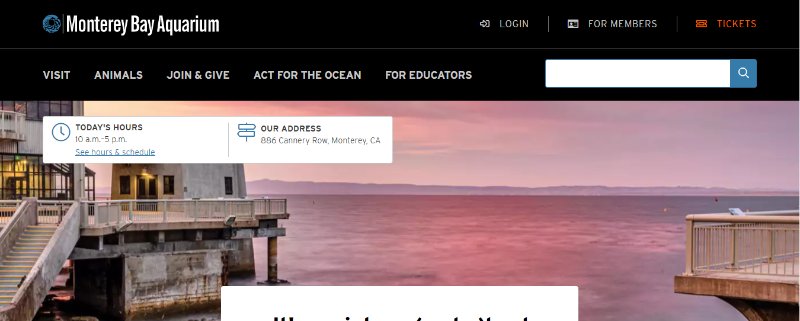
What is the Monterey Bay Aquarium?
The Monterey Bay Aquarium is a nonprofit aquarium whose stated mission is to inspire conservation of the ocean. Its exhibits focus heavily on Monterey Bay and the California coast, connecting the animals visitors see with fisheries, habitat protection, animal rescue, research, and public policy.
The aquarium opened on October 20, 1984, on the former site of the Hovden Cannery. The cannery began operating in 1916 and closed in 1973 after Monterey’s sardine industry had collapsed. Parts of the industrial structure were incorporated into the aquarium, which explains the exposed pipes, concrete, boilers, and preserved cannery features visible around the building.
The date 1999 is sometimes confused with the aquarium’s founding. It was actually the year the aquarium launched its Seafood Watch program. The public aquarium had already been operating for 15 years by then. The aquarium, Monterey Bay Aquarium Research Institute, and Monterey Bay National Marine Sanctuary are also separate entities, although their work overlaps in marine science, education, and conservation.
Plan your visit: tickets, hours and parking
Monterey Bay Aquarium ticket prices
General admission should be purchased in advance through the official Monterey Bay Aquarium ticket page. The aquarium states that it does not partner with third-party organizations to sell or distribute admission tickets.
| Ticket category | Age | Price |
|---|---|---|
| Adult | 18–69 | $65 |
| Youth | 5–17 | $50 |
| Senior | 70 or older | $50 |
| Child | 4 and under | Complimentary |
Eligible adults participating in SNAP, including California’s CalFresh program, can use Museums for All. A valid SNAP EBT card and matching photo identification provide complimentary admission at the main entrance for the adult cardholder and up to three additional people. These tickets are issued in person rather than reserved online.
A required caregiver assisting a guest with a disability may also qualify for complimentary admission. Contact the aquarium’s Concierge Team before the visit to arrange this accommodation.
Hours and the best time to visit
Operating hours vary, so use the official daily schedule for your date. The schedule also lists available feedings, films, tours, and auditorium programs. Last entry is one hour before closing, but that is not enough time for a meaningful first visit.
The aquarium recommends budgeting three to four hours. Its accessibility guide says the galleries are generally quietest during the final one to two hours before closing, particularly in fall and winter. School groups commonly visit until about 2 p.m. from Tuesday through Friday during the school year. Summer, weekends, and holidays are usually the busiest periods.
Arriving at opening gives you the most remaining time, but a later visit can be calmer. The better choice depends on whether your priority is maximizing exhibit time or reducing crowd and sensory intensity.
Parking and transportation
The aquarium does not offer public onsite parking. Its official directions page identifies several nearby options:
- Cannery Row Lot 7: 160 Irving Street
- Cannery Row Parking Garage: 601 Foam Street
- Cannery Row Parking Lot 21: 32 Cannery Row
- Metered street parking: Available on parts of Foam Street, Ocean View Boulevard, and Wave Street
A passenger drop-off zone is available near the entrance. The seasonal Monterey-Salinas Transit trolley normally connects downtown Monterey, Fisherman’s Wharf, Cannery Row, and the aquarium from Memorial Day through Labor Day, but confirm the current schedule before relying on it. Free bicycle parking is available across the street, and the aquarium sits directly on the Monterey Bay Coastal Recreation Trail.
Best exhibits at Monterey Bay Aquarium
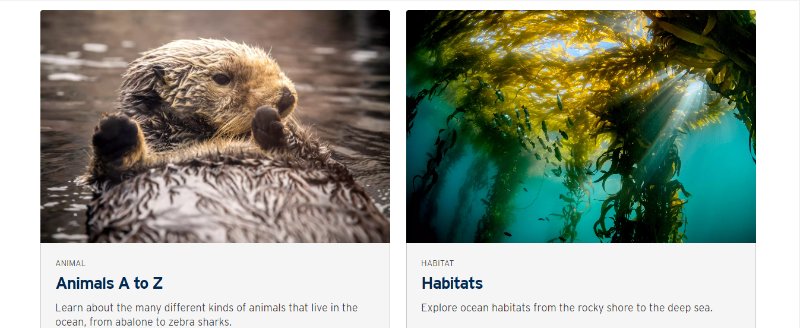
The aquarium organizes much of the visitor experience around marine habitats rather than presenting animals as an unrelated collection. Current animals and gallery access can change, but the following exhibits provide the clearest starting point for a first visit.
Kelp Forest
The Kelp Forest exhibit rises 28 feet and recreates a living California kelp community. Giant kelp moves through surging seawater while fish, leopard sharks, wolf-eels, and schooling species occupy different levels of the habitat. It is an effective introduction to how kelp forests and other marine ecosystems support complex food webs.
Check the daily schedule for narrated feeding or diver programs. A presentation adds ecological context that is easy to miss when viewing the animals without interpretation.
Open Sea
Open Sea is the aquarium’s largest exhibit. Its 90-foot viewing window looks into a million-gallon habitat designed for animals that travel through open water. Depending on the current collection, visitors may see schooling sardines, tunas, sea turtles, hammerhead sharks, rays, jellies, or ocean sunfish.
This is a useful place to slow down rather than move quickly from species to species. The scale, schooling behavior, and interactions between animals are the main experience.
Sea Otters
The two-level Sea Otters exhibit provides underwater and surface views of resident otters that cannot be released into the wild. Scheduled feeding and training sessions explain animal care, enrichment, and the species’ role in coastal ecosystems. Viewing areas can become crowded, so consult the schedule and arrive before a program begins when an otter presentation is a priority.
Into the Deep
Into the Deep presents animals from the dark ocean below the reach of sunlight. The aquarium describes it as the largest collection of deep-sea animals in North America. Displays can include giant isopods, Japanese spider crabs, deep-sea corals, comb jellies, sea cucumbers, and animals still being studied by scientists.
The exhibit is more than a collection of unusual species. It shows how remotely operated vehicles, specialized collection systems, and carefully controlled life-support equipment allow researchers and animal-care teams to observe organisms that are rarely seen alive at the surface.
Monterey Bay Habitats and touch pools
Monterey Bay Habitats represents environments such as reefs, sandy seafloor, wharf pilings, and deeper coastal water. It is a good place to look for local sharks and rays, rockfish, octopuses, and species adapted to the bay’s varied seafloor.
Staff-supervised touch pools in the Ocean’s Edge galleries provide access to selected intertidal animals. Lower viewing and touch sections accommodate wheelchair users, although animal contact always depends on welfare considerations and daily conditions.
How long should you spend at Monterey Bay Aquarium?
Plan three to four hours for a balanced first visit. That is the aquarium’s own recommendation and allows time for the major galleries, one scheduled presentation, short breaks, and the waterfront viewing decks.
- About two hours: Suitable for a focused visit to the Kelp Forest, Open Sea, Sea Otters, and Into the Deep. Expect to skip secondary galleries and most programs.
- Three to four hours: The best fit for most first-time visitors. It allows a steady pace, one or two programs, and time to read selected interpretation.
- Five hours or more: Better for marine-life enthusiasts, families moving at a slower pace, or visitors who want multiple feedings, films, dining, shops, and longer observation periods.
A practical way to use the time is:
- Review the daily schedule before entering and select one or two fixed-time programs.
- Visit your highest-priority exhibit early rather than following the crowd in a rigid loop.
- Group nearby galleries together, but allow the program schedule to determine when you change wings.
- Reserve time for the outdoor decks overlooking Monterey Bay.
- Leave a final 30-minute buffer for a missed gallery, re-entry after lunch, or an exhibit that deserves more time.
Accessibility and visitor policies
The aquarium publishes a detailed accessibility and inclusion guide. The most useful planning points are summarized below.
| Topic | What to know |
|---|---|
| Wheelchairs | Manual wheelchairs are available free on a first-come, first-served basis. Powered devices are not available to borrow. |
| Routes | Ramps and elevators provide access to all exhibits, including the Open Sea and Sea Otter mezzanines. |
| Caregivers | A caregiver required to assist a guest with a disability may receive complimentary admission when arrangements are made with the Concierge Team. |
| Sensory resources | Complimentary sensory bags, noise-reducing headphones, sensory cards, maps, quieter seating areas, and red-light flashlights are available or identified. |
| Strollers and wagons | Permitted except in the Aviary, Sea Otters mezzanine, and Auditorium. Adaptive strollers are allowed in all public spaces. |
| Food and drink | Outside meals are generally prohibited. Small snacks and reusable water bottles are allowed, and medical-food needs are exempt. |
| Re-entry | Get a hand stamp at the exit to leave and return later the same day. |
| Storage | No rental lockers are available. |
| Photography | Personal photography and video are allowed. Turn off the flash; tripods, monopods, and drones are prohibited. |
| Service animals | Trained service animals meeting ADA standards are permitted and must remain under control. |
Are great white sharks at Monterey Bay Aquarium?
No. Great white sharks are not currently on exhibit at Monterey Bay Aquarium, and the aquarium says it will not display them in the future.
The confusion comes from a significant historical program. Beginning in 2004, the aquarium successfully displayed six young white sharks over roughly a decade. Each animal was tagged and returned to the wild. The work was intended to answer research and animal-care questions, not to establish a permanent white-shark exhibit.
The aquarium continues to study white sharks in the wild. Readers interested in the species can review current information about great white shark conservation and status.
Conservation and research beyond the exhibits
The aquarium’s strongest distinction is the connection between public interpretation and ongoing conservation work. Its major programs address sea otter recovery, sustainable seafood, ocean policy, fisheries, deep-sea science, and public education.
Sea Otter Recovery Program
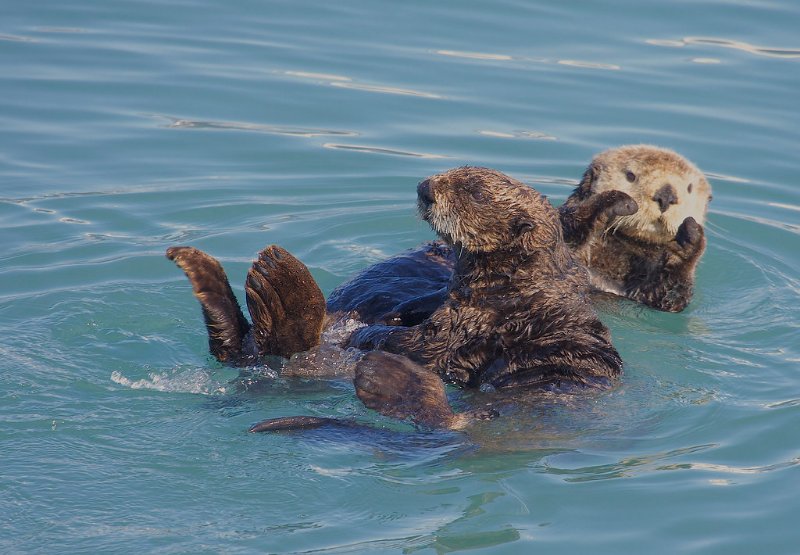
The Sea Otter Recovery Program rescues stranded southern sea otters, provides medical care and rehabilitation, and prepares suitable animals for release. Non-releasable female otters can act as surrogate mothers, teaching rescued pups the behaviors they need to survive independently.
The program reports that more than 1,000 stranded sea otters have received medical care over its lifetime and that 84 pups have been successfully surrogate-raised. Released otters are monitored to measure survival, behavior, territory establishment, and reproduction.
Sea otter recovery has effects beyond one species. Otters influence the abundance of herbivores such as sea urchins, which can affect kelp forests and other coastal habitats. The work also provides a local example of the broader challenges facing California’s threatened and endangered species.
Seafood Watch
Seafood Watch evaluates fisheries and aquaculture using science-based criteria, then converts those assessments into purchasing recommendations for consumers and businesses.
As of December 2025, the program reported recommendations covering 76% of seafood sold in the United States and 42% of global seafood production. Its influence therefore extends well beyond visitors who enter the aquarium.
MBARI and deep-sea research
The Monterey Bay Aquarium Research Institute, usually called MBARI, is a separate nonprofit oceanographic research institution. It operates independently from the aquarium, although the organizations collaborate continuously. MBARI serves as the aquarium’s research and technology partner, while the aquarium supports education and public conservation communication.
Their collaboration is especially visible in Into the Deep. MBARI research vessels, remotely operated vehicles, scientific observations, and engineering expertise helped locate, document, and safely collect deep-sea animals. Aquarium specialists then developed life-support and animal-care systems that allow longer observation at the surface.
Researchers can learn from those extended observations, while visitors gain access to animals and environments that would otherwise remain visible only through brief footage from a research vehicle.
Stanford University and tuna research

In 1994, the aquarium and Stanford University opened the Tuna Research and Conservation Center at Hopkins Marine Station. The center combined facilities for caring for tuna with research into physiology, migration, mortality, population structure, and electronic-tagging techniques.
This is a specific, documented partnership—not a general relationship between Stanford, the aquarium, and the City of Monterey. Tagging data from joint fieldwork has helped researchers understand tuna movements and inform fisheries management.
Monterey Bay National Marine Sanctuary
Monterey Bay National Marine Sanctuary is not operated by the aquarium. It is a federally managed marine protected area within NOAA’s National Marine Sanctuary System.
Designated in 1992, the sanctuary protects 6,094 square miles along California’s central coast. Its habitats include kelp forests, rocky and sandy shores, bays, estuaries, open ocean, submarine canyon, seamounts, and deep seafloor. The aquarium interprets many of these environments for visitors, but the sanctuary is the separate governmental entity responsible for managing the protected area.
How to support the aquarium and ocean conservation
Admission revenue, membership, donations, grants, sponsorships, retail sales, and other earned income support the nonprofit’s operations and conservation programs. Useful ways to act include:
- Purchase admission only through the official aquarium ticket system.
- Consider membership when your household is likely to visit more than once within a year.
- Donate directly to the aquarium rather than through an unverified fundraising page.
- Use Seafood Watch recommendations when buying seafood or selecting a restaurant.
- Support habitat protection and other practical ways to help threatened wildlife in your own community.
Frequently asked questions
How long should you spend at Monterey Bay Aquarium?
Plan three to four hours. A focused two-hour visit can work if you prioritize a few exhibits and one scheduled program, while a longer visit suits visitors who want several feedings, films, and breaks.
How much are Monterey Bay Aquarium tickets?
As last verified July 29, 2026, admission costs $65 for adults ages 18–69 and $50 for youth ages 5–17 and seniors age 70 or older. Children ages four and under receive complimentary admission.
Do you need to buy Monterey Bay Aquarium tickets in advance?
Advance purchase is strongly recommended. Buy general admission through the Aquarium’s official site because it states that it does not authorize third-party organizations to sell or distribute its tickets.
What are Monterey Bay Aquarium’s hours?
Hours vary by date, and last entry is one hour before closing. Check the official schedule for the exact opening time, closing time, feedings, films, tours, and programs on your intended visit date.
Is there parking at Monterey Bay Aquarium?
There is no public onsite parking. Nearby options include Cannery Row Lot 7 at 160 Irving Street, Cannery Row Parking Garage at 601 Foam Street, and Lot 21 at 32 Cannery Row.
Are great white sharks on exhibit at Monterey Bay Aquarium?
No. The aquarium released all six young white sharks involved in its historical exhibit program and says it will not display white sharks again. Its current research focuses on the animals in the wild.
Can you bring food or leave and re-enter?
Outside meals are generally prohibited, although small snacks, reusable water bottles, and medically necessary food are allowed. Get a hand stamp at the exit if you want to leave and return later that day.
Is Monterey Bay Aquarium accessible for wheelchairs and strollers?
Yes. Ramps and elevators serve all exhibits, and manual wheelchairs are available free on a first-come basis. Strollers are allowed except in the Aviary, Sea Otters mezzanine, and Auditorium; adaptive strollers are allowed throughout public spaces.
Is Monterey Bay Aquarium worth the price?
Monterey Bay Aquarium is not a low-cost attraction. At the current $65 adult price, its value depends on how much time you give it and whether marine science, animal behavior, and conservation are genuine priorities for your group.
The strongest case for visiting is the combination of large habitat-based exhibits, scheduled interpretation, accessible facilities, a waterfront setting, and conservation programs that continue outside the public galleries. Plan at least three hours, choose programs in advance, and avoid treating it as a quick Cannery Row stop.
Budget-conscious visitors should check Museums for All eligibility before buying admission. Households considering multiple visits should compare membership against the cost of separate tickets. In every case, confirm current prices, hours, and exhibit access directly with the aquarium before traveling.