
The Mexican spotted owl (Strix occidentalis lucida) is a medium-sized, dark-eyed owl of the old-growth forests and steep rocky canyons of the southwestern United States and the mountains of central and northern Mexico. It is the most widely distributed of the three spotted owl subspecies and has been federally listed as Threatened under the U.S. Endangered Species Act since 1993, with only about 2,100 birds remaining north of the U.S.-Mexico border.
- Status: Threatened (U.S. Endangered Species Act, listed 1993); the spotted owl species is Near Threatened on the IUCN Red List
- Known as: Mexican Spotted Owl (Strix occidentalis lucida), a subspecies of the Spotted Owl
- Estimated numbers left in the wild: 2,100 in the United States, Mexican population unknown but also very low
Despite its name, most Mexican spotted owls live in the southwestern United States – Arizona, New Mexico, Utah, Colorado, and western Texas – with the rest in the mountains of central and northern Mexico. They do not occur in Canada or Central America. These owls hunt by perching quietly on a branch and dropping silently onto prey below.
These owls also have large eyes which allow them to see well in the dark so they can stay out hunting for prey all night long!
The subspecies has the largest range of any spotted owl, stretching from the Four Corners states south through Mexico’s Sierra Madre – but it is a bird of the U.S. Southwest and Mexico, not of Canada or Central America.
Description
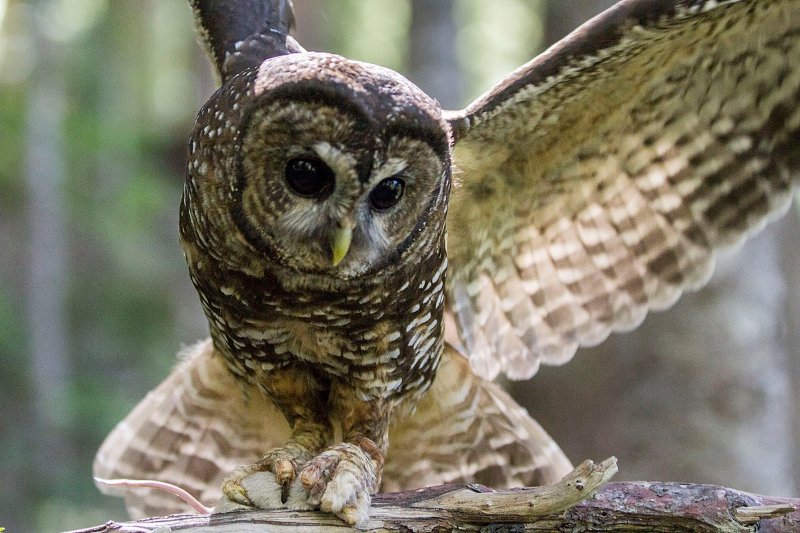
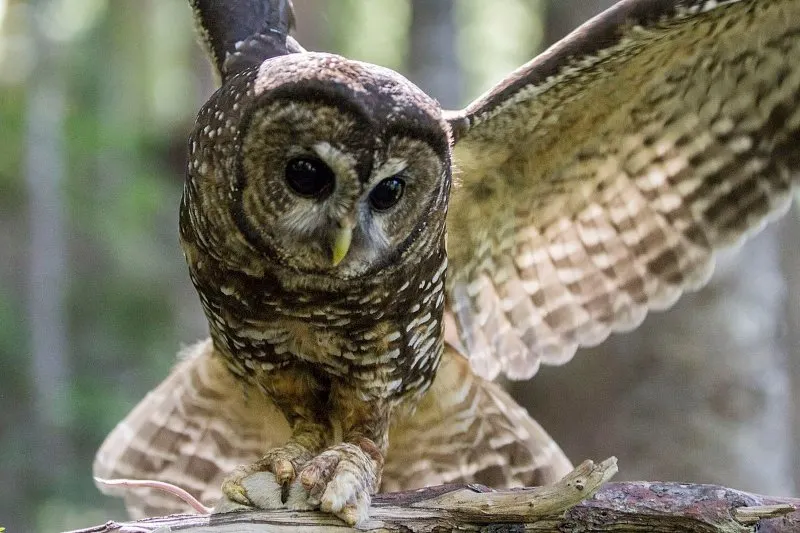
Mexican spotted owl is large owls, though they are the smallest subspecies of the spotted owl.
Their height ranges up to 48 centimeters and their wingspan can be as much as 112 centimeters. As with most owls, much of their apparent body is actually a fluffy mass of feathers, and the lean body inside weighs 640 grams at most.
Females are larger than males on average.
The color of this subspecies is chestnut brown with large white and brown spots on the head, chest, and back. Unusually, their eyes are dark in color, which is in contrast to the light colors of most owl eyes – a fact which allows much easier identification.
Anatomy and Appearance
The owl has a primarily brown color. They have small, dark eyes which makes them difficult to spot in the woodlands.
Adults measure about 16-19 inches (41-48 cm) long with a wingspan of roughly 42-45 inches (107-114 cm) and weigh 19.5-23 ounces (547-647 grams); females are larger than males. The bird is carnivorous, feeding almost entirely on small animals.
They are primarily nocturnal meaning they hunt at night or later into the evening often around the sunset or just before dawn.
Location
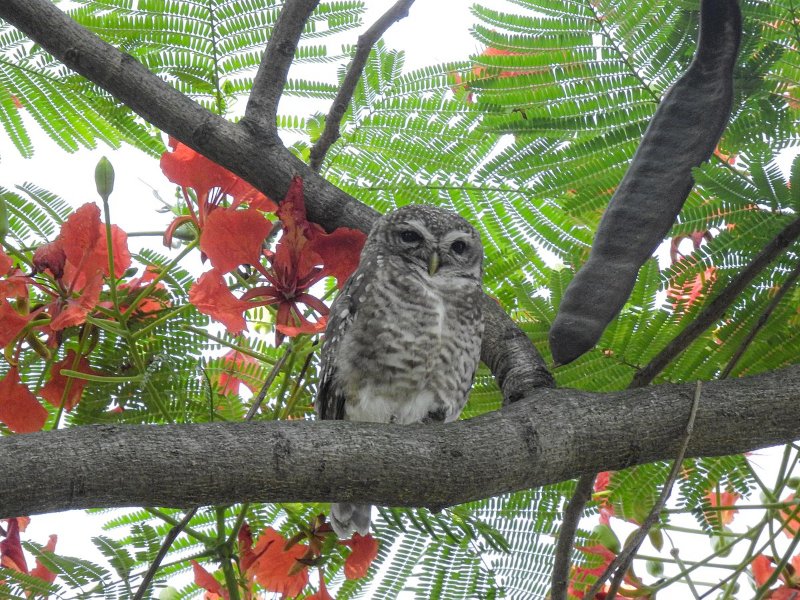
Mexican spotted owl occurs throughout northwestern and central Mexico, and their range extends up into the United States, including Utah, Colorado, New Mexico, Arizona, and Texas.
The species is typically found in old-growth forests in mountain or canyon terrain.
Mexican Spotted Owls Habitat
Mexican spotted owls inhabit Mexican evergreen forests, deciduous woodlands, and pine-oak woodlands.
The species can also be found in open, semiopen suitable habitat, and also in breeding habitat ecology. The bird species like to live in dense, old-growth forests that have a lot of large trees. Spotted owls use these forests for nesting, roosting, and foraging.
They are agile fliers within the forest canopy but are sit-and-wait hunters rather than aerial pursuers, dropping onto prey on the ground. Their entire range lies within North America – the U.S. Southwest and Mexico – not Central America or Canada.
See Related: Best Lean To Greenhouses | Side of House Options
Mexican Spotted Owls Diet and Nutrition
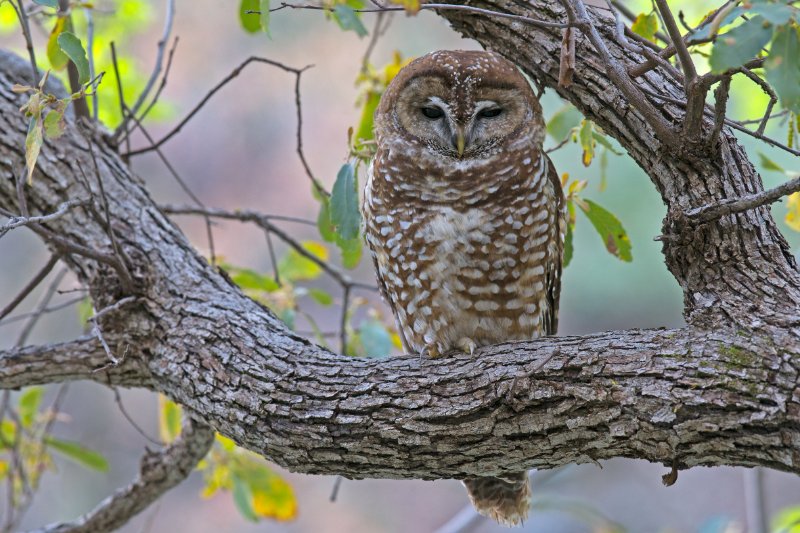
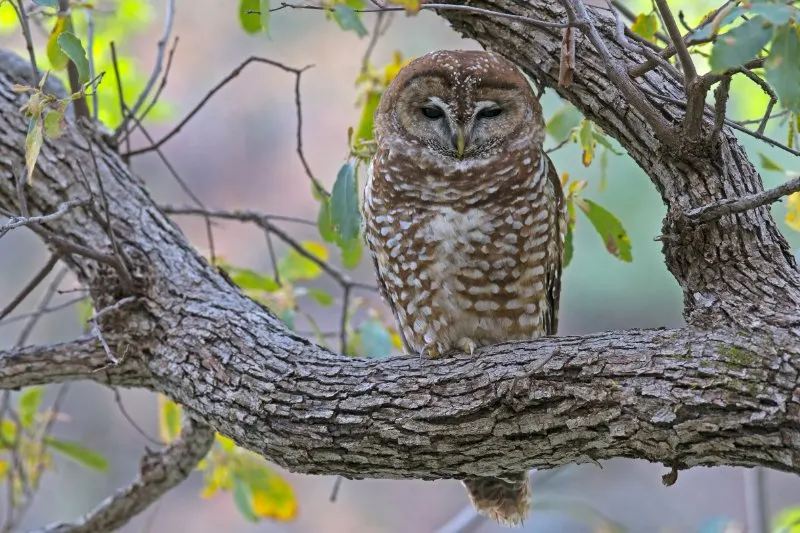
The owl is solitary hunters who prefer old-growth forests with large trees and a dense canopy of branches overall. Mexican Spotted Owls feed primarily prey particularly birds, rabbits, squirrels, mice, reptiles, and insects
They prey on small forest animals of many different kinds, including mammals (rabbits, gophers, wood rats, mice, bats, and voles principally), reptiles (snakes and lizards), and even insects or large spiders.
Their preferred hunting technique is to perch on a high branch, scanning the ground below with their keen eyesight and hearing. When prey appears, they drop silently on it, kill it, and devour it.
Mexican Spotted Owls Mating Habits
The species is confronted by poor reproductive success as well as other problems. The preferred nest site for this owl is a natural hollow in a tree, though they will also use cliff ledges and may appropriate large stick nests made by other bird species, especially during the breeding season.
The female usually lays one to three eggs (most often two), and the owlets leave the nest about 35 days after hatching, around June. The young can fly shortly afterward and gradually become independent. Mexican spotted owls live on average about 15 years in the wild.
Mexican Spotted Owl Population
Mexican spotted owl populations are declining throughout their range.
The main threats to the spotted owls are loss of habitat from logging, plus severe wildfire driven by drought and climate change. Populations have declined across the U.S. Southwest and Mexico – on some Arizona and New Mexico forests by about 10% per year in the 1990s. The owl species is now found only in the U.S. Southwest and the mountains of Mexico, not in Canada.
Once more widespread, the Mexican spotted owl is now a threatened subspecies that has lost much of its habitat to logging, wildfire, and other human activities.
Mexican Spotted Owl vs Other Owl Species
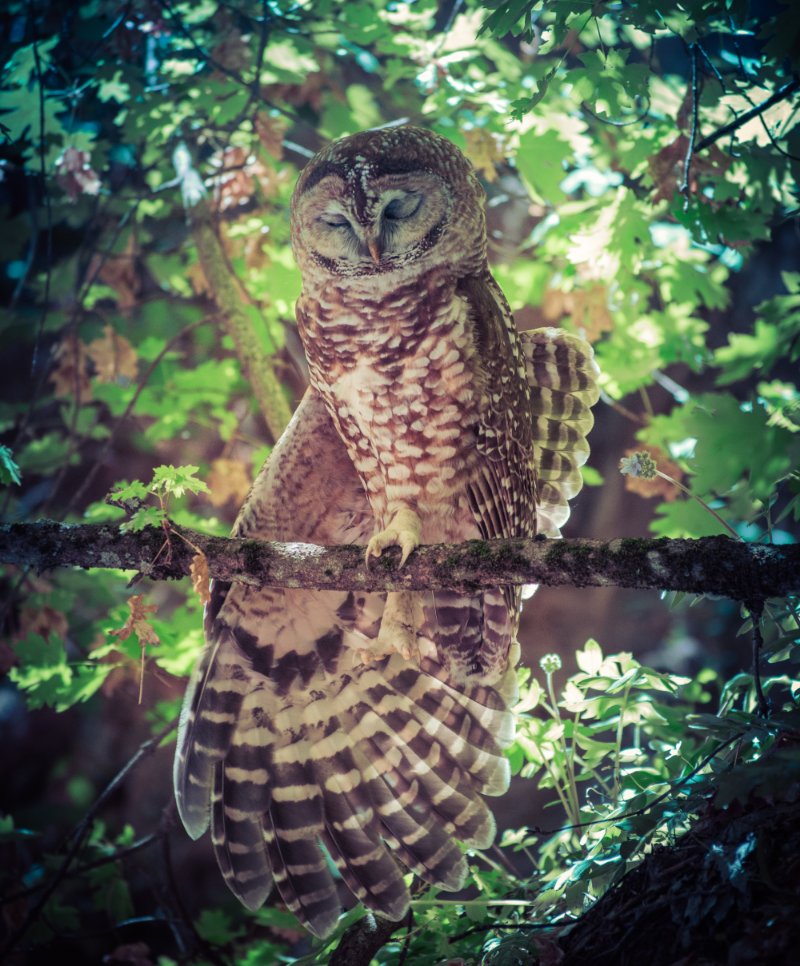
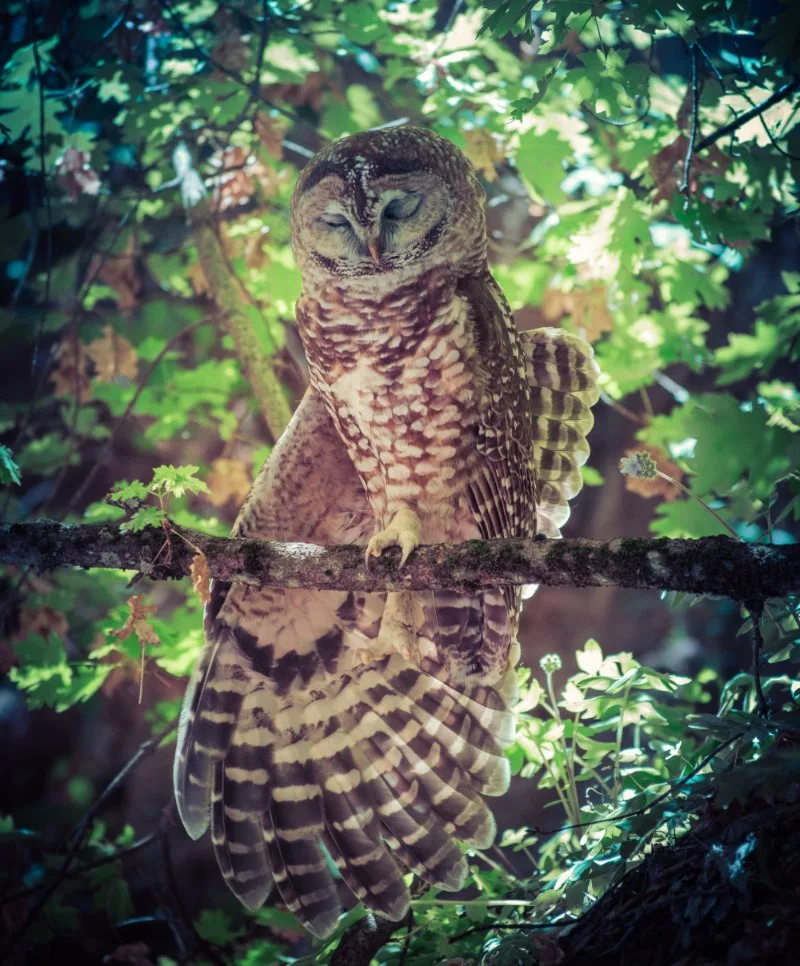
Mexican Spotted Owls are different from other owls in a few ways.
Their spotted plumage is where the name comes from. Unlike many owls, they have dark brown eyes rather than yellow, and they range across the mountains and canyons of the U.S. Southwest and Mexico.
It hunts by perching and waiting for prey rather than quartering the air like some other owls. It is found in the southwestern United States and Mexico – not in Central America or Canada.
Spotted owls are also endangered animals that you might see when traveling or where ever the bird species are located!
Mexican Spotted Owl and Human Relationship
The bird has had a long and complicated relationship with humans.
For most of the 20th century the owl went largely unnoticed until logging of old-growth forest began to shrink its range. Today the Mexican spotted owl is threatened chiefly by habitat destruction from timber harvest and by catastrophic wildfire – not by hunting.
They are very important to the environment and ecosystem, and it is important that we do what we can to protect them!
Mexican Spotted Owl Facts
Here are some fun facts about Mexican spotted owls.
- Mexican spotted owls live on average about 15 years in the wild.
- This owl species mate for life!
- Owlets leave the nest about 35 days after hatching, then learn to fly and hunt over the following weeks.
- They favor old-growth forests and steep, shady canyons with large trees for nesting and roosting.
- Spotted owls like to eat small mammals, lizards, and mice.
- They are solitary, silent hunters that drop onto prey from a perch.
- The Mexican spotted owl was listed as a threatened subspecies under the U.S. Endangered Species Act in 1993.
Conservation Status
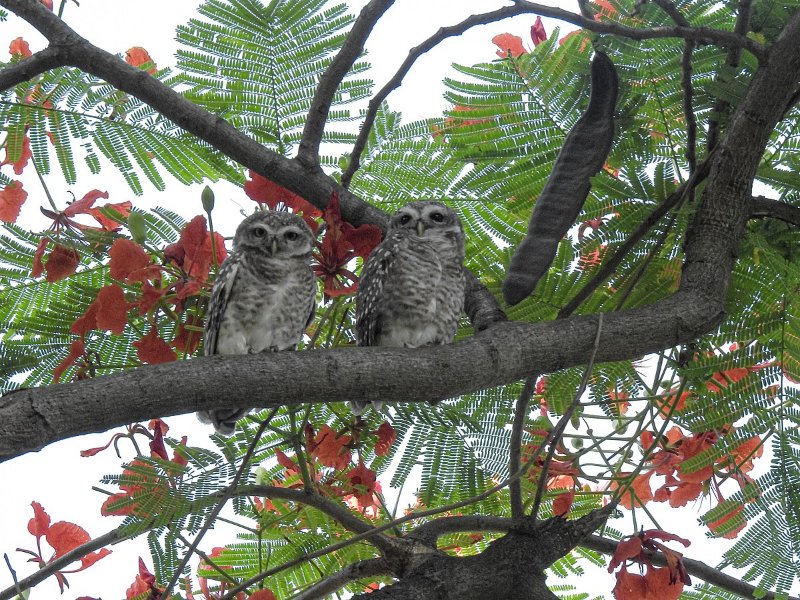
The Mexican spotted owl is federally listed as threatened (not endangered) under the U.S. Endangered Species Act, meaning it is likely to become endangered within the foreseeable future if current trends continue. Its decline is driven mainly by loss of old-growth forest habitat and severe wildfire rather than by direct persecution.
Threats
Habitat destruction and climate change are the two main threats to the Mexican spotted owl’s future at the current time. Logging of old-growth forests is a particularly acute risk in the United States, while Mexican forestry is different and not as destructive.
For this reason, the Mexican spotted owl is declining in the United States but likely stable in Mexico.
Climate change is threatening this owl species as well because conditions are growing hotter and drier over much of the bird’s range.
This lessens the availability of prey, heightens the hazard of large forest fires (which, of course, can destroy the invaluable mature forests, too), and gradually shifts the local ecology away from the conditions spotted owls are adapted to.
Great horned owls prey on spotted owls, and barred owls also threaten the species.
Conservation efforts
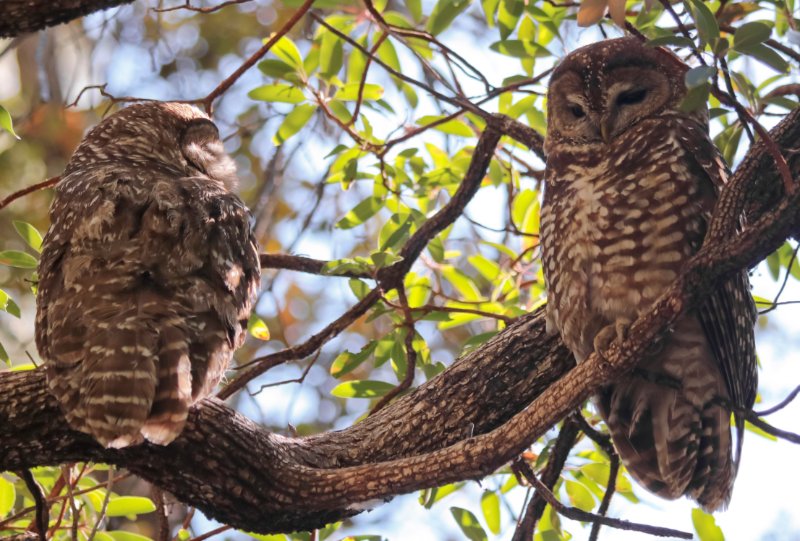
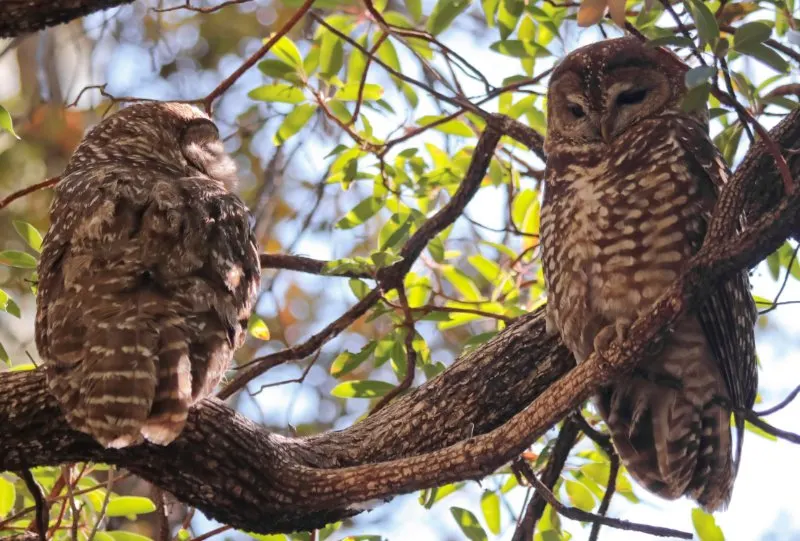
The Mexican spotted owl is protected under the U.S. Endangered Species Act and managed by the U.S. Fish and Wildlife Service, which has designated critical habitat for it and published a recovery plan. Its main threats are habitat loss and wildfire – not hunting or poisoning. In the wild these owls live on average about 15 years.
Organizations such as the Center for Biological Diversity, wildlife society, and other organizations are currently championing the cause of the Mexican spotted owl, chiefly through legal action intended to extend protection to its critical habitat. Wildlife organizations also conduct raptor research and conservation projects to conduct the bird
Unfortunately, recent defeats in the legal arena have left birds in the United States vulnerable to logging, ranching, and other habitat destruction.
Organizations
Do you know of or are you a part of an organization that works to conserve the Mexican Spotted Owl, then please contact us to have it featured on Our Endangered World.
See Related: Why Is Biodiversity Important to Ecosystems
Final Thoughts
Mexican spotted owls live in the forests and canyons of the southwestern United States and the mountains of Mexico.
They are quiet, perch-hunting owls of mature forest – and, despite the name, they are not found in Canada; their range is limited to the U.S. Southwest and Mexico.
The demise of the Mexican spotted owl is primarily attributed to habitat loss, shooting, power line collisions, climate change effects on prey abundance, great horned owls preying upon them, or barred owls threatening with competition for food sources.
Organizations such as the Center for Biological Diversity are currently championing the cause of Mexican Spotted Owl species by taking legal action to protect their habitats from logging and other human activities.
FAQ
What are Mexican spotted owls?
The Mexican spotted owl (Strix occidentalis lucida) is a subspecies of spotted owl on the U.S. threatened species list.
They live in the mountains and canyons of the southwestern United States and central and northern Mexico – not in Canada or Central America. (Barred owls are a separate species that competes with them.)
The owls are one of the few birds that have spots (which give them their name), and these magnificent creatures fly at heights of 2-5 meters (6-15 feet) while staying completely silent.
Spotted owls hunt by sitting on trees until prey arrives; once prey is close to ground level spotted owls make a swift attack without making any noise whatsoever to outsmart potential prey.
What makes Mexican Spotted Owls different from other owls?
Mexican Spotted Owl is a bird species that are different from owl species because spotted Owls contain more spots.
The bird has brown feathers with white spots all over its body, which is a unique characteristic that not many owl species share.
They live in the southwestern United States and the mountains of Mexico. They are largely non-migratory, though some make short seasonal moves to lower elevations in winter.
Why is the Mexican spotted owl threatened?
The Mexican spotted owl lives only in the southwestern United States and the mountains of Mexico.
In Mexico, the owl is found in mountain forests of states such as Jalisco, Colima, Michoacan, and the Sierra Madre ranges. Owls may shift between forest patches when their habitat is destroyed by logging, wildfire, or human disturbance.
Multiple surveys show that these owl species are affected by habitat loss due to the construction of highways, dams, and other projects which destroy the old-growth forest where they nest and roost, as well as the widespread use of pesticides for agricultural purposes.
How long can Mexican spotted owls live for?
Mexican spotted owls live on average about 15 years in the wild, though some individuals reach their late teens.
Spotted owls are also one of the few owl species that have markings on their plumage, which is how they received their name. They live in old-growth mixed-conifer and pine-oak forests and in steep, rocky canyons.
The bird usually nests in tall trees and can be found in a variety of habitats. The Mexican spotted owl is not listed as endangered but as threatened, and it is protected under both U.S. and Mexican law.
What do Mexican spotted owls eat?
Mexican spotted owls eat mostly small mammals – woodrats, mice, and voles – along with rabbits, bats, birds, reptiles, and insects.
How can I help Mexican spotted owls?
The Mexican spotted owl lives in the southwestern United States and the mountains of Mexico. Spotted owls are endangered, with dwindling populations throughout their range.
You can help by supporting protection of old-growth forest, backing responsible forest and wildfire management in the U.S. Southwest and Mexico, and donating to groups such as the Center for Biological Diversity that defend the owl’s critical habitat.
Other Species Profiles
Related Resources