
Orbeez are not readily biodegradable in the practical sense most people mean. They are synthetic superabsorbent polymer water beads. Some polyacrylates can break down slowly under certain environmental conditions, but the evidence does not support treating toy water beads as home-compostable, recyclable, or harmless litter.
The safest routine disposal method is to contain used beads and place them in household trash. Never flush them, pour them into a drain, scatter them outdoors, or add them to compost.
Safety warning: Water beads can continue expanding after they are swallowed and may cause choking, intestinal blockage, surgery, or death. The U.S. Consumer Product Safety Commission advises parents and caregivers to remove loose water beads from environments with children.
U.S. product-safety and regulatory information last reviewed August 6, 2026.
Key Takeaways
- Orbeez may degrade eventually, but they do so too slowly to be considered readily biodegradable for household disposal.
- Do not put toy water beads in home compost, municipal organics bins, garden soil, or curbside recycling.
- Place used beads in a sealed bag or container and dispose of them with household trash unless local waste guidance says otherwise.
- “Non-toxic” does not mean safe to swallow. A bead can expand inside the digestive tract and cause a life-threatening obstruction.
- A new U.S. safety standard applies to covered water-bead toys manufactured after March 12, 2026, but compliant beads are still not safe to ingest.
| Question | Practical answer |
|---|---|
| Are Orbeez biodegradable? | They can degrade very slowly under some conditions, but they are not readily biodegradable on a useful household-disposal timescale. |
| Are Orbeez compostable? | No. Do not put ordinary toy water beads in home or municipal compost. |
| Are Orbeez recyclable? | Not through standard curbside recycling. Loose hydrogel beads do not belong in conventional plastic-recycling streams. |
| Can Orbeez go down a sink or toilet? | No. They can expand, accumulate, and contribute to plumbing blockages. |
| Are Orbeez safe to swallow? | No. Even products labeled non-toxic can cause choking or intestinal obstruction. |
| What is the best disposal method? | Contain the beads in a bag or lidded container and place them in household trash, subject to local rules. |
What Are Orbeez Made Of?
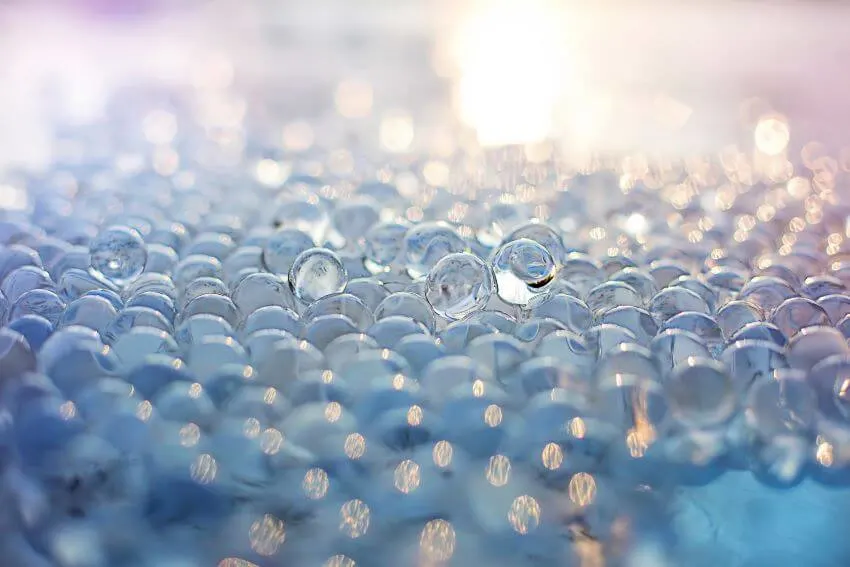
Orbeez is a brand of water beads owned by Spin Master. “Water beads” is the broader product category, which also includes beads sold for sensory activities, decorations, floral displays, gardening, and gel-blaster ammunition.
The beads are made from a cross-linked superabsorbent polymer. The polymer network draws in liquid and swells without dissolving like sugar or salt. A 2025 laboratory study of superabsorbent water beads described the tested beads, including Orbeez, as sodium polyacrylate gel.
Exact dyes, additives, manufacturing methods, and formulations may vary by product and market. That is why it is more accurate to describe Orbeez as sodium-polyacrylate-based superabsorbent polymer beads than to claim that every product has one identical ingredient list.
According to the CPSC, water beads can grow to roughly 100 times their original size after exposure to water. A dry bead may be difficult to see after it rolls under furniture, yet it can expand again when exposed to liquid.
Are Orbeez Biodegradable?
The most accurate answer is that Orbeez can degrade very slowly, but they are not readily biodegradable in a way that makes them suitable for composting or outdoor disposal.
A peer-reviewed agricultural soil study found that the main chain of a tested polyacrylate superabsorbent degraded, if at all, at a rate of only 0.12% to 0.24% over six months. The study examined a particular polyacrylate product under specified soil conditions, so it cannot provide an exact lifespan for every Orbeez formulation.
It does show why the unqualified statement “Orbeez are biodegradable” is misleading. A material can undergo eventual chemical or biological change while still persisting for a long time in ordinary soil, landfill, or household compost conditions.
Biodegradable Does Not Mean Compostable
Biodegradation describes breakdown by environmental processes, but the word alone does not specify how long the process takes or what conditions it requires. Compostability is a narrower claim: a compostable material should break down under defined composting conditions without leaving unacceptable residue.
Ordinary toy water beads are not food scraps, yard waste, or a certified compostable product. Unless a composting facility explicitly accepts the exact product, keep them out of both home compost and municipal organics bins. See the difference between biodegradable and compostable for a fuller explanation of these terms.
Are Orbeez Plastic?
Orbeez are synthetic polymer hydrogels rather than conventional rigid plastic objects. However, their polymer structure is manufactured rather than natural, they are not accepted in ordinary curbside plastic recycling, and they should be handled as persistent synthetic waste rather than an organic material.
Environmental Impact of Water Beads
The strongest environmental concern is not that every intact bead immediately releases a dangerous chemical. The more practical problems are slow degradation, easy dispersal, lack of a normal recycling pathway, plumbing damage, and the possibility that loose beads will be swallowed by children or animals.
Because the dry beads are small and the hydrated beads are slippery, a spill can spread well beyond the play or craft area. Beads released outdoors can be difficult to recover. Beads sent through plumbing can enter wastewater infrastructure or lodge in pipes before they reach it.
A household quantity of water beads is small compared with major sources of polymer waste. That does not make unnecessary dispersal responsible. The useful environmental response is proportional: avoid releasing them, contain what you already own, and choose reusable or lower-waste sensory materials when practical.
Similar tradeoffs apply to other synthetic play materials. Our analysis of the environmental impact of synthetic sensory materials explains why composition, use, and disposal all matter.
How to Dispose of Orbeez Safely
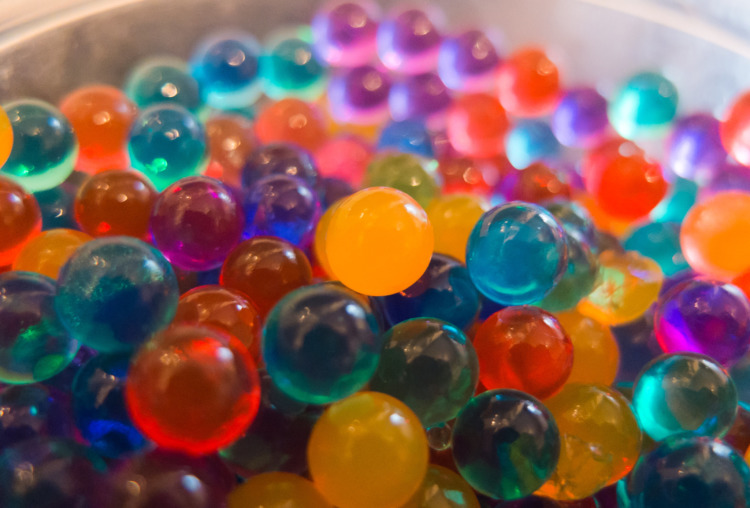
- Keep children and pets away from the area. Dry beads can be difficult to see, and hydrated beads roll easily.
- Collect every visible bead. Use a scoop, spoon, dustpan, or paper towel rather than rinsing the beads toward a drain.
- Contain the beads. Put them in a sealed bag or a lidded disposable container. Drying is not necessary for disposal and should never be done where loose beads could scatter or become accessible.
- Place the container in household trash. Follow local solid-waste instructions if your municipality gives different guidance for superabsorbent polymers.
- Inspect the area again. Check beneath furniture, along baseboards, and anywhere a dry bead could have rolled.
Never Dispose of Water Beads This Way
- Do not flush them down a toilet.
- Do not pour them into a sink, bathtub, floor drain, or storm drain.
- Do not add them to compost, garden beds, plant pots, or municipal food-waste bins.
- Do not put loose beads in curbside recycling.
- Do not scatter them outdoors or leave them where wildlife can reach them.
If a large quantity enters a drain, stop running additional water and contact a plumber rather than trying to force the beads farther through the system. Preventing synthetic materials from entering wastewater is one small part of reducing the different types of water pollution.
Can You Dry and Reuse Orbeez?
Hydrated water beads can lose water through evaporation, shrink, and expand again when rehydrated. Drying them reduces their size; it does not make them compostable or remove their ingestion risk. In fact, dry beads can be harder to notice after a spill.
Current CPSC guidance is to remove loose water beads from environments with children. If an adult keeps them for a non-child craft or sealed display, follow the product instructions, use a secure container, prevent access by children and pets, and discard any beads that become contaminated or escape their container.
Do not wash unwanted beads into a sink. Soap, disinfectant, salt, or hand sanitizer does not change the basic disposal requirement.
Water Bead Safety for Children and Pets
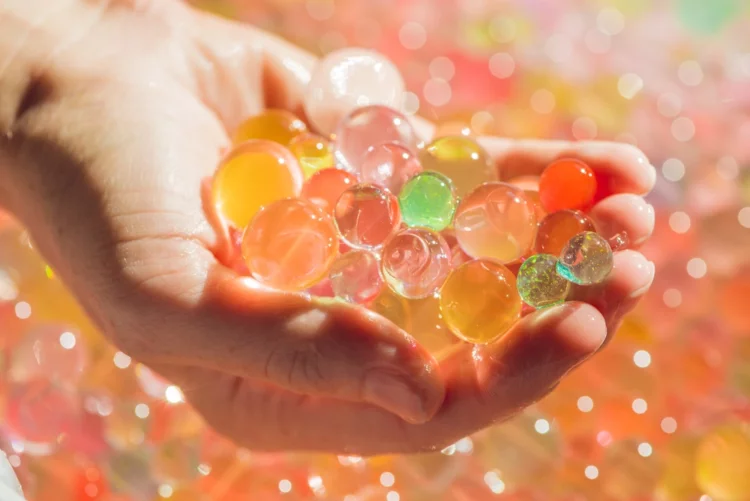
A “non-toxic” label generally refers to chemical poisoning under specified conditions. It does not mean an object is safe to eat, inhale, or insert into the nose or ear.
Water beads can absorb liquid and expand inside the digestive tract. The CPSC reports nearly 7,000 water-bead ingestion injuries treated in U.S. emergency departments from 2018 through 2022 and is aware of an infant death in 2023. Beads inserted into the nose or ear can also expand and damage surrounding tissue.
Pets face a similar physical risk if they swallow a bead. Keep both dry and hydrated beads out of reach, and contact a veterinarian promptly after a known or suspected ingestion.
What to Do If Someone Swallows a Water Bead
Do not assume the bead will pass safely and do not wait for symptoms to appear. In the United States, call Poison Control at 1-800-222-1222 and seek prompt medical evaluation. Call 911 immediately if the person is choking, struggling to breathe, collapsing, or experiencing another medical emergency.
Outside the United States, contact the local poison information center or emergency service. Tell the medical team that the object was a superabsorbent water bead because its expansion behavior is clinically important.
The 2026 U.S. Water-Bead Toy Standard
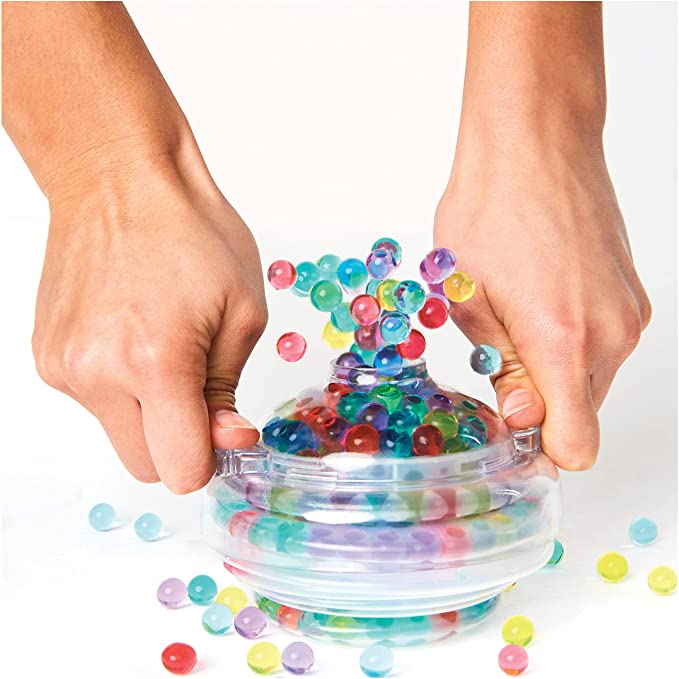
The federal water-bead toy standard took effect on March 12, 2026. Covered water-bead toys manufactured after that date must meet requirements that include:
- A performance test using a 5 mm gauge to limit the expanded size of covered toy beads.
- An extractable acrylamide limit of 325 micrograms per 100 small beads or one large bead.
- Stronger, conspicuous warnings about ingestion, insertion, choking, and expansion inside the body.
- Third-party conformity testing and certification requirements for covered children’s products.
The rule applies to water beads marketed as toys and toys containing water beads. It does not automatically cover every decorative, agricultural, or other non-toy product. Older products may also predate the rule. Most importantly, compliance reduces certain risks; it does not make a water bead safe to swallow.
Are Orbeez Safe for Plants?
Do not intentionally mix toy Orbeez into potting soil, garden beds, or compost. Slow degradation, unknown product-specific additives, dyes, and the difficulty of recovering scattered beads make this an unnecessary use.
Purpose-designed agricultural water-retention products exist, but those should be evaluated and used according to their own labels. An agricultural product is not interchangeable with a children’s toy simply because both absorb water.
If a few beads accidentally fall into soil, remove the visible beads and place them in household trash. There is no need to claim that a small accidental spill has permanently poisoned the soil, but it should not become a routine disposal method.
Lower-Waste Sensory and Craft Alternatives
No sensory material is appropriate for every child or setting. Select activities according to age, developmental needs, allergies, and the likelihood that materials will be put in the mouth.
- Water play with reusable cups, funnels, and sponges: provides pouring, squeezing, and volume-based play without thousands of loose beads.
- Reusable silicone sensory mats or fidgets: easier to inspect, clean, contain, and keep for repeated use.
- A securely sealed sensory bottle or bag: use a permanently secured lid or edge and inspect it regularly for leaks.
- Age-appropriate dough or cornstarch-and-water play: supervise closely, follow food-safety guidance, and account for allergies and mouthing behavior.
- Reusable natural textures: fabric swatches, large wooden shapes, sponges, and other non-choking materials can provide tactile variation without disposable polymer beads.
For decorative craft projects, consider these eco-friendly glitter alternatives rather than replacing one difficult-to-contain synthetic material with another.
The Bottom Line
Orbeez may undergo limited degradation over time, but that is not a sound reason to describe them as readily biodegradable, compostable, recyclable, or safe to release outdoors. They are synthetic superabsorbent polymer beads that should be contained and placed in household trash.
Never put water beads in sinks, toilets, storm drains, compost, or garden soil. Keep them away from children and pets, and treat any suspected ingestion as a prompt medical or veterinary issue.
Responsible disposal matters, but it is also useful to keep the issue in proportion. Reducing larger waste streams, conserving resources, and making durable purchasing choices generally have greater impact. Start with these practical ways to help the environment.
Frequently Asked Questions
Are Orbeez biodegradable?
Orbeez can degrade very slowly under some environmental conditions, but they are not readily biodegradable on a household disposal timescale. Do not treat them as compostable or release them outdoors.
How long do Orbeez take to break down?
There is no reliable universal decomposition time for every Orbeez formulation. One soil study measured only 0.12% to 0.24% degradation of a polyacrylate polymer’s main chain over six months, indicating that breakdown can be extremely slow.
Can Orbeez go in compost?
No. Ordinary toy water beads are not certified compostable and should stay out of home compost, municipal organics bins, garden beds, and plant pots.
Can Orbeez go down the drain or toilet?
No. Water beads can expand, collect inside plumbing, and contribute to blockages. Collect them and place them in household trash instead.
How should you dispose of Orbeez?
Collect every visible bead, seal the beads in a bag or lidded container, and place the container in household trash unless local waste guidance says otherwise.
Are Orbeez safe for plants?
Do not intentionally add toy Orbeez to soil or compost. Purpose-designed agricultural hydrogels are separate products and should be used only according to their labels.
What should I do if a child swallows a water bead?
Do not wait for symptoms or assume the bead will pass. In the United States, call Poison Control at 1-800-222-1222 and seek prompt medical evaluation. Call 911 immediately if the child is choking or struggling to breathe.