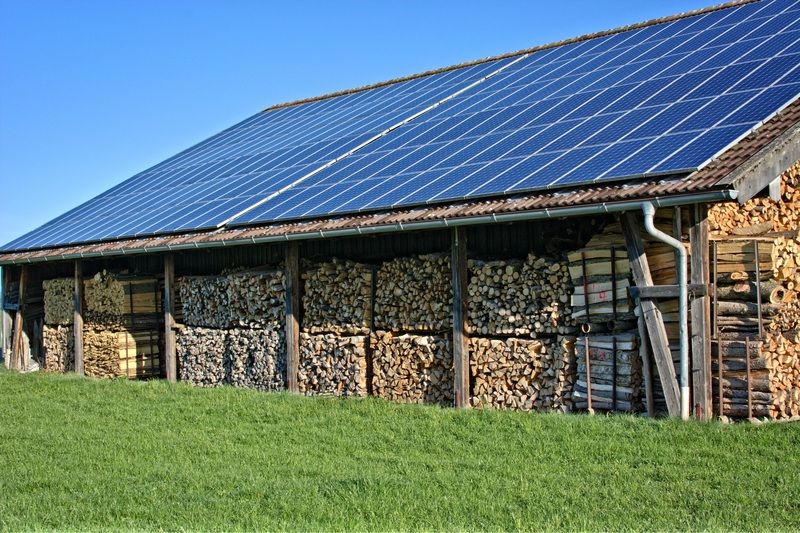
Solar panels are used to generate electricity for homes, businesses, batteries, electric vehicles, water pumps, ventilation fans, outdoor lights, portable equipment, and farm operations. Photovoltaic panels convert sunlight into electrical energy, while solar thermal collectors capture heat for water, air, or cooking. Those technologies are related, but they are not interchangeable.
The best solar setup depends on the load you need to power, the available sunlight, grid access, equipment compatibility, and whether you need energy after sunset or during an outage. This guide explains 10 practical uses for solar panels, the components each application requires, and the limitations that product descriptions often leave out.
Key Takeaways
- Photovoltaic panels produce electricity from light, not heat.
- Solar thermal collectors directly capture heat for applications such as water heating and solar cooking.
- A battery is optional for many grid-connected systems but is usually required for off-grid power, stored nighttime energy, or outage backup.
- There is no universal panel count, output estimate, or savings figure. System performance depends on the load, location, shade, panel orientation, weather, equipment losses, electricity rates, and utility rules.
- Solar has environmental advantages but is not impact-free. Manufacturing, materials, land use, transportation, and end-of-life management still matter.
What Solar Panels Actually Do
Photovoltaic technology, usually shortened to PV, converts sunlight into electrical energy. Individual solar cells are connected to form modules, commonly called panels. Multiple panels can then be connected into an array sized for anything from a small sensor to a home, commercial building, or utility power plant.
PV panels produce direct-current electricity. A charge controller may regulate that electricity for a battery or compatible DC load, while an inverter converts it into alternating current for common household equipment and the electrical grid.
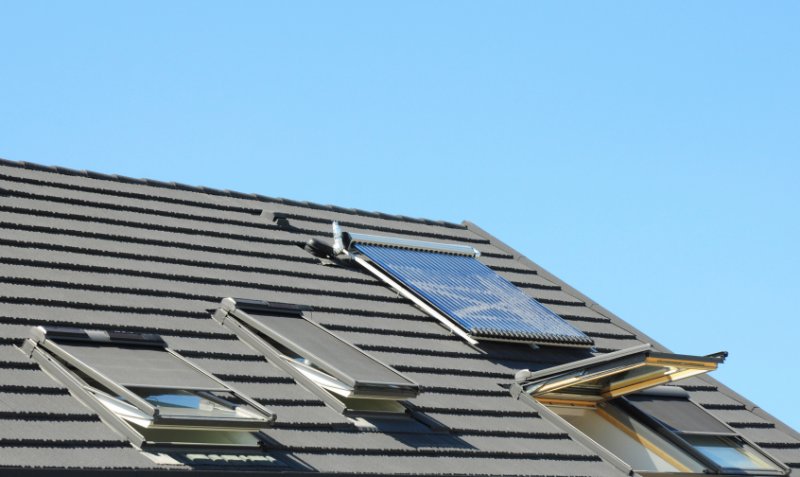
Solar thermal collectors work differently. Instead of producing electricity, they absorb solar heat and transfer it to water, another fluid, or air. The U.S. Energy Information Administration explains that active solar-heating systems use pumps or fans to move heated fluid or air between the collector, a building, and a storage system.
This distinction prevents a common source of confusion. A PV array can power an electric water heater, heat-pump water heater, ventilation fan, or induction cooker. A solar thermal collector heats water, air, or cooking equipment directly.
Why Use Solar Panels?
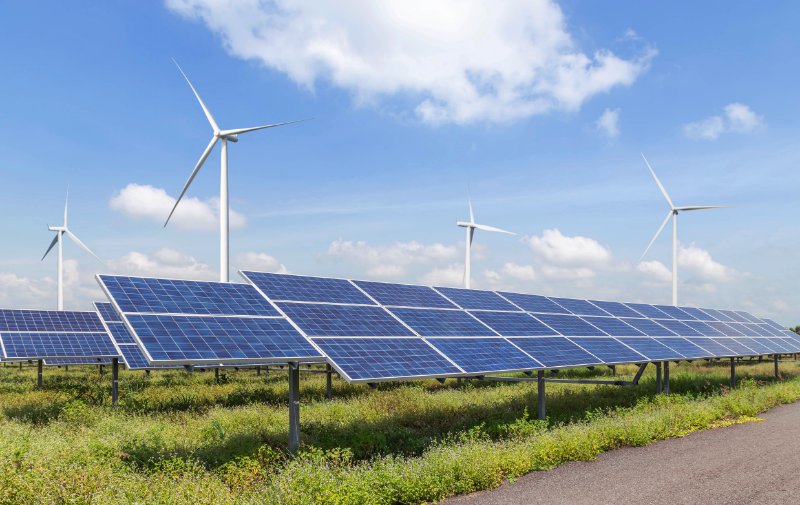
Solar Is Modular
A small panel can charge a battery or run a low-power device. A larger array can offset a building’s electricity use, support an EV charger, or feed electricity into a utility grid. This modularity makes PV useful where extending a power line would be expensive or impractical.
Operating Emissions Are Low, but Lifecycle Impacts Remain
Solar technologies do not create air pollution or greenhouse-gas emissions while generating electricity. However, producing glass, metals, semiconductor materials, mounting equipment, inverters, and batteries requires energy and raw materials. Large installations can also affect land and habitat, while retired equipment requires responsible handling. The environmental case for solar is therefore strongest when durable equipment is appropriately sited, used for a long service life, and recycled where suitable programs exist.
For broader context, see how different technologies compare by greenhouse-gas impact.
Panels Can Operate for Decades
The U.S. Department of Energy reported that the average operational lifespan of a solar panel had increased to approximately 25 to 35 years in 2025. That does not mean every component lasts equally long. Inverters, batteries, wiring, controls, pumps, and mounting hardware have their own warranties, maintenance needs, and replacement cycles.
Savings Depend on the Site and Contract
Solar can reduce purchased electricity, but it does not automatically eliminate an electric bill. Financial results depend on system cost, financing, energy consumption, solar production, electricity rates, export compensation, fixed utility charges, maintenance, and equipment replacement. A proposal should show its assumptions rather than promise universal savings.
10 Uses for Solar Panels at a Glance
| Use | Typical Setup | Important Caveat |
|---|---|---|
| Building and grid electricity | PV array, mounting, inverter, wiring, disconnects, and meter or interconnection equipment | Production and savings depend on the site, load, and utility rules |
| Water and pool heating | Solar thermal collector and storage tank, or PV powering an electric heating system | Solar thermal and photovoltaic panels are different technologies |
| Water pumping | PV array, pump controller, pump, pipework, and often a storage tank | The pump must be sized for flow rate, lift, friction, and seasonal sunlight |
| Ventilation and small loads | Small PV module connected directly to a fan or through a battery | An attic fan can waste energy if the attic is poorly sealed or vented |
| Outdoor lighting | Panel, battery, LED, controller, and light or motion sensor | Winter sunlight, shade, battery size, and required illumination affect reliability |
| Camping and portable equipment | Foldable panel, charge controller, cables, and portable battery | Rated panel watts are not the same as daily usable watt-hours |
| Battery charging and backup | PV array, compatible inverter or controller, battery, and protection equipment | Ordinary grid-tied solar usually shuts down during an outage |
| Cooking | Direct solar cooker or PV system powering an electrical appliance | A reflective solar cooker is solar thermal equipment, not a PV panel |
| EV charging and transportation | Rooftop or carport PV, inverter, electrical panel, and EV charging equipment | Vehicle-mounted panels usually provide limited energy compared with a fixed array |
| Agriculture and agrivoltaics | PV for pumps, buildings, sensors, cooling, fencing, or co-located agricultural production | Crop and land-use outcomes depend on climate, layout, height, and farm operations |
10 Practical Uses for Solar Panels
1. Power Homes, Businesses, and the Electrical Grid
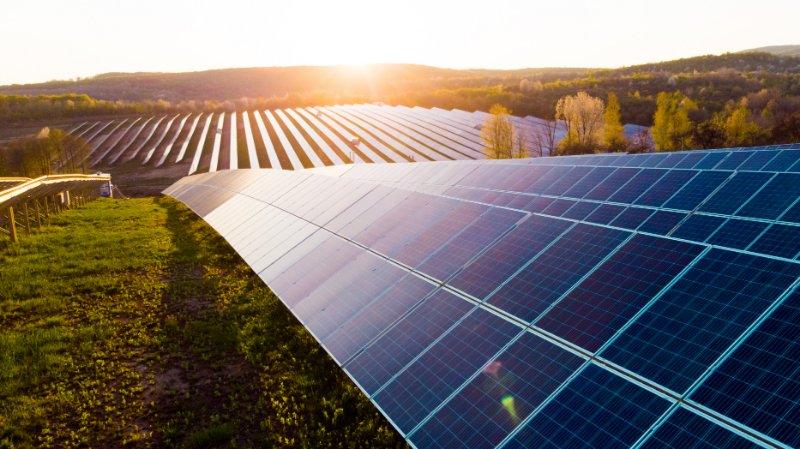
Electricity generation is the most common use for photovoltaic panels. A rooftop system can serve household appliances and building systems, while commercial roofs, parking canopies, ground-mounted arrays, community projects, and solar farms use the same underlying technology at larger scales.
A building-scale system normally includes modules, racking, wiring, one or more inverters, electrical protection, disconnects, and metering or utility-interconnection equipment. A battery is optional when the grid balances production and consumption, but storage may be added to shift energy to later hours or support selected loads during an outage.
A roof is not automatically suitable. Shade, orientation, structural condition, usable area, fire setbacks, and the remaining life of the roof all affect the design. Start by comparing the characteristics of the best home solar panels, then have a qualified installer model the complete system rather than selecting modules in isolation.
2. Heat Household Water and Swimming Pools
Solar energy can heat water in two distinct ways:
- Solar thermal: A rooftop collector heats water or a heat-transfer fluid that circulates through a tank or heat exchanger.
- Solar electric: PV panels produce electricity for a resistance water heater, heat-pump water heater, circulation pump, or other electrical equipment.
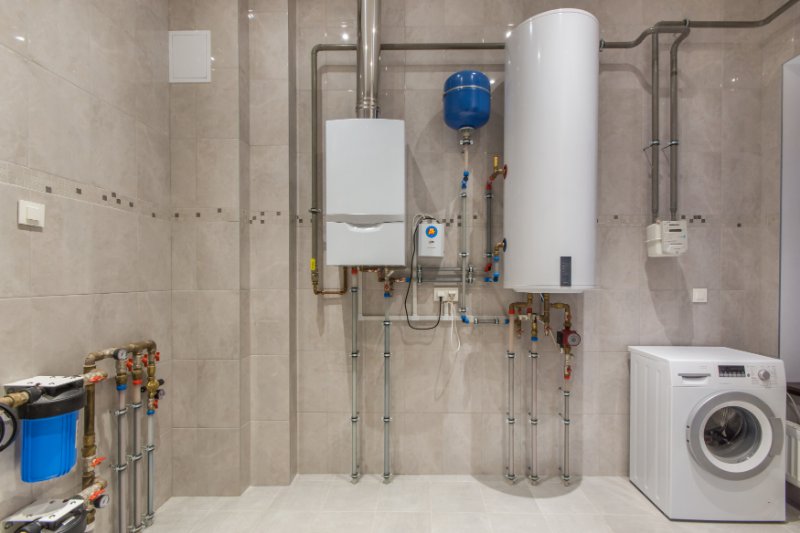
Active solar thermal systems use pumps to circulate fluid. Passive designs rely more heavily on natural circulation and tank placement. In either case, the installation must account for freezing conditions, overheating, water quality, plumbing safety, storage volume, and periods with limited sunshine.
Swimming pools are another suitable thermal application because they need lower water temperatures than household hot-water systems. Learn how different solar pool-heating systems circulate pool water through collectors before returning it to the pool.
3. Pump Water for Wells, Livestock, and Irrigation
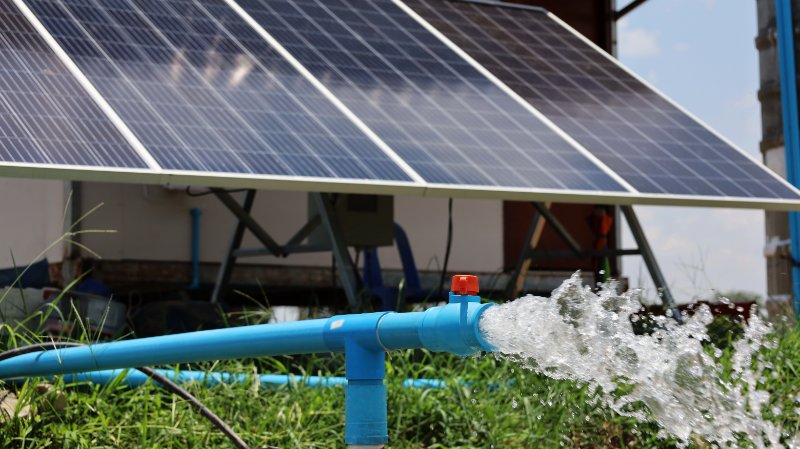
A photovoltaic array can power a surface or submersible pump for livestock watering, wells, pond circulation, and some irrigation systems. This is particularly useful at remote sites where a grid extension or repeated fuel delivery would be impractical.
A basic system may include the PV array, mounting structure, controller, electric pump, piping, valves, sensors, and a water tank. Pumping water into an elevated or oversized tank during sunny periods can sometimes provide simpler storage than charging a large electrical battery.
Correct sizing requires more than matching the pump’s watt rating to a panel. The designer must account for daily water demand, total vertical lift, pipe friction, required flow, seasonal solar conditions, pump efficiency, controller compatibility, and motor-starting requirements. The USDA’s technical guide to small solar-powered water-pump systems provides a useful engineering overview but is not a substitute for site-specific design.
4. Run Ventilation Fans and Other Small Building Loads
Small PV modules can operate ventilation fans in sheds, greenhouses, barns, workshops, boats, and other spaces. A direct-coupled fan runs fastest when sunlight is strongest, which can work well when heat and solar availability rise together. A battery or grid connection is needed when ventilation must continue at night or during low-light conditions.
Solar power does not make every ventilation installation efficient. ENERGY STAR warns that an attic fan can pull conditioned air from the home if soffit vents are blocked or the attic is not properly sealed from the living space. Air sealing, insulation, passive airflow, fan location, and moisture control should be evaluated before adding mechanical ventilation.
For smaller applications, compare dedicated solar-powered greenhouse fans and review what a complete solar setup for a shed requires.
5. Provide Outdoor, Pathway, and Remote Lighting
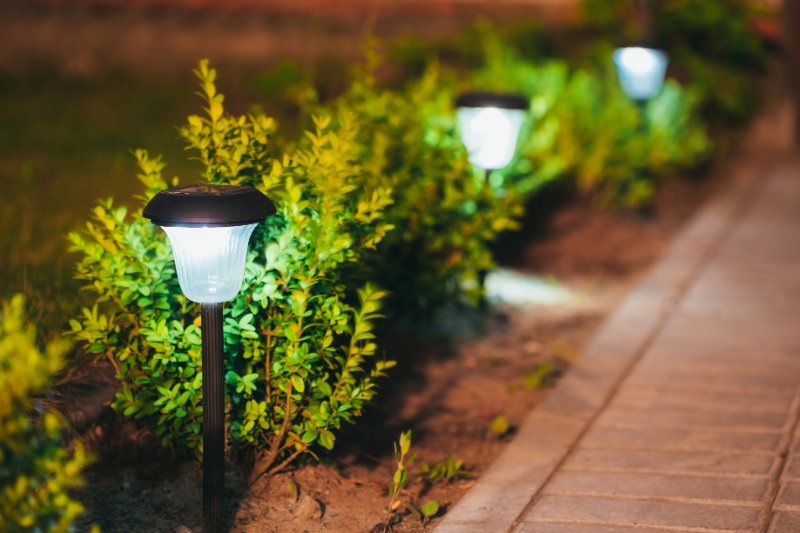
Integrated solar lights are one of the simplest ways to use PV. A compact panel charges a battery during the day, and a controller activates an LED after dark or when a motion sensor detects movement.
Common applications include pathways, driveways, signs, gates, gardens, parking areas, bus stops, and remote street lighting. Solar lighting is most attractive where trenching and wiring would be costly, but the design still needs enough panel area and battery capacity for the required brightness and nighttime duration.
Before buying, check the rated light output, expected runtime, battery-replacement options, ingress-protection rating, panel placement, winter sunlight, and nearby shade. Compare purpose-built solar driveway lights and larger solar lamp posts according to the area that actually needs illumination.
6. Power Camping, RV, and Portable Equipment
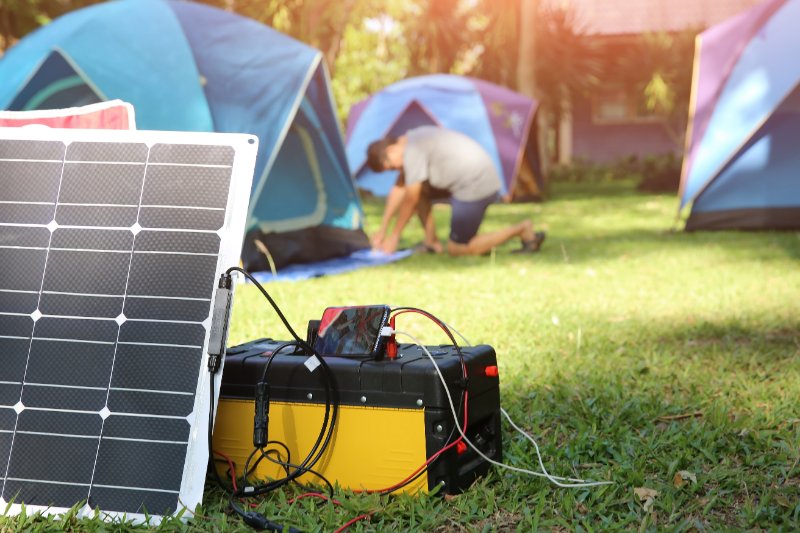
Portable panels can charge batteries for phones, cameras, lights, navigation equipment, radios, laptops, routers, coolers, and other travel or field equipment. Rigid panels are commonly mounted on RVs and boats, while foldable panels are easier to move into direct sunlight at a campsite.
Choose equipment by energy, not marketing labels. Panel output is measured in watts, while the energy a device consumes or a battery stores is measured in watt-hours. A panel rated at 100 watts does not produce 100 watts continuously throughout the day; clouds, heat, angle, shade, controller losses, and charging conditions reduce usable output.
List each device’s power draw and daily operating time before selecting a panel or battery. Readers focused on portable electronics can compare solar laptop chargers and solar power banks, but a larger power station is usually more appropriate for equipment with substantial or variable loads.
7. Charge Batteries and Support Backup Power
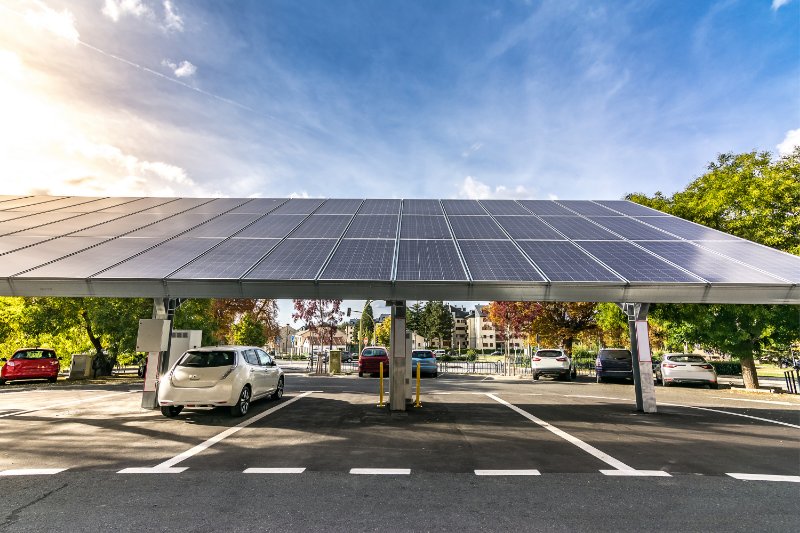
Solar panels can charge batteries for portable systems, homes, businesses, telecommunications equipment, remote monitoring, and emergency loads. A complete storage system normally requires a compatible charge controller or hybrid inverter, battery-management system, overcurrent protection, disconnects, appropriate wiring, and a safe installation location.
Battery capacity and inverter power describe different limits. Capacity, measured in kilowatt-hours, indicates how much energy the battery can store. Inverter power, measured in kilowatts, indicates how much connected equipment it can operate at one time. A large battery paired with an undersized inverter still cannot start a high-power motor or run several heavy loads simultaneously.
Rooftop panels alone should not be assumed to provide backup electricity. Grid-connected systems normally disconnect during an outage to protect utility workers and equipment. Backup operation requires a system designed to isolate itself from the grid, along with compatible controls, an appropriate inverter, and usually storage or another dispatchable power source.
Readers comparing packaged systems should evaluate solar-powered generators for home backup according to usable battery capacity, continuous and surge power, recharge time, supported solar input, battery chemistry, warranty, and the loads that must remain operational.
8. Cook Food With Direct or Photovoltaic Solar Energy
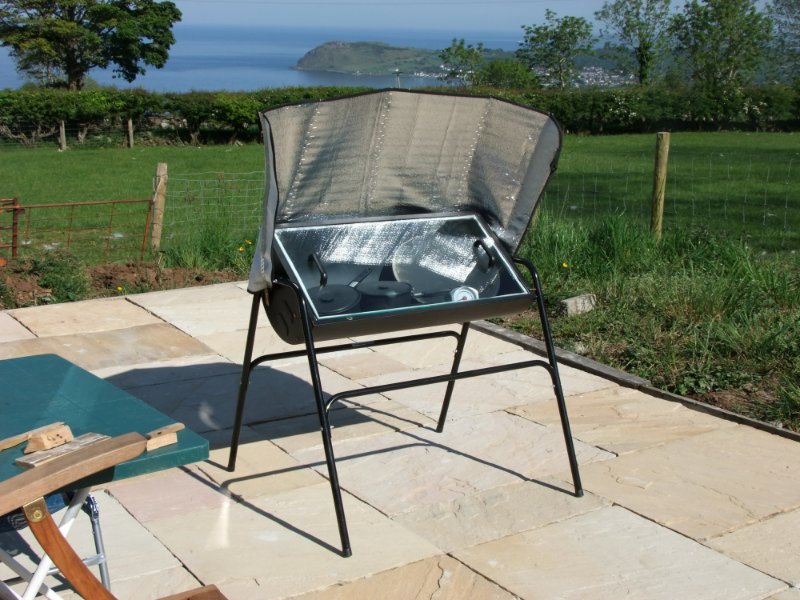
A direct solar cooker is a thermal device rather than a photovoltaic panel. Reflective surfaces direct sunlight toward a dark cooking vessel, while glazing or an enclosure helps retain heat. Common designs include box cookers, panel cookers, and parabolic reflectors.
The alternative is PV-powered cooking: solar panels supply electricity to an induction plate, slow cooker, kettle, or other appliance through an inverter and, when needed, a battery. This approach is more controllable but requires a substantially larger electrical system than a phone charger or light.
Solar cooking depends on weather and time of day. Reflectors and hot cooking vessels can also create glare and burn hazards. Use stable equipment, supervise the cooking process, and follow the same food-temperature and handling practices used with other cooking methods. The Climate Technology Centre & Network’s solar-cooking overview explains how concentration, absorption, and heat retention work.
9. Charge Electric Vehicles and Support Transportation
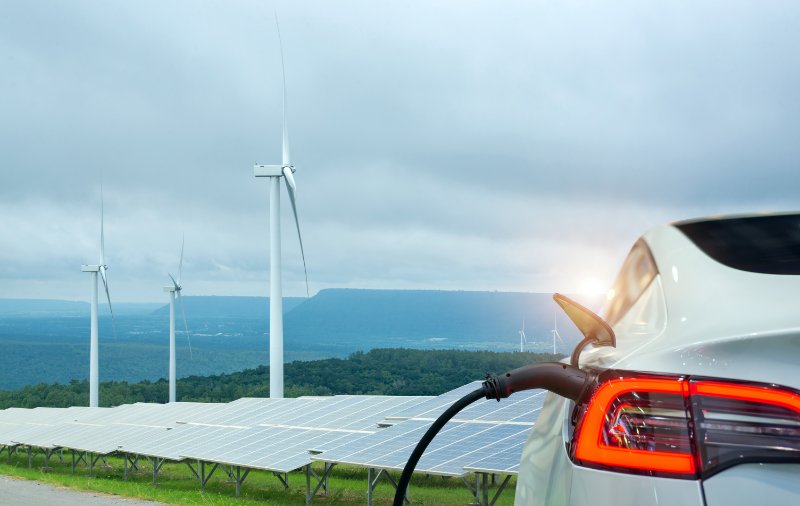
The most practical connection between solar panels and transportation is an EV charger supplied by a rooftop, ground-mounted, or carport PV system. Charging during sunny hours can align part of the vehicle load with onsite production, while the grid or a stationary battery balances differences between production and the driver’s schedule.
Size the system from actual driving energy and charging behavior. Consider annual miles or kilometers, vehicle efficiency, charging losses, time at home, charger power, existing building loads, electrical-panel capacity, and utility rates. EV charging is a substantial electrical load and should be installed according to local electrical, permitting, and interconnection requirements.
Some vehicles use integrated PV to support auxiliary loads or add a limited amount of range, but the available roof area is small compared with a fixed home or carport array. For most drivers, fixed solar generation connected to conventional EV supply equipment is the more meaningful application.
10. Support Farms and Agrivoltaic Systems
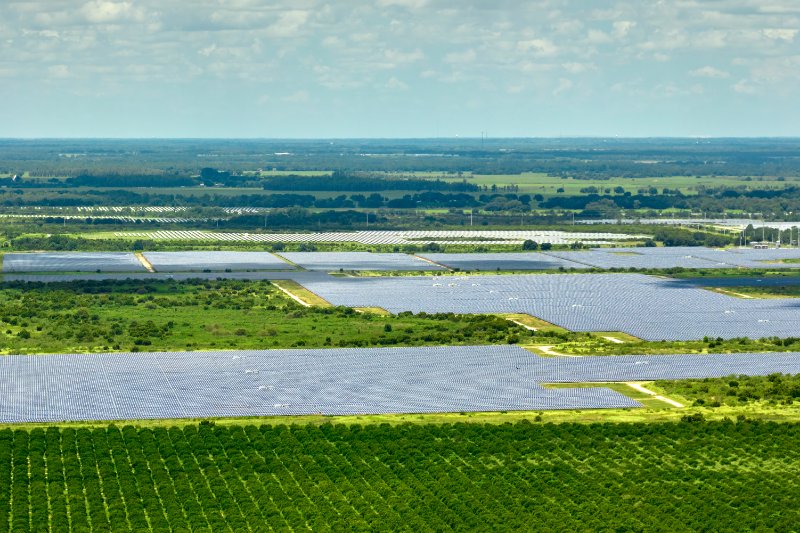
Farms can use PV for irrigation and livestock pumps, electric fencing, lighting, ventilation, refrigeration, sensors, communications, workshops, packing facilities, greenhouses, and other electrical loads. Remote or seasonal loads are often particularly suitable because solar can reduce the need for long grid extensions or repeated fuel delivery.
Agrivoltaics goes a step further by co-locating solar generation with crops, grazing, pollinator habitat, or other agricultural activity. Depending on the crop, climate, panel height, row spacing, equipment access, and water conditions, shade from the array may reduce soil-water evaporation or protect some plants from heat stress. Those outcomes are not universal, and a design that benefits one crop or region may reduce productivity elsewhere.
The U.S. Department of Energy’s agrivoltaics research overview notes both the potential benefits and the remaining questions around crop suitability and system design. Readers planning controlled growing spaces can also review solar panels for greenhouses, while landowners evaluating larger projects should consider the economics and tradeoffs of solar land development.
How to Choose the Right Solar Setup
Start with the task, not the panel. A well-matched system is based on measured demand, site conditions, and the hours when energy is needed.
- Define the load. Record each device’s running power, starting surge, operating hours, and daily energy consumption. For a home, begin with at least 12 months of electricity bills.
- Evaluate the site. Check shade, orientation, roof or ground condition, usable area, weather exposure, seasonal sunlight, and distance from the load.
- Choose the system architecture. Decide whether the application should be grid-tied, off-grid, direct-coupled, battery-supported, portable, or solar thermal.
- Decide when energy is needed. A daytime pump or fan may operate directly from solar. Nighttime, low-light, and outage loads require storage, the grid, water storage, thermal storage, or another backup source.
- Model realistic production. The free PVWatts calculator estimates grid-connected PV production for locations worldwide using system inputs and long-term weather records. Use it as a planning estimate, then obtain a site-specific design.
- Compare the entire lifecycle. Review equipment warranties, expected degradation, inverter or battery replacement, maintenance access, service support, roof work, insurance, disposal, and available recycling pathways.
Roof-mounted arrays, batteries, EV chargers, grid interconnections, pumps, and pressurized water-heating systems involve electrical, structural, fire, or plumbing risks. Use qualified professionals and follow the codes, utility requirements, and product instructions that apply to the installation location.
The Most Useful Solar System Is the One Matched to a Real Load
Solar panels can serve applications ranging from a pathway light to a utility power plant, but the panel is only one part of the system. Useful results depend on matching the array, controller, inverter, battery, pump, wiring, storage, and other equipment to a clearly defined task.
Before buying equipment, document what must be powered, when it must operate, and how much energy it consumes. Then determine whether the job calls for photovoltaic electricity, solar thermal heat, or a combination of technologies. That process produces a more reliable result than starting with a panel count or a promised percentage reduction in an electric bill.
Solar is one part of broader climate change mitigation. Energy efficiency, responsible siting, durable equipment, grid planning, storage, recycling, and reduced fossil-fuel consumption all influence the eventual environmental benefit.
Frequently Asked Questions
What are solar panels most commonly used for?
Solar panels are most commonly used to generate electricity for homes, businesses, grid-scale power plants, batteries, EV chargers, water pumps, outdoor lights, ventilation fans, portable equipment, and farm systems. Direct water heating and solar cooking usually use solar thermal collectors rather than photovoltaic panels.
Do solar panels work on cloudy or rainy days?
Yes. Photovoltaic panels can generate electricity from diffuse daylight, but output usually falls when less sunlight reaches the cells. There is no reliable universal percentage for rainy-day production; cloud cover, system design, season, temperature, shading, and location all matter.
How many solar panels are needed to run a house?
There is no fixed number. The calculation depends on the home’s annual electricity consumption, peak loads, panel wattage, system losses, roof orientation, shade, and local solar resource. Start with 12 months of electricity use, model the site with PVWatts, and obtain a site-specific design.
How long do solar panels last?
The U.S. Department of Energy reported an average operational lifespan of approximately 25 to 35 years in 2025. Electricity production normally declines gradually, and inverters, batteries, mounting hardware, and other system components may have different service lives.
Do solar panels need batteries?
No. A grid-connected system can offset electricity use without a battery. Storage is commonly added for off-grid operation, nighttime energy use, or backup power. Outage backup also requires a compatible inverter, controls, and equipment that can safely isolate the system from the grid.
Can solar panels heat water or cook food?
Yes, but the technology matters. Solar thermal collectors and cookers capture heat directly. Photovoltaic panels instead generate electricity that can operate a water heater, heat pump, induction plate, kettle, or another electrical appliance.
Are solar panels environmentally friendly?
Solar panels generate electricity without air emissions while operating, but manufacturing, raw materials, transportation, land use, and end-of-life management have environmental impacts. Durable equipment, responsible siting, long service life, and appropriate recycling improve the overall outcome.
Related Solar and Energy Resources
- Environmentally friendly technology for everyday use
- Home energy-saving products that can reduce electricity demand
- Solar panels for greenhouses
- Solar land development benefits and tradeoffs
See Related: How to Recycle Old Rooftop Solar Panels: Step-by-Step Sustainability Checklist
See Related: The Thrifty Environmentalist’s Guide to DIY Solar Power Projects

