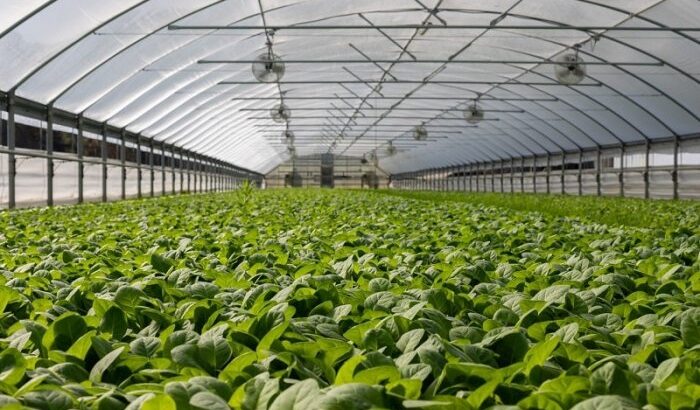
A greenhouse fogger can be either a fixed water-only system for humidity and evaporative cooling or a portable machine for applying a label-approved crop treatment. Those jobs require different equipment. For climate control, choose a properly designed high-pressure fog system with filtration, airflow, and sensor-based controls. For pesticides or fungicides, choose a cold ULV applicator only when the product label permits greenhouse fogging.
Quick answer: Based on current documentation, the PetraTools Electric Backpack ULV Fogger is the strongest consumer-oriented portable option in this list. The Fogmaster Tri-Jet 6208 and Vectorfog C150+ are better suited to professional or frequent use. The Burgess 1443 and Black Flag 190107 are outdoor thermal mosquito foggers and should never be operated inside an enclosed greenhouse.
Product specifications and safety guidance were last verified on July 16, 2026. Prices and availability can change.
Affiliate disclosure: This article may contain affiliate links. If you buy through one, we may earn a commission at no extra cost to you. This is a research-based comparison using manufacturer documentation, university extension guidance, and government safety sources. We did not conduct hands-on testing of every model.
Key Takeaways
- For routine humidity or cooling, install a dedicated water fogging system rather than carrying a portable chemical applicator through the greenhouse.
- Cold ULV foggers use airflow instead of heat and are generally the more practical portable format for enclosed spaces, provided both the equipment manual and the liquid’s label allow the use.
- Thermal mosquito foggers are not interchangeable with greenhouse fogging systems. Some are explicitly limited to outdoor use.
- Smaller droplets stay airborne longer, but excessive humidity, poor air movement, and wet foliage can increase disease pressure.
- Several products in the old version of this list no longer have clear, current manufacturer documentation. They are retained for identification but are not ranked as recommended buys.
Greenhouse Fogger Comparison Table
| Product | Equipment type | Best fit | Documentation status | Greenhouse verdict |
|---|---|---|---|---|
| PetraTools Electric Backpack ULV Fogger | Portable electric cold ULV fogger | Large hobby or commercial treatment jobs | Current manufacturer page | Best-documented consumer option |
| SuperHandy Fogger Sprayer | Battery backpack ULV fogger | Cordless application work | Current retail listings; manufacturer support unclear | Conditional pick; verify the exact SKU |
| Concrobium Mold Control Cold Fogger | Cold ULV structural-treatment fogger | Empty-building mold and odor work | Current brand guidance | Not a routine crop-treatment fogger |
| Nix Co. Disinfectant Backpack Fogger | Electric backpack fogger | Unclear | No stable current model page located | Not ranked |
| Smith Performance FT982 | Electric thermal fogger | Specialist thermal formulations | Current manufacturer page | Not for humidity control; specialist use only |
| Fogmaster Tri-Jet 6208 | Professional cold ULV fogger | Frequent portable applications | Manufacturer page and manual available | Strong professional option |
| Burgess 1443 | Propane thermal insect fogger | Outdoor mosquito control | Current manufacturer page | Do not use in an enclosed greenhouse |
| Cardinal CMD65 | Engine-powered backpack mist duster | Outdoor grounds and vector control | Current primary documentation not located | Not recommended for routine greenhouse use |
| Black Flag 190107 | Electric thermal insect fogger | Outdoor patios and yards | Current manufacturer page | Do not use in an enclosed greenhouse |
| SWANSOFT ULV Fogger | Portable electric ULV fogger | Unclear | Marketplace listing; current support unverified | Not ranked |
| Konideke Electric ULV Fogger | Portable electric ULV fogger | Unclear | Marketplace listing; current support unverified | Not ranked |
| Vectorfog C150+ | Commercial electric cold ULV fogger | High-output professional work | Current manufacturer page and manual | Strong commercial option |
| AlphaWorks ULV Backpack Fogger | Backpack ULV fogger | Portable application work | Current manufacturer support unclear | Conditional; verify parts and warranty |
What Kind of Greenhouse Fogger Do You Need?
The word fogger is used for several tools that behave differently. Buying by product name alone is the main reason greenhouse owners end up with the wrong machine.
Fixed fogging system for humidity and cooling
A fixed greenhouse fogging system pumps clean water through overhead nozzles. According to UMass Extension’s greenhouse fogging guidance, true fog droplets are generally smaller than 50 microns, and high-pressure greenhouse systems commonly target roughly 10 to 20 microns. The droplets evaporate in the air, adding humidity and removing heat.
This is the right category for propagation, evaporative cooling, and automatic humidity control. A complete system normally includes a pump, piping, filtration, anti-drip nozzles, sensors, a controller, and adequate horizontal airflow. It should be designed around crop needs, greenhouse volume, ventilation, local wet-bulb conditions, and vapor pressure deficit rather than a single relative-humidity target.
Misting system for larger water droplets
Mist droplets are larger and more likely to settle on foliage or growing media before evaporating. Misting can be useful for propagation, but too much surface wetness can encourage fungal problems and fungus gnats. Many low-pressure products sold as fogging systems are technically misting systems, so check the stated droplet range and operating pressure.
Portable cold ULV fogger for approved liquid applications
A cold ultra-low-volume fogger uses a motor and airflow to atomize liquid without a heating element. It can be useful when a pesticide, fungicide, disinfectant, or other formulation is specifically compatible with the machine and legally labeled for the crop, site, and fogging method. A portable ULV fogger is an application tool; it does not replace climate controls, ventilation, sanitation, or an integrated pest-management plan.
Thermal fogger for specialist or outdoor use
A thermal fogger heats a specially formulated liquid to create a dense aerosol. It is not a greenhouse humidifier. Some thermal mosquito foggers use an open flame or create combustion byproducts and are explicitly restricted to outdoor use. Never assume that a model marketed for yards, patios, or mosquito control is safe inside a greenhouse.
How We Evaluated These Products
This update prioritizes fit and verifiability over review counts or promotional claims. Each product was assessed using five criteria: the fogging method, intended use, droplet and output control, current manufacturer documentation, and the availability of operating and safety instructions.
- Models with current official documentation and a plausible enclosed-space use case received the strongest consideration.
- Products designed for outdoor mosquito control were excluded from greenhouse recommendations, even when they remain commercially available.
- Products found mainly through old marketplace pages or unstable search links were retained for identification but downgraded.
- No model is endorsed for a particular chemical unless the chemical label and equipment manual both allow that use.
Detailed Reviews of 13 Greenhouse Foggers
1. PetraTools Electric Backpack ULV Fogger: Best-Documented Consumer Option
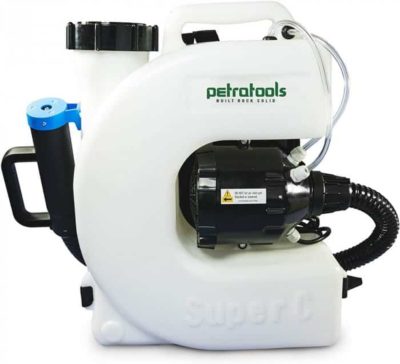
The current PetraTools product page lists a 1,200-watt motor, four-gallon tank, spray distance of up to 20 feet, and adjustable droplets from 20 to 50 microns. The manufacturer also claims more than 38,000 square feet of coverage per tank, although real coverage will vary with output, walking speed, crop density, and the liquid being applied.
This is the strongest consumer-oriented choice here because the model is still supported, specifications are easy to find, and the large tank reduces refill stops. The tradeoff is weight: four gallons of water alone weighs more than 33 pounds before the machine is added. Confirm the current model’s cord, voltage, and extension-cord requirements before ordering, and do not treat it as an automatic humidity system.
2. SuperHandy Fogger Sprayer: Conditional Cordless Pick
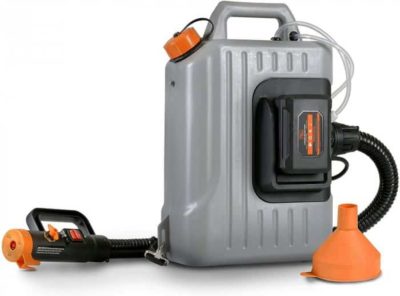
The SuperHandy listing is attractive when a power cord would create a trip hazard or limit movement between greenhouse bays. Current retail descriptions commonly identify a 48-volt battery, a 350-watt motor, a tank near 2.6 gallons, and adjustable output. Those specifications differ from some older versions of the article, which described a three-gallon machine.
The weakness is documentation. A stable, detailed manufacturer page and current parts catalog were not easy to locate during this update. Treat it as a conditional recommendation: confirm the exact model number, included battery, charger voltage, replacement-battery availability, droplet range, and chemical compatibility in writing. That verification matters more than the convenience of cordless operation.
3. Concrobium Mold Control Cold Fogger: For Structural Remediation, Not Crop Fogging
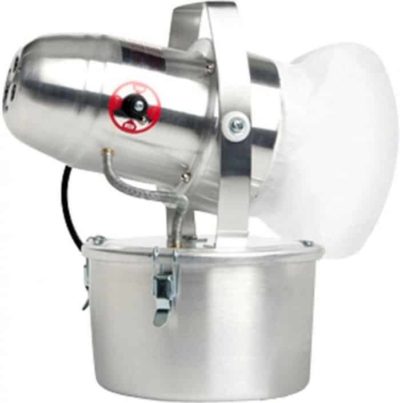
Rust-Oleum describes the Concrobium fogger as an applicator for mold and musty-odor treatment in rooms, basements, attics, crawlspaces, wall cavities, and new construction. That is a structural-remediation use case, not evidence that the product should be sprayed across greenhouse crops.
It may have a role when an empty greenhouse structure needs a treatment that is permitted by the Concrobium instructions, but crops, growing media, beneficial insects, water systems, and food-contact surfaces change the risk profile. Do not use this machine or its associated solution on plants unless the current label explicitly permits that application. For crop mold, address ventilation, leaf wetness, sanitation, plant spacing, and a registered crop-protection product instead.
4. Nix Co. Disinfectant Backpack Fogger: Model Verification Required
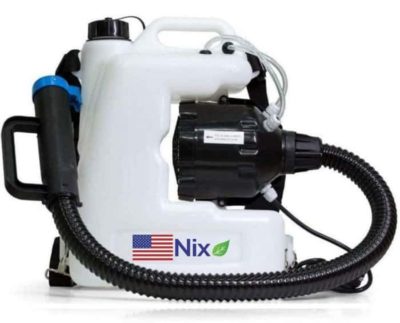
The earlier article linked this product through an Amazon search results page rather than a stable model listing. During this update, a current manufacturer page, manual, and parts source could not be verified. That makes the old claims about spray range, noise, weight, and cord length too uncertain to preserve as buying advice.
Do not buy an apparently similar unit based on the photograph alone. Ask the seller for the model number, manual, electrical rating, tank material, droplet range, compatible formulations, warranty, and replacement parts. Until those details can be confirmed, this model is not ranked.
5. Smith Performance FT982 Electric Thermal Fogger: Specialist Thermal Use Only
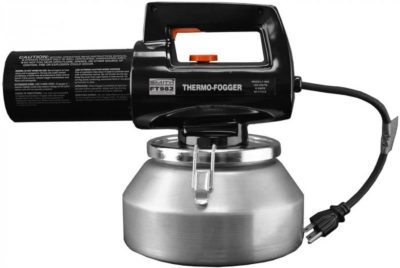
The manufacturer’s current FT982 page identifies a 110-volt electric thermal fogger with a one-gallon aluminum tank. It also states that only products specifically formulated for thermal fogging should be used.
This machine belongs in a specialist application program, not a general greenhouse equipment list. It does not create the water fog needed for climate control, and the heat, formulation requirements, inhalation exposure, ventilation needs, and entry restrictions require professional planning. Consider it only when the treatment label expressly allows thermal fogging in the greenhouse and a trained applicator has assessed the procedure.
6. Fogmaster Tri-Jet 6208: Best Professional Cold Fogger
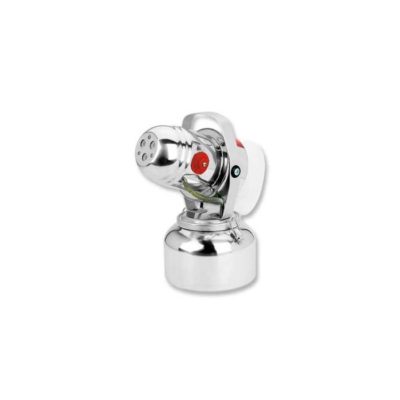
The Fogmaster Tri-Jet 6208 is a durable cold fogger with a long-running professional product line. Manufacturer literature lists a one-gallon tank, adjustable output, three counter-rotating vortex nozzles, and a nominal droplet range around 15 to 30 microns, with performance affected by the liquid’s viscosity and surface tension.
This is the best fit in the list for a grower who needs repeatable portable application and values repairability over backpack convenience. The aluminum construction and replaceable parts support long service, but the one-gallon tank means more refills than a large backpack model. As with every ULV machine, the applicator must verify that the exact formulation is compatible with the equipment and labeled for the greenhouse use.
7. Burgess 1443 Propane Insect Fogger: Do Not Use in a Greenhouse
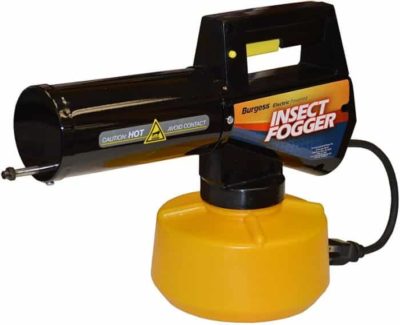
The Burgess 1443 manufacturer page is unambiguous: this propane thermal insect fogger is for outdoor use only and must not be used indoors or in enclosed spaces. A greenhouse is an enclosed space.
Safety verdict: Remove this product from the greenhouse shortlist. It is designed for outdoor mosquito and biting-fly control, not for greenhouse humidity, crop treatment, or structural remediation.
8. Cardinal CMD65 Commercial Mosquito Fogger: Outdoor Equipment, Not Climate Control
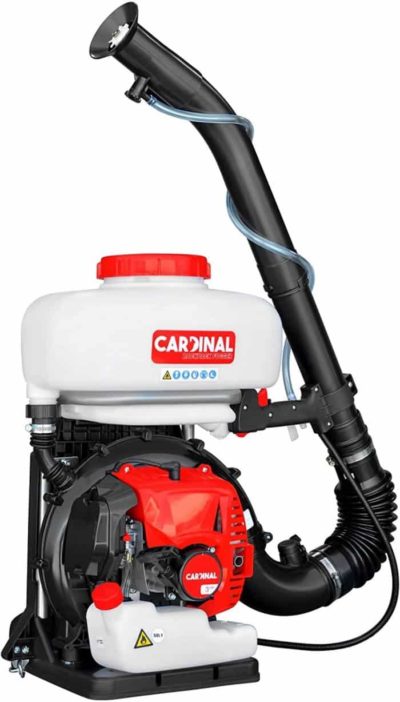
The Cardinal CMD65 is generally sold as a commercial backpack mosquito fogger, blower, and duster. That makes it closer to outdoor vector-control equipment than a greenhouse humidity system. Engine exhaust, noise, high output, drift, and formulation compatibility are material concerns in an enclosed growing space.
A current primary manufacturer page and greenhouse-specific operating instructions were not located during this update, so the old weight, tank, and performance claims have been removed. Do not use it in a greenhouse unless the exact machine manual and the pesticide label both expressly allow the site and method, and the application is planned by a qualified professional.
9. Black Flag 190107 Electric Insect Fogger: Outdoor Thermal Fogger
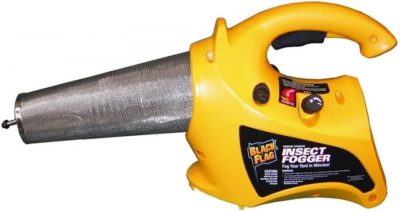
The Black Flag 190107 is marketed for outdoor mosquito and biting-fly control around yards, patios, and decks. It uses thermal-fogging insecticides and is not a cold ULV machine or a water fogging system.
The operating manual prohibits indoor use because concentrated fog and heat can create fire or explosion hazards. That exclusion applies to an enclosed greenhouse. The product can remain in an outdoor mosquito-control article, but it should not be presented as a greenhouse fogger.
10. SWANSOFT ULV Fogger Machine: Current Support Unverified
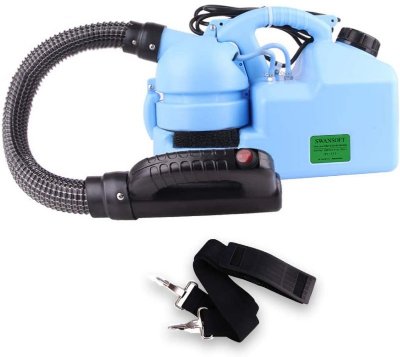
The SWANSOFT model entered the original list through a marketplace listing with broad claims about greenhouse suitability and chemical resistance. A current official product page, operating manual, warranty policy, and parts source could not be confirmed during this review.
That does not prove every unit is unusable, but it prevents a responsible recommendation. Before considering old stock or a visually similar rebranded machine, obtain the exact model documentation and verify electrical certification, droplet control, tank material, hose seals, compatible pH range, cleaning instructions, and support.
11. Konideke Electric ULV Fogger: Marketplace Model With Limited Verification
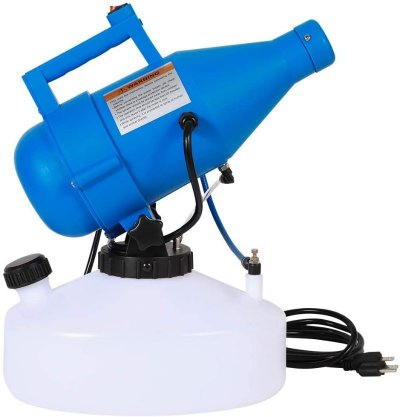
Older listings for the Konideke fogger describe adjustable output and droplets around 20 to 50 microns, but a current primary source was not found to substantiate the complete specification set. The product may also appear under different seller names, making warranty and parts support difficult to assess.
Do not rely on the claimed droplet size alone. A useful machine also needs stable output, chemical-resistant seals, safe electrical construction, a readable manual, and a supplier that stocks consumable parts. Without those basics, a low purchase price can become poor value.
12. Vectorfog C150+ ULV Cold Fogger: Best Commercial Handheld Option
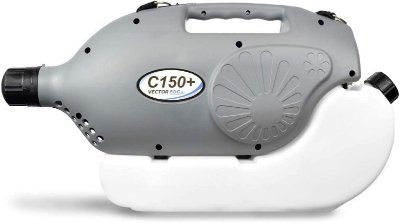
The Vectorfog C150+ is the strongest high-output handheld option in this comparison. Current manufacturer materials describe a six-liter tank, adjustable droplets from approximately 5 to 50 microns, and a 1,250-watt motor. It is built for frequent commercial work rather than occasional hobby use.
The higher output and broad adjustment range are useful when an applicator needs to calibrate for different spaces and formulations. They also increase the consequence of a setup error. Confirm voltage, flow setting, nozzle position, formulation pH and viscosity limits, PPE, ventilation, and entry requirements before each job. For routine greenhouse humidity, an installed sensor-controlled water system remains the better tool.
13. AlphaWorks ULV Fogger Backpack Sprayer: Conditional Portable Option
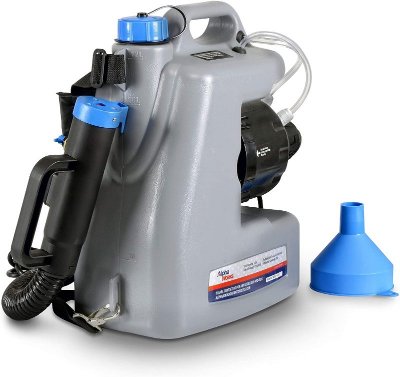
The AlphaWorks backpack format provides mobility, a wide tank opening, and a long hose, features that can be useful around benches and dense crop rows. The difficulty is the same as with several marketplace-led models: current manufacturer documentation and long-term parts support are not clear enough to make it a primary recommendation.
Consider it only after comparing the exact SKU with a better-documented model. Verify the power source, tank capacity, empty and full weight, droplet range, output adjustment, seal materials, battery or motor warranty, charger certification, and cleaning procedure. A seller’s broad claim that a machine works with pesticides, disinfectants, or fertilizers is not a substitute for the formulation label.
For Humidity and Cooling, Buy a Fixed Greenhouse Fog System
None of the 13 portable applicators above is the ideal primary system for day-to-day climate control. A fixed greenhouse fogging system distributes clean water across the air volume and responds automatically to temperature, humidity, or vapor pressure deficit. It is easier to control, more uniform, and less labor-intensive than walking through the structure with a backpack unit.
Specify the system around the crop and greenhouse
Start with greenhouse volume, crop canopy, propagation stage, ventilation capacity, outside dry-bulb and wet-bulb conditions, and the target VPD. Evaporative cooling has a hard climate limit: water cannot cool the air below the local wet-bulb temperature, and humid weather reduces the cooling available. Coordinate fogging with fans, vents, shade, heating, and greenhouse lighting rather than treating each system independently.
Use the right pressure, nozzles, and overlap
True high-pressure greenhouse fog systems commonly operate around 800 to 1,200 psi to produce droplets near 10 to 20 microns. Lower-pressure systems often produce larger mist droplets that are more likely to wet leaves and media. Follow the supplier’s nozzle-height and spacing calculations; uniform overlap matters more than simply installing more nozzles.
Plan for water quality and drainage
Fine nozzles clog easily when water contains sediment or dissolved minerals. Use staged filtration, anti-drip valves, and water treatment where needed. Inspect the greenhouse floor and drainage before commissioning the system; persistent puddles are a sign that droplets are not evaporating or water is being applied faster than the space can handle.
Greenhouse Fogger Buying Guide
- Define the job. Humidity, evaporative cooling, pesticide application, structural mold work, and outdoor mosquito control require different equipment.
- Check the site and application method on the label. A product that can be sprayed on a crop is not automatically approved for fogging, ULV application, or greenhouse use.
- Match droplet size to the task. Fine droplets stay suspended longer; larger droplets settle sooner and wet surfaces more readily. Adjustable output is useful only when the machine can be calibrated consistently.
- Calculate full operating weight. One U.S. gallon of water weighs about 8.34 pounds. A four-gallon backpack becomes heavy before the machine, hose, and battery or motor are counted.
- Confirm power and mobility. Check voltage, amperage, cord length, extension-cord rating, battery runtime, charger compatibility, and whether wet conditions create an electrical hazard.
- Verify wetted materials. Tank plastic, tubing, seals, valves, and nozzles must tolerate the formulation’s chemistry and pH.
- Look for service documentation. A manual, parts diagram, replacement seals, filters, batteries, nozzles, and an accessible support team are worth more than an inflated feature list.
- Budget for maintenance. Filtration, rinsing, calibration, nozzle cleaning, PPE, and application records are part of ownership.
Greenhouse size and construction also affect the answer. A compact unit may overwhelm one of the best mini greenhouses, while a large ridge-and-furrow structure may need zoned fixed fogging. Review the main greenhouse structure types before sizing pumps, nozzles, hoses, or portable tanks.
How to Set Up and Use a Greenhouse Fogger Safely
Do not improvise chemical use. The EPA explains that pesticide labels are legally enforceable and define where, how, how much, and how often a product may be used.
Setting up a fixed water-only fogging system
- Set crop-specific temperature, humidity, and VPD targets at canopy height.
- Test water quality and specify filtration or treatment before choosing nozzles.
- Have the supplier calculate pump pressure, zone flow, nozzle spacing, airflow, and ventilation.
- Install anti-drip nozzles and sensors where condensation or direct spray will not distort readings.
- Commission one zone at a time. Check whether droplets evaporate before reaching foliage, glazing, electrical equipment, or the floor.
- Log conditions and adjust short pulses, ventilation, and set points as the crop canopy changes.
If the greenhouse itself is still being planned, complete the water, drainage, power, and ventilation design during the greenhouse installation process. Retrofitting high-pressure lines after benches and electrical circuits are in place is harder and often more expensive.
Using a portable ULV fogger for a crop treatment
- Read the fogger manual, pesticide label, and Safety Data Sheet before mixing anything.
- Confirm that the crop, greenhouse site, target pest, application method, rate, PPE, ventilation criteria, and restricted-entry interval are all permitted.
- Remove unprotected workers, visitors, pets, and other non-handlers from the treatment area. Protect water, food, beneficial organisms, and sensitive equipment as required by the label.
- Inspect the tank, seals, hose, wiring, battery, nozzle, and filter. Calibrate output with a safe test liquid when the manual permits it.
- Mix and apply exactly as directed. Avoid runoff, excessive leaf wetness, and unplanned drift into adjacent zones.
- Follow all ventilation and entry restrictions. The EPA Worker Protection Standard applies to covered workers and handlers in greenhouses, including training, PPE, warnings, application restrictions, and restricted-entry intervals.
- Record the application, then clean and store the machine according to the manual. Never leave mixed product in the tank unless the label and manual expressly allow it.
For commercial operations, workers generally must remain out of a treated area during the label’s restricted-entry interval. Fog or aerosol residue can remain suspended in the air after application, so visual clearance alone is not a safe re-entry test.
Common Greenhouse Fogging Mistakes
- Buying an outdoor thermal mosquito fogger for indoor greenhouse humidity or crop treatment.
- Choosing by tank size while ignoring droplet range, output control, full weight, and parts support.
- Assuming that a pesticide, fungicide, disinfectant, fertilizer, or biological product can be fogged because it is sold as a liquid.
- Running fog in already saturated air without enough ventilation or horizontal airflow.
- Allowing mist to settle on leaves, media, glazing, lights, heaters, outlets, or the floor.
- Using hard or dirty water without adequate filtration, then treating repeated nozzle clogs as an equipment defect.
- Entering after the visible cloud disappears instead of following the label’s ventilation criteria and restricted-entry interval.
- Trusting an old marketplace listing when the current model number, manual, warranty, and replacement parts cannot be confirmed.
Frequently Asked Questions
What is the best type of fogger for greenhouse humidity?
For routine humidity and evaporative cooling, the best choice is a fixed high-pressure water fogging system with filtration, anti-drip nozzles, airflow, and sensor-based controls. A portable ULV chemical fogger is less uniform and requires manual operation.
What is the difference between fogging and misting in a greenhouse?
Fog droplets are generally smaller than 50 microns and can remain suspended long enough to evaporate. Mist droplets are larger, usually 50 to 100 microns, and are more likely to settle on foliage or growing media.
Can I use a mosquito fogger inside a greenhouse?
Do not use a mosquito fogger inside a greenhouse unless both the equipment manual and the pesticide label expressly allow enclosed-greenhouse use. Outdoor thermal models such as the Burgess 1443 and Black Flag 190107 are not suitable for enclosed greenhouses.
Can I put fertilizer in a greenhouse fogger?
Only when the fogger manufacturer and fertilizer directions both permit that application. Many fertilizers can clog fine nozzles, leave deposits, damage seals, or create an inhalation hazard when aerosolized. Fertigation through irrigation is usually easier to control.
Can a fogger prevent mold in a greenhouse?
A fogger does not automatically prevent mold. Excess humidity and leaf wetness can increase disease pressure. Mold prevention depends on airflow, ventilation, sanitation, crop spacing, temperature, irrigation timing, and keeping humidity within the crop’s target range. Use a registered fungicide only as its label directs.
Which Greenhouse Fogger Should You Choose?
Choose the system by purpose, not by the density of the visible cloud. For automatic humidity and cooling, commission a fixed high-pressure water fogging system with controls and proper airflow. For occasional label-approved treatments, PetraTools is the best-documented consumer portable model in this group. Fogmaster’s Tri-Jet 6208 is the stronger repairable professional choice, while Vectorfog C150+ fits high-output commercial work.
SuperHandy and AlphaWorks may suit users who need backpack mobility, but verify the exact current SKU and support before paying. Concrobium belongs in structural mold-remediation work rather than routine crop treatment. Nix Co., SWANSOFT, and Konideke lack enough current primary documentation to rank confidently. Keep Burgess 1443 and Black Flag 190107 outside; their manufacturer guidance does not support enclosed-greenhouse use.
A fogging system is only one part of greenhouse environmental control. Pair it with sound structure, ventilation, drainage, cladding, light, and heating decisions. The site’s guides to greenhouse kits, greenhouse plastic, solar greenhouse heaters, and geothermal greenhouse systems can help you plan the rest of the environment.